Skin discoloration is a common concern that affects people of all skin types and ages. It refers to any uneven changes in skin tone, including dark patches, light spots, redness, or blotchy areas. These changes often make the skin appear uneven, dull, or patchy, even if the skin is otherwise healthy.
Skin discoloration is not usually dangerous, but it can be persistent and emotionally frustrating. The good news is that most types of discoloration can be improved with the right skincare routine, targeted ingredients, sun protection, and sometimes professional treatments.
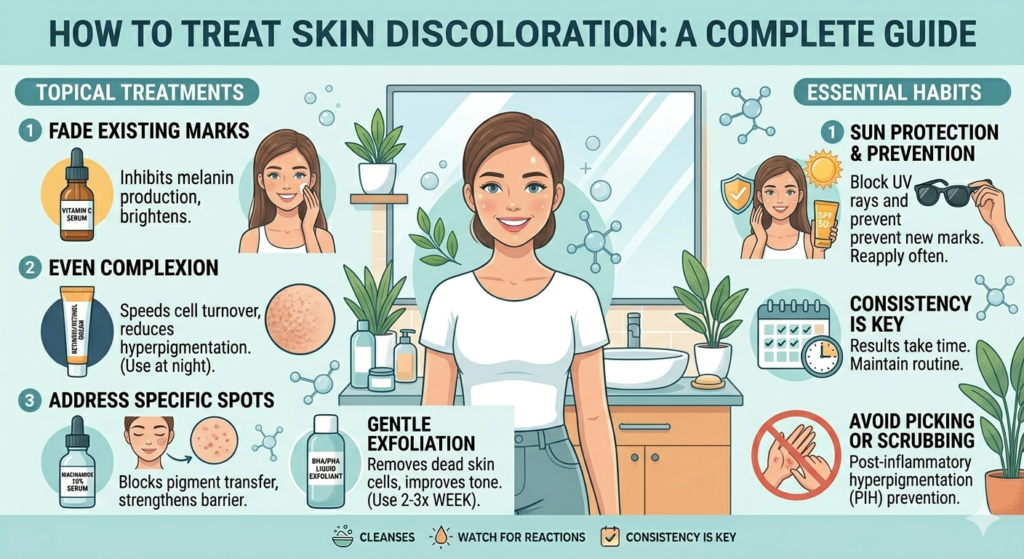
This complete guide explains how to treat skin discoloration, its causes, types, best ingredients, skincare routines, prevention strategies, and frequently asked questions.
What Is Skin Discoloration?
Skin discoloration is an umbrella term for uneven skin tone caused by changes in melanin production, blood flow, inflammation, or damage to the skin.
It can appear as:
- Dark spots
- Light patches
- Redness
- Hyperpigmentation
- Hypopigmentation
- Uneven tone
Types of Skin Discoloration
Hyperpigmentation (Dark Spots)
This occurs when the skin produces excess melanin.
Common forms:
- Sun spots
- Acne marks
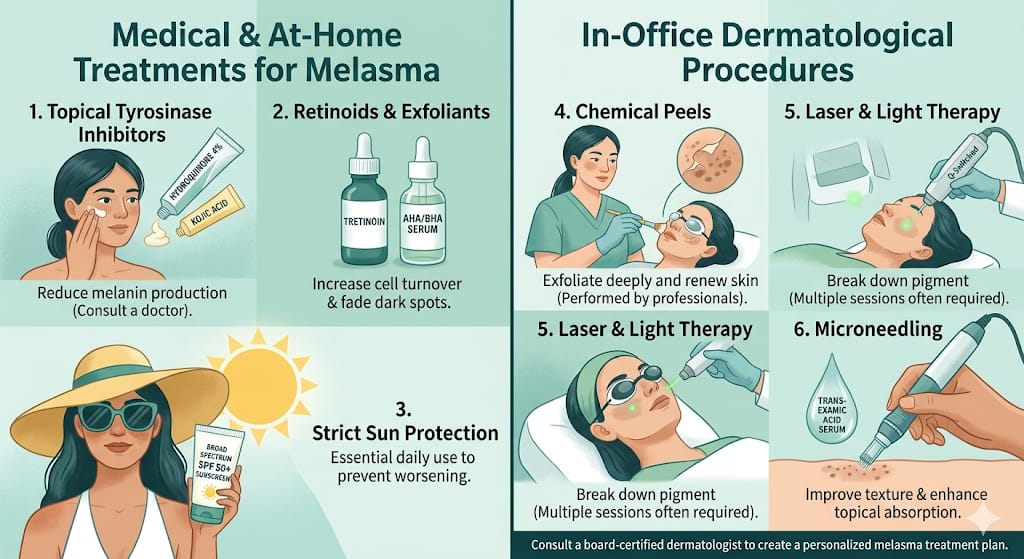
- Melasma
- Age spots
Hypopigmentation (Light Spots)
This happens when the skin loses pigment.
Causes:
- Skin injury
- Certain medical conditions
- Inflammation
Redness (Erythema)
Caused by:
- Inflammation
- Irritation
- Rosacea
- Broken capillaries
Post-Inflammatory Discoloration
Occurs after:
- Acne
- Cuts
- Burns
- Skin irritation
Causes of Skin Discoloration
Understanding the cause helps in choosing the right treatment.
Sun Exposure
UV rays increase melanin production, leading to dark spots and uneven tone.
Acne and Inflammation
Inflammation triggers post-acne marks and pigmentation.
Hormonal Changes
Hormones can trigger melasma and uneven pigmentation.
Aging
Skin becomes uneven due to slower cell turnover.
Genetics
Some people are more prone to pigmentation issues.
Skin Injury
Cuts, burns, or irritation may leave marks.
Harsh Skincare Products
Over-exfoliation or strong chemicals can cause discoloration.
Best Ingredients for Treating Skin Discoloration
Vitamin C
Brightens skin and reduces dark spots.
Benefits:
- Fades pigmentation
- Improves radiance
- Protects against free radicals
Niacinamide
A powerful ingredient for evening skin tone.
Benefits:
- Reduces dark spots
- Controls redness
- Strengthens skin barrier
Retinoids
Increase skin cell turnover.
Benefits:
- Fades discoloration
- Improves texture
- Reduces acne marks
Alpha Arbutin
Helps reduce melanin production.
Benefits:
- Brightens skin
- Fades dark patches
Kojic Acid
Targets pigmentation at the source.
Benefits:
- Lightens dark spots
- Improves uneven tone
Azelaic Acid
Excellent for acne-related discoloration.
Benefits:
- Reduces redness
- Fades post-acne marks
Glycolic Acid
Exfoliates skin surface.
Benefits:
- Removes dead skin cells
- Improves glow
Sunscreen (Most Important Step)
Prevents further discoloration.
Benefits:
- Blocks UV damage
- Prevents new dark spots
Skincare Routine for Skin Discoloration
Morning Routine
Step 1: Gentle Cleanser
Removes impurities without stripping skin.
Step 2: Vitamin C Serum
Brightens and protects skin.
Step 3: Moisturizer
Hydrates and supports skin barrier.
Step 4: Sunscreen
Prevents worsening of discoloration.
Night Routine
Step 1: Cleanser
Removes dirt and sunscreen.
Step 2: Treatment Serum
Options:
- Niacinamide
- Retinoids
- Azelaic acid
Step 3: Moisturizer
Repairs skin overnight.
Weekly Routine
Exfoliation (1–2 times per week)
- Glycolic acid
- Lactic acid
- Gentle chemical exfoliants
Lifestyle Tips for Reducing Discoloration
Wear Sunscreen Daily
This is the most important step.
Avoid Picking Pimples
Prevents post-acne marks.
Stay Hydrated
Supports skin repair.
Eat Antioxidant-Rich Foods
- Fruits
- Vegetables
- Nuts
- Green tea
Get Enough Sleep
Supports skin regeneration.
Manage Stress
Reduces hormonal imbalance and inflammation.
Professional Treatments for Skin Discoloration
Chemical Peels
Remove pigmented surface layers.
Laser Therapy
Targets deeper pigmentation.
Microneedling
Improves skin regeneration.
Dermabrasion
Removes damaged outer layers.
Consult a dermatologist before procedures.
Natural Remedies for Skin Discoloration
Aloe Vera
Soothes and heals skin.
Turmeric
Has anti-inflammatory properties.
Green Tea
Reduces oxidative stress.
Honey
Helps with healing and hydration.
Note: Natural remedies are supportive, not primary treatments.
How Long Does It Take to Treat Skin Discoloration?
- Mild cases: 2–4 weeks
- Moderate cases: 1–3 months
- Severe pigmentation: 3–6 months or longer
Consistency is key.
Common Mistakes That Worsen Discoloration
Skipping Sunscreen
Leads to worsening pigmentation.
Over-Exfoliating
Damages skin barrier.
Using Too Many Actives
Causes irritation and more discoloration.
Picking Pimples
Creates post-acne marks.
Ignoring Skin Type
Wrong products can worsen the condition.
Prevention of Skin Discoloration
- Daily sunscreen use
- Gentle skincare routine
- Avoiding harsh scrubs
- Treating acne early
- Hydrating skin properly
Signs Your Treatment Is Working
- More even skin tone
- Fading dark spots
- Reduced redness
- Brighter complexion
External Resources
American Academy of Dermatology
AAD Hyperpigmentation Guide
Mayo Clinic Skin Conditions
Mayo Clinic Skin Pigmentation Info
Healthline Skin Discoloration Guide
Healthline Hyperpigmentation
WebMD Skin Discoloration Overview
WebMD Skin Pigment Changes
CeraVe Pigmentation Skincare
CeraVe Dark Spot Care
Frequently Asked Questions (FAQs)
What causes skin discoloration?
It is caused by sun exposure, acne, hormones, aging, and inflammation.
Can skin discoloration go away?
Yes, most types can improve with treatment.
What is the fastest treatment for dark spots?
Vitamin C, retinoids, and sunscreen together work best.
Does sunscreen help discoloration?
Yes, it prevents worsening and new spots.
How long does it take to fade pigmentation?
Usually weeks to months depending on severity.
Can acne cause discoloration?
Yes, it often leaves dark marks after healing.
Is skin discoloration permanent?
Not usually, but some cases may take longer to fade.
Can natural remedies remove dark spots?
They may help slightly but are not enough alone.
Is niacinamide good for discoloration?
Yes, it helps even skin tone.
Can stress cause skin discoloration?
Yes, indirectly through inflammation and hormones.
Does vitamin C lighten skin?
It brightens and evens tone, not bleach skin.
Can exfoliation help discoloration?
Yes, but only in moderation.
What foods help skin tone?
Antioxidant-rich foods support skin health.
When should I see a dermatologist?
If discoloration is severe or persistent.
Can makeup cover discoloration?
Yes, but skincare is needed for treatment.
Final Thoughts
Skin discoloration is a common but treatable condition. It occurs due to multiple factors such as sun exposure, acne, inflammation, and hormonal changes. The most effective approach combines sunscreen, targeted skincare ingredients like vitamin C, niacinamide, and retinoids, along with healthy lifestyle habits.
Consistency is the most important factor. With time and proper care, skin tone can become more even, brighter, and healthier-looking.