
Under-eye bags are a very common cosmetic concern that affect people of all ages. They appear as mild swelling, puffiness, or sagging under the eyes and can make the face look tired, older, or stressed—even when you feel perfectly fine. While under-eye bags are usually harmless, they can be persistent and frustrating because the skin under the eyes is extremely thin and sensitive.
The good news is that under-eye bags can often be reduced and managed with the right skincare routine, lifestyle changes, and in some cases, medical treatments. Understanding the cause is the first step to choosing the right solution.
This complete guide explains how to treat under-eye bags, including causes, types, skincare ingredients, home remedies, lifestyle habits, medical treatments, prevention tips, and frequently asked questions.
What Are Under-Eye Bags?
Under-eye bags refer to mild swelling or puffiness beneath the eyes. They occur when the tissues and muscles around the eyes weaken and fat or fluid shifts forward.
They can appear as:
- Puffiness under the eyes
- Loose or sagging skin
- Mild swelling
- Shadowing or dark appearance
Under-eye bags are different from dark circles, although they often appear together.
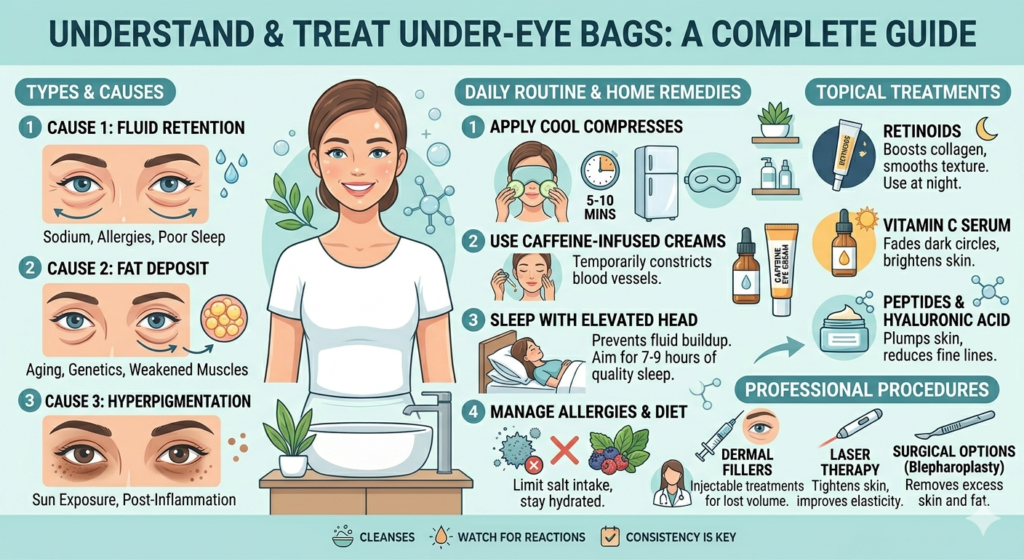
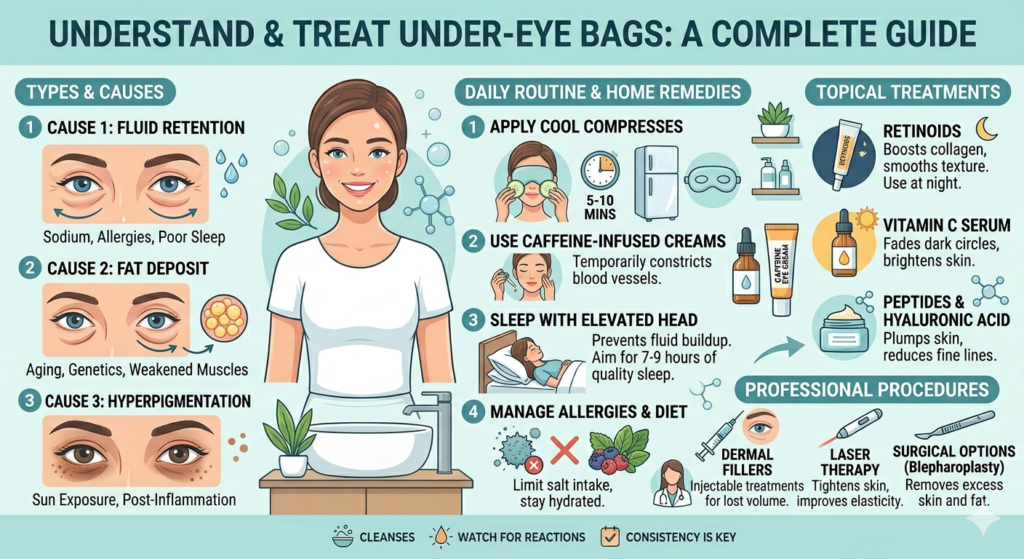
Causes of Under-Eye Bags
Several factors contribute to under-eye bags.
Aging
As we age:
- Skin loses collagen
- Muscles weaken
- Fat shifts forward under the eyes
- Skin becomes thinner
This is the most common cause.
Fluid Retention
Fluid can build up under the eyes due to:
- High salt intake
- Crying
- Hormonal changes
- Sleep position
Lack of Sleep
Poor sleep causes:
- Blood vessel dilation
- Fluid buildup
- Tired appearance
Genetics
Some people naturally have:
- Puffy under-eyes
- Thinner skin
- Fat pads under eyes
Allergies
Allergic reactions can cause:
- Swelling
- Itching
- Eye rubbing (which worsens bags)
Lifestyle Factors
- Smoking
- Alcohol consumption
- Stress
- Poor diet
Sun Exposure
UV rays weaken collagen and accelerate skin aging.
Types of Under-Eye Bags
Temporary Under-Eye Bags
Caused by:
- Lack of sleep
- Salt intake
- Allergies
These usually improve quickly.
Permanent Under-Eye Bags
Caused by:
- Aging
- Genetics
- Fat displacement
These are more persistent.
Under-Eye Puffiness vs Dark Circles
Puffiness
- Swelling or bulging
- Caused by fluid or fat
Dark Circles
- Pigmentation or shadows
- Caused by thin skin or blood vessels
Best Skincare Ingredients for Under-Eye Bags
Caffeine
Caffeine helps:
- Reduce swelling
- Tighten blood vessels
- Improve circulation
Retinol
Retinol helps:
- Strengthen skin
- Improve collagen
- Reduce fine lines
Hyaluronic Acid
Hydrates and plumps the under-eye area.
Peptides
Support collagen production and skin firmness.
Vitamin C
Brightens and improves skin texture.
Niacinamide
Reduces inflammation and strengthens skin barrier.
Aloe Vera
Soothes and cools puffiness.
Best Skincare Routine for Under-Eye Bags
Morning Routine
Step 1: Gentle Cleansing
Use a mild cleanser to avoid irritation.
Step 2: Caffeine Eye Cream
Reduces puffiness and tightens skin.
Step 3: Moisturizer
Keeps skin hydrated.
Step 4: Sunscreen
Protects delicate under-eye skin from UV damage.
Night Routine
Step 1: Cleanser
Removes dirt and oil.
Step 2: Retinol Eye Cream (2–3 times weekly)
Boosts collagen production.
Step 3: Hydrating Eye Cream
Repairs skin overnight.
Lifestyle Tips to Reduce Under-Eye Bags
Get Enough Sleep
Aim for 7–9 hours of sleep daily.
Sleep Position
Sleep on your back with head slightly elevated to reduce fluid buildup.
Reduce Salt Intake
High sodium causes water retention.
Stay Hydrated
Dehydration can worsen puffiness.
Manage Allergies
Use antihistamines if needed (consult a doctor).
Avoid Smoking
Smoking damages collagen and weakens skin.
Limit Alcohol
Alcohol causes dehydration and puffiness.
Cold Compress for Under-Eye Bags
Cold therapy helps reduce swelling.
Methods include:
- Cold spoons
- Ice packs wrapped in cloth
- Chilled cucumber slices
Apply for 5–10 minutes.
Natural Remedies for Under-Eye Bags
Cucumber Slices
Cooling and hydrating effect.
Tea Bags
Contains caffeine and antioxidants.
Aloe Vera Gel
Soothes and hydrates skin.
Rose Water
Calms inflammation.
Potato Slices
Natural enzymes may reduce puffiness.
Eye Massage Techniques
Gentle massage can improve lymphatic drainage.
Steps:
- Use ring finger
- Tap lightly under eyes
- Move from inner to outer corner
- Do for 1–2 minutes daily
Best Foods for Healthy Under-Eye Skin
- Cucumber (hydration)
- Watermelon (hydration)
- Leafy greens (vitamins)
- Salmon (omega-3)
- Nuts (healthy fats)
Foods That Worsen Under-Eye Bags
- Excess salt
- Processed foods
- Alcohol
- Sugary foods
Medical Treatments for Under-Eye Bags
Chemical Peels
Improve skin texture and pigmentation.
Laser Therapy
Tightens skin and stimulates collagen.
Dermal Fillers
Used to smooth hollow areas under eyes.
Blepharoplasty (Surgery)
Removes or repositions fat for long-term correction.
Consult a dermatologist or plastic surgeon before treatment.
How Long Does It Take to Reduce Under-Eye Bags?
- Temporary puffiness: hours to days
- Mild improvement: 1–2 weeks
- Long-term improvement: months (with consistent care)
- Surgical correction: permanent solution
Common Mistakes That Make Under-Eye Bags Worse
Rubbing Eyes
Damages delicate skin.
Not Sleeping Enough
Leads to fluid buildup.
Overusing Skincare Products
Can irritate sensitive skin.
Ignoring Sunscreen
UV damage accelerates aging.
Drinking Too Much Alcohol
Causes dehydration and puffiness.
When to See a Doctor
Consult a professional if:
- Swelling is sudden or severe
- Only one eye is affected
- Pain or redness occurs
- Bags do not improve over time
Signs Your Under-Eye Routine Is Working
- Less puffiness
- Smoother skin
- Brighter appearance
- Reduced swelling in mornings
Prevention Tips for Under-Eye Bags
- Sleep well regularly
- Maintain healthy diet
- Stay hydrated
- Use sunscreen daily
- Avoid rubbing eyes
- Use gentle skincare products
External Resources for Under-Eye Care
American Academy of Dermatology
AAD Eye Skin Care Tips
Mayo Clinic Eye Health Information
Mayo Clinic Eye Care Guide
Healthline Under-Eye Bags Guide
Healthline Eye Bags Information
WebMD Eye Puffiness Guide
WebMD Eye Bags Overview
CeraVe Eye Care Tips
CeraVe Eye Cream Information
Frequently Asked Questions (FAQs)
What causes under-eye bags?
They are caused by aging, fluid retention, genetics, lack of sleep, and lifestyle factors.
Can under-eye bags go away permanently?
Temporary bags can improve, but age-related bags may require long-term care or procedures.
Does lack of sleep cause eye bags?
Yes, poor sleep is a major cause of puffiness.
Can drinking water reduce eye bags?
Yes, hydration helps reduce fluid imbalance.
Do eye creams really work?
Yes, they can improve puffiness and skin texture with consistent use.
Is caffeine good for under-eye bags?
Yes, it helps reduce swelling and tighten blood vessels.
Can stress cause eye bags?
Yes, stress affects sleep and circulation.
Are under-eye bags permanent?
Some are temporary, while others are due to aging or genetics.
Can diet affect eye bags?
Yes, high salt and alcohol worsen puffiness.
Is sunscreen important for under-eyes?
Yes, it prevents collagen breakdown and aging.
Can allergies cause eye bags?
Yes, allergic reactions can cause swelling and puffiness.
What is the fastest way to reduce eye bags?
Cold compress and proper sleep help quickly.
Can eye bags be prevented?
Healthy lifestyle and skincare can reduce risk.
Do eye bags get worse with age?
Yes, skin loses elasticity over time.
When should I see a doctor?
If swelling is severe, painful, or persistent.
Final Thoughts
Under-eye bags are a common concern caused by a mix of aging, genetics, lifestyle habits, and fluid retention. While they may not always disappear completely, they can be significantly improved with the right combination of skincare, healthy habits, and targeted treatments.
Simple changes such as improving sleep, reducing salt intake, staying hydrated, using caffeine-based eye creams, and protecting the skin from sun damage can make a noticeable difference over time.
Consistency is key. With proper care and prevention, the under-eye area can appear smoother, brighter, and more refreshed, helping you look more rested and confident every day.