Teenage skin goes through some of the biggest changes in life. Hormonal shifts during puberty often lead to increased oil production, acne, blackheads, whiteheads, sensitivity, and uneven skin texture. At the same time, some teens experience dryness or combination skin, depending on genetics and environment.
Because of these changes, teens need a simple, gentle, and consistent skincare routine that focuses on cleansing, protecting, and balancing the skin—not overloading it with too many products. The goal of teen skincare is not perfection, but healthy skin habits that prevent long-term issues like acne scars, irritation, and premature damage.
This complete guide explains the best skincare routine for teens, including morning and night routines, acne care, ingredient guidance, lifestyle habits, common mistakes, and frequently asked questions.
Why Teen Skincare Matters
Teen skin is more reactive because of hormonal changes. Without proper care, teens may experience:
- Persistent acne
- Oily skin buildup
- Clogged pores
- Blackheads and whiteheads
- Skin irritation
- Acne scars and dark spots
A simple routine helps:
- Prevent breakouts
- Control oil production
- Protect the skin barrier
- Reduce acne scarring
- Build lifelong skincare habits
Understanding Teen Skin
Teen skin is different from adult skin in several ways:
Increased Oil Production
Hormones (especially androgens) increase sebum production, making skin oily.
Faster Cell Turnover
Skin renews faster, which can lead to clogged pores.
Acne-Prone Nature
Teenagers are more likely to develop acne due to hormonal changes.
Sensitive Skin Barrier
Teen skin can easily become irritated with harsh products.
Common Skin Problems in Teens
Acne
Includes pimples, cysts, and inflamed breakouts.
Blackheads and Whiteheads
Caused by clogged pores.
Oily Skin
Excess sebum production.
Dry or Flaky Skin
Often caused by harsh cleansing or weather.
Combination Skin
Oily T-zone with dry cheeks.
The Golden Rule of Teen Skincare
Less is more.
Teens do NOT need:
- 10-step routines
- Strong acids every day
- Multiple active ingredients at once
They DO need:
- Gentle cleansing
- Basic hydration
- Sun protection
- Simple acne treatment if needed
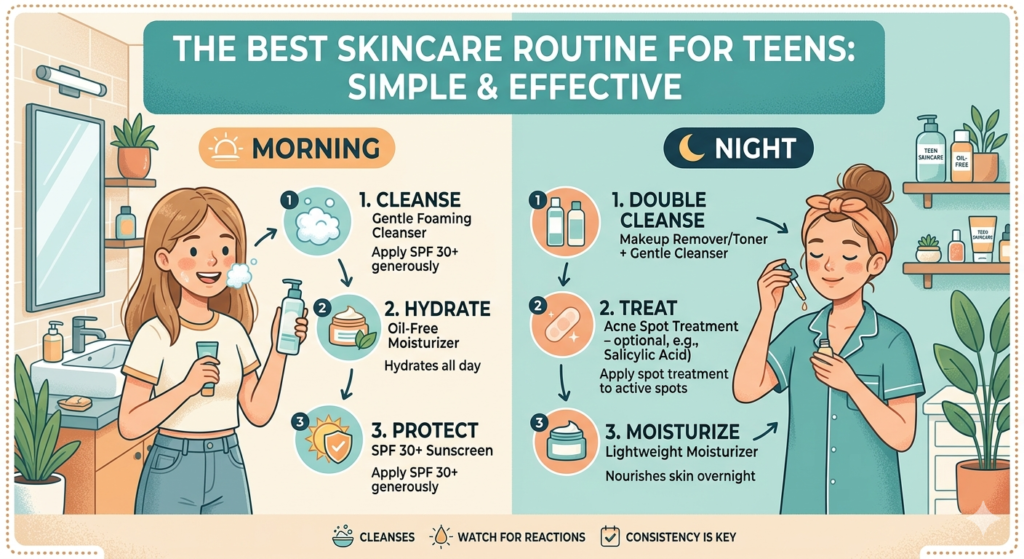
The Best Skincare Routine for Teens
Morning Routine
Step 1: Gentle Cleanser
Cleansing removes oil, sweat, and bacteria that build up overnight.
Best ingredients:
- Salicylic acid (for acne-prone skin)
- Glycerin (hydration)
- Aloe vera (soothing)
- Niacinamide (oil control)
Tips:
- Use lukewarm water
- Wash for 20–30 seconds
- Do not over-scrub
Step 2: Lightweight Moisturizer
Moisturizer is important even for oily skin.
Benefits:
- Balances oil production
- Prevents dryness
- Strengthens skin barrier
Best types:
- Gel-based moisturizers (oily skin)
- Lotion-based moisturizers (dry skin)
Step 3: Sunscreen (Most Important Step)
Sunscreen protects against:
- Dark spots
- Acne scars
- Premature aging
- Skin damage
SPF guidelines:
- SPF 30 or higher
- Broad-spectrum protection
Why teens need sunscreen:
UV exposure worsens acne marks and skin damage.
Night Routine
Step 1: Cleanser
Removes:
- Dirt
- Oil
- Pollution
- Sunscreen
If wearing makeup, double cleansing may help.
Step 2: Acne Treatment (Optional)
Only if needed.
Common ingredients:
- Salicylic acid (unclogs pores)
- Benzoyl peroxide (kills acne bacteria)
- Niacinamide (reduces inflammation)
- Retinoids (for persistent acne)
Start slowly to avoid irritation.
Step 3: Moisturizer
Repairs skin overnight and reduces irritation.
Best Ingredients for Teen Skin
Salicylic Acid
- Clears pores
- Reduces acne
Niacinamide
- Controls oil
- Reduces redness
Hyaluronic Acid
- Hydrates skin without heaviness
Benzoyl Peroxide
- Treats active acne
Ceramides
- Strengthen skin barrier
Aloe Vera
- Soothes irritation
Ingredients Teens Should Avoid
- Harsh scrubs
- Alcohol-heavy toners
- Strong acids used daily
- Too many active ingredients at once
- Fragrance-heavy products (for sensitive skin)
Best Skincare Routine for Oily Teen Skin
- Gel cleanser with salicylic acid
- Lightweight oil-free moisturizer
- Niacinamide serum
- SPF 30+ sunscreen
Best Skincare Routine for Dry Teen Skin
- Cream-based gentle cleanser
- Hydrating moisturizer with ceramides
- Hyaluronic acid serum
- Sunscreen
Best Skincare Routine for Acne-Prone Teens
- Salicylic acid cleanser
- Benzoyl peroxide spot treatment
- Lightweight moisturizer
- Sunscreen daily
Common Skincare Mistakes Teens Make
Overwashing the Face
Washing too often increases oil production.
Popping Pimples
Leads to scars and infections.
Skipping Moisturizer
Makes skin produce more oil.
Not Using Sunscreen
Causes dark spots and aging.
Using Too Many Products
Damages skin barrier.
Lifestyle Habits for Clear Teen Skin
Eat a Balanced Diet
Helpful foods:
- Fruits
- Vegetables
- Nuts
- Whole grains
Limit:
- Sugary foods
- Fast food
- Soda
Drink Enough Water
Hydration helps skin function properly.
Sleep Well
Teen skin repairs itself during sleep.
Manage Stress
Stress can worsen acne.
Exercise Regularly
Improves blood circulation and skin health.
How Long Does Teen Acne Take to Improve?
- Mild acne: 2–4 weeks
- Moderate acne: 1–3 months
- Severe acne: may require dermatologist treatment
When Should Teens See a Dermatologist?
- Severe cystic acne
- Painful breakouts
- Acne scars forming
- No improvement after months
- Emotional distress due to acne
Professional Treatments for Teen Acne
- Topical prescriptions
- Oral medications (if needed)
- Chemical peels
- Light therapy
Natural Remedies for Teen Skin (Optional Support)
Aloe Vera
Soothes redness.
Honey
Has antibacterial properties.
Green Tea
Reduces oiliness.
Note: Natural remedies should not replace medical skincare.
Teen Skincare Routine Example
Morning
- Cleanser
- Moisturizer
- Sunscreen
Night
- Cleanser
- Acne treatment (if needed)
- Moisturizer
Signs Your Teen Skincare Routine Is Working
- Fewer breakouts
- Less oiliness
- Smoother skin
- Reduced redness
- Faster healing pimples
Signs of Over-Treatment
- Burning sensation
- Dry patches
- Peeling skin
- Increased irritation
Teen Skincare Myths
Myth: Acne is caused by dirty skin
Acne is mostly hormonal, not dirt-related.
Myth: Sunscreen causes acne
Non-comedogenic sunscreen does not cause acne.
Myth: Scrubbing removes acne
Scrubbing worsens inflammation.
Myth: Teens don’t need moisturizer
All skin types need hydration.
External Resources for Teen Skincare
American Academy of Dermatology
AAD Teen Acne Guide
Mayo Clinic Acne Information
Mayo Clinic Acne Guide
Healthline Teen Acne Care
Healthline Teen Skin Care
WebMD Acne Overview
WebMD Acne Guide
CeraVe Skin Care Tips
CeraVe Teen Skincare Info
Frequently Asked Questions (FAQs)
What is the best skincare routine for teens?
A simple routine: cleanser, moisturizer, and sunscreen.
Do teens need skincare products?
Yes, basic skincare helps maintain healthy skin.
How often should teens wash their face?
Twice daily is enough.
Can teens use retinol?
Yes, but only under guidance or low concentration.
Is acne normal in teens?
Yes, it is very common during puberty.
Does chocolate cause acne?
Not directly, but diet may influence some individuals.
Can sunscreen cause breakouts?
Non-comedogenic sunscreen is safe for acne-prone skin.
Should teens use exfoliators?
Only 1–2 times per week if needed.
Can stress cause acne?
Yes, stress can worsen breakouts.
How long does teen acne last?
It varies but often improves after puberty.
Should teens pop pimples?
No, it increases risk of scars.
Can skincare cure acne completely?
It helps manage it but may not fully eliminate it.
What foods help teen skin?
Fruits, vegetables, and healthy fats.
Is oily skin normal in teens?
Yes, due to hormones.
When should teens see a dermatologist?
For severe or persistent acne.
Final Thoughts
Teen skincare does not need to be complicated. The most important thing is building a simple, consistent routine that includes cleansing, moisturizing, and sunscreen. Additional treatments like salicylic acid or benzoyl peroxide can be added only if needed.
Healthy habits like good sleep, balanced diet, hydration, and stress management also play a major role in clear skin. With patience and consistency, teens can achieve healthy, balanced, and confident skin without overloading their routine with unnecessary products.