
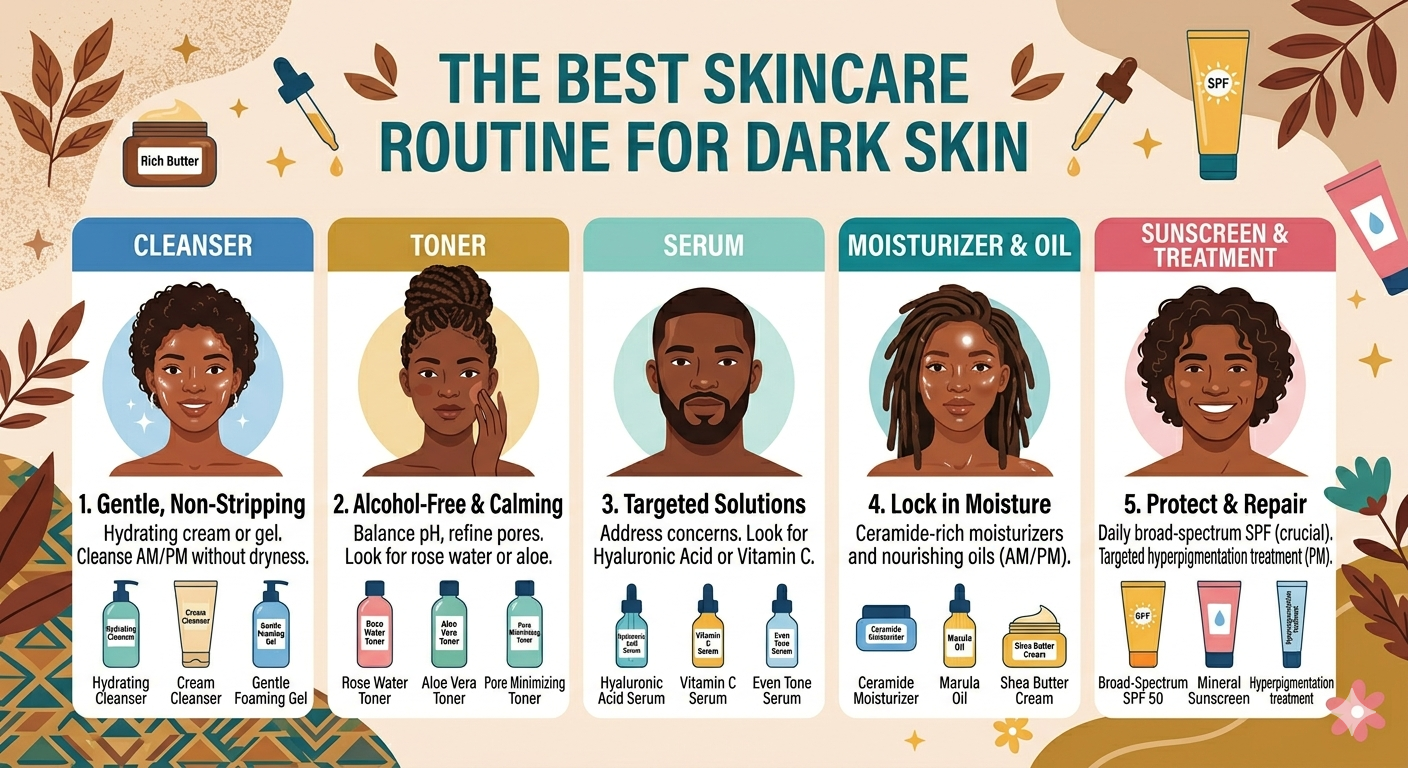
Dark skin is rich in melanin, which provides natural protection against UV damage and slows visible signs of aging. However, it also has unique skincare needs, especially when it comes to hyperpigmentation, uneven tone, acne marks, and sensitivity to inflammation.
A well-designed skincare routine for dark skin focuses on maintaining an even complexion, preventing dark spots, protecting the skin barrier, and enhancing natural glow—without bleaching or damaging the skin.
This guide explains the best skincare routine for dark skin, including skin concerns, ingredients, morning and night routines, treatment options, mistakes to avoid, and FAQs.
Understanding Dark Skin
Dark skin contains more melanin, which is responsible for its deeper tone. While melanin offers protection, it also means:
- Dark spots last longer
- Acne marks are more visible
- Inflammation can lead to hyperpigmentation
- Skin may be prone to uneven tone
Common Concerns in Dark Skin
- Hyperpigmentation (dark spots)
- Acne marks
- Uneven skin tone
- Dry patches or oil imbalance
- Post-inflammatory marks (PIH)
Key Goals of a Skincare Routine for Dark Skin
A good routine should:
- Even skin tone
- Prevent dark spots
- Maintain hydration
- Strengthen skin barrier
- Protect from sun damage
- Improve natural radiance
Best Ingredients for Dark Skin
1. Vitamin C
- Brightens skin
- Fades dark spots
- Boosts collagen
- Improves radiance
2. Niacinamide
- Reduces pigmentation
- Controls oil
- Strengthens skin barrier
- Reduces redness
3. Alpha Arbutin
- Targets hyperpigmentation
- Evens skin tone
- Gentle brightening
4. Retinol
- Boosts cell turnover
- Fades acne marks
- Improves texture
5. Glycolic Acid
- Exfoliates dead skin
- Brightens dull areas
- Smooths skin
6. Hyaluronic Acid
- Hydrates deeply
- Plumps skin
- Reduces dryness
7. Ceramides
- Repair skin barrier
- Prevent moisture loss
8. Sunscreen (Most Important)
- Prevents dark spots from worsening
- Protects against UV damage
- Prevents premature aging
Morning Skincare Routine for Dark Skin
Step 1: Gentle Cleanser
Removes oil and impurities without stripping skin.
Best types:
- Gel cleanser
- Hydrating cleanser
Step 2: Vitamin C Serum
Helps brighten skin and reduce pigmentation.
Benefits:
- Evens tone
- Fades dark marks
- Adds glow
Step 3: Niacinamide Serum (Optional)
Supports barrier and controls oil.
Step 4: Moisturizer
Locks in hydration.
Best ingredients:
- Ceramides
- Glycerin
- Shea butter (for dry skin)
Step 5: Sunscreen (SPF 30+)
Essential for preventing pigmentation.
Important note:
Dark skin still needs sunscreen—melanin does NOT block UV damage completely.
Night Skincare Routine for Dark Skin
Step 1: Cleanser
Removes sunscreen, oil, and dirt.
Step 2: Treatment Serum
Choose based on concern:
- Acne: salicylic acid
- Dark spots: alpha arbutin
- Anti-aging: retinol
Step 3: Hydrating Serum
- Hyaluronic acid for moisture
- Soothes skin
Step 4: Moisturizer
Helps repair skin overnight.
Weekly Skincare Routine
Exfoliation (2–3 times per week)
Best ingredients:
- Glycolic acid
- Lactic acid
- Mandelic acid
Benefits:
- Removes dead skin
- Improves brightness
- Reduces dullness
Hydrating Mask (1–2 times per week)
Helps restore moisture balance.
Best Treatments for Dark Skin Concerns
Hyperpigmentation Treatment
- Vitamin C
- Niacinamide
- Alpha arbutin
- Sunscreen
Acne Treatment
- Salicylic acid
- Benzoyl peroxide (careful use)
- Retinoids
Uneven Skin Tone
- Exfoliation
- Brightening serums
- Sunscreen
Dark Spots (PIH)
- Retinol
- Chemical exfoliation
- Sun protection
Professional Treatments
Chemical Peels
Helps remove dark surface layers safely when done by professionals.
Microneedling
Boosts collagen and improves texture.
Laser Therapy
Targets pigmentation but must be carefully chosen for dark skin types.
Important: Always consult a dermatologist experienced with melanin-rich skin.
Common Mistakes in Skincare for Dark Skin
Skipping Sunscreen
Leads to worsening pigmentation.
Over-Exfoliating
Can trigger more dark spots.
Using Harsh Bleaching Products
Damages skin barrier and worsens tone.
Ignoring Acne Treatment
Acne often leads to long-lasting marks.
Changing Products Too Often
Skin needs consistency.
How Long Does It Take to See Results?
- Hydration: 1–3 days
- Brightening: 2–4 weeks
- Dark spot fading: 4–12 weeks
- Full improvement: 3–6 months
Tips for Healthy Dark Skin
Protect from Sun Daily
Even indoors or cloudy weather.
Stay Hydrated
Helps maintain glow.
Eat Antioxidant-Rich Foods
- Fruits
- Vegetables
- Nuts
Avoid Picking Pimples
Prevents permanent dark spots.
Use Gentle Products
Protects skin barrier.
Can Dark Skin Become Lighter?
No skincare should be used to change natural skin tone. The goal is:
- Even tone
- Healthy glow
- Reduced pigmentation
- Smooth texture
Signs Your Routine Is Working
- Fewer dark spots
- More even tone
- Smoother texture
- Natural glow
External Resources
American Academy of Dermatology – Skin of Color Care
AAD Skin of Color Guide
Mayo Clinic – Skin Pigmentation Information
Mayo Clinic Hyperpigmentation
Healthline – Dark Skin Skincare Guide
Healthline Skin of Color Care
WebMD – Skin Pigmentation Overview
WebMD Skin Discoloration Guide
Frequently Asked Questions (FAQs)
Is skincare different for dark skin?
Yes, mainly in pigmentation management and sun protection.
Do people with dark skin need sunscreen?
Yes, every skin tone needs sunscreen.
Why do dark spots last longer in dark skin?
Because of higher melanin activity.
What is the best ingredient for dark skin?
Vitamin C and niacinamide are most effective.
Can dark skin use retinol?
Yes, it helps improve tone and texture.
How can I reduce hyperpigmentation?
Use sunscreen, exfoliation, and brightening serums.
Is bleaching safe for dark skin?
No, it can damage skin.
How often should I exfoliate?
2–3 times per week.
Can acne cause dark spots?
Yes, it often leads to PIH.
How do I get glowing dark skin?
Hydration, sunscreen, and antioxidants.
Final Thoughts
The best skincare routine for dark skin focuses on protection, hydration, and pigmentation control—not changing skin color. With the right ingredients like vitamin C, niacinamide, retinol, and sunscreen, dark skin can stay healthy, radiant, and even-toned.
Consistency is the key. With proper care, dark skin can achieve a natural glow, smooth texture, and long-term skin health without harsh treatments or harmful products.