
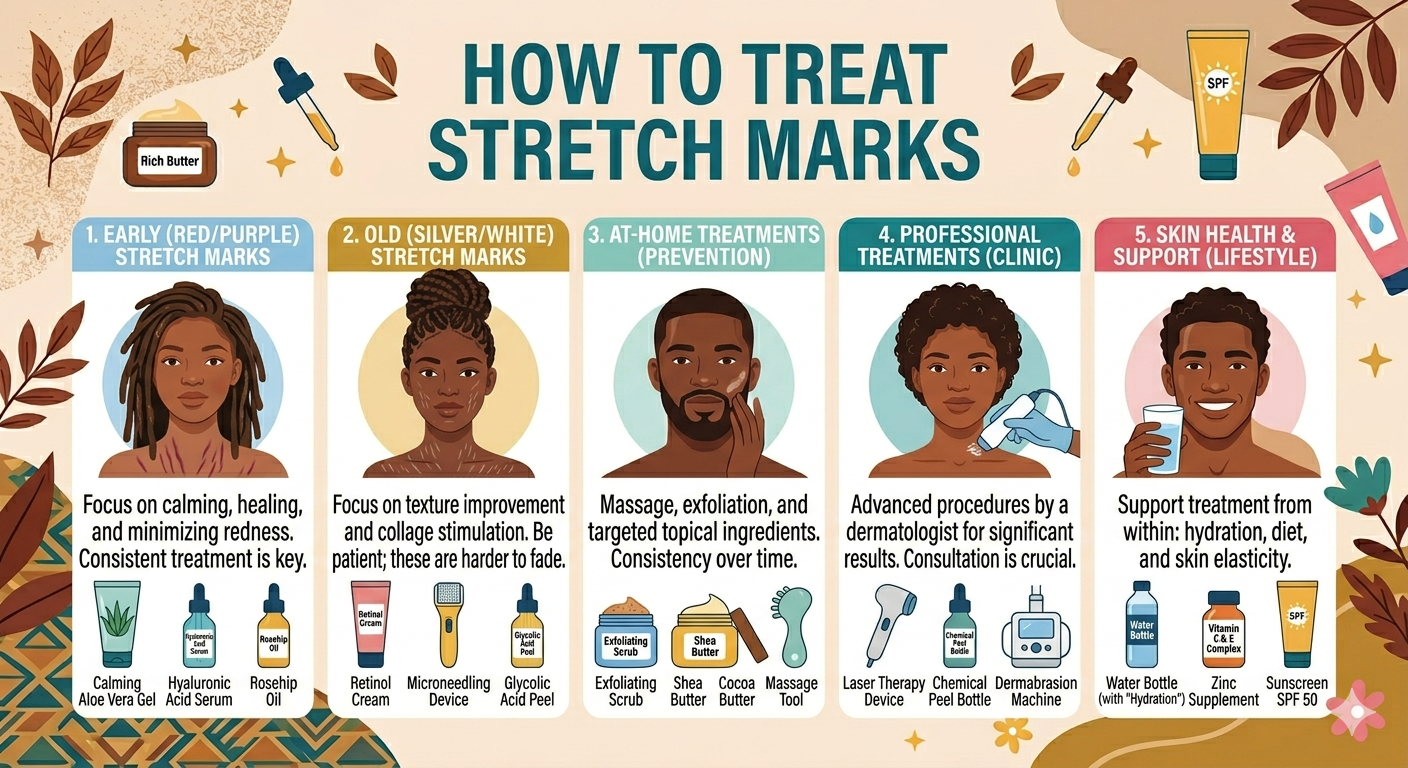
How to Treat Stretch Marks
Stretch marks are one of the most common skin concerns affecting people of all ages, genders, and skin types. Whether they appear after pregnancy, weight changes, puberty, bodybuilding, or hormonal fluctuations, stretch marks can impact confidence and body image. The good news is that while stretch marks may not disappear completely, there are many effective treatments and skincare strategies that can significantly reduce their appearance.
Stretch marks, medically known as striae, occur when the skin stretches rapidly and the collagen and elastin fibers break. These marks often begin as red, purple, pink, or dark streaks and gradually fade into lighter, silvery lines over time. Although they are harmless, many people seek treatments to improve their appearance and restore smoother-looking skin.
In this comprehensive guide, you will learn everything about stretch marks, including their causes, different types, prevention methods, medical treatments, home remedies, and skincare routines that can help improve skin texture and elasticity.
What Are Stretch Marks?
Stretch marks are long, narrow streaks or lines that develop when the skin stretches or shrinks rapidly. This sudden change causes the skin’s supportive structures, particularly collagen and elastin fibers, to rupture. As the skin heals, stretch marks appear.
Stretch marks commonly occur on:
- Abdomen
- Hips
- Thighs
- Buttocks
- Breasts
- Upper arms
- Lower back
- Shoulders
Initially, stretch marks may feel slightly raised or itchy. Over time, they usually flatten and fade.
Types of Stretch Marks
Understanding the different types of stretch marks can help determine the best treatment approach.
Striae Rubrae
These are fresh stretch marks that appear red, purple, pink, or dark brown depending on skin tone. They are easier to treat because blood vessels are still active in the affected area.
Striae Albae
These are older stretch marks that have faded to white or silver. They are more difficult to treat because collagen damage is already established.
Striae Gravidarum
These stretch marks occur during pregnancy, especially around the abdomen and breasts.
Striae Distensae
This is the general medical term used for stretch marks caused by stretching of the skin.
Causes of Stretch Marks
Stretch marks develop due to rapid skin stretching and hormonal changes. Several factors contribute to their formation.
Pregnancy
Pregnancy is one of the leading causes of stretch marks. Rapid abdominal expansion combined with hormonal changes weakens skin elasticity.
Rapid Weight Gain or Loss
Significant body weight changes stretch the skin quickly, damaging collagen fibers.
Puberty
Teenagers often develop stretch marks during growth spurts, particularly on thighs, hips, breasts, and shoulders.
Bodybuilding
Rapid muscle growth can lead to stretch marks on the arms, chest, and shoulders.
Hormonal Changes
High cortisol levels reduce skin elasticity and make stretch marks more likely.
Genetics
If your family members have stretch marks, you may be genetically predisposed to developing them.
Corticosteroid Use
Long-term use of steroid creams or medications can thin the skin and increase the risk of stretch marks.
Medical Conditions
Certain health conditions such as Cushing syndrome and Marfan syndrome can contribute to stretch mark development.
Who Gets Stretch Marks?
Stretch marks affect millions of people worldwide. They are extremely common and can happen to anyone.
People at higher risk include:
- Pregnant women
- Teenagers during puberty
- Athletes and bodybuilders
- Individuals with obesity
- People experiencing rapid weight fluctuations
- Individuals using corticosteroids
- People with a family history of stretch marks
Can Stretch Marks Be Removed Completely?
One of the most common questions people ask is whether stretch marks can disappear completely.
The reality is that stretch marks are a type of scar, and complete removal is very difficult. However, many treatments can significantly reduce their appearance, improve skin texture, and make them far less noticeable.
The earlier you begin treatment, the better the results tend to be.
Best Treatments for Stretch Marks
There are many treatment options available ranging from home remedies to professional dermatological procedures.
Topical Treatments for Stretch Marks
Retinoid Creams
Retinoids are among the most effective topical treatments for fresh stretch marks.
Retinoids work by:
- Stimulating collagen production
- Increasing skin cell turnover
- Improving skin texture
- Reducing discoloration
Tretinoin is one of the most commonly prescribed retinoids for stretch marks.
Benefits include:
- Smoother skin
- Improved elasticity
- Faded stretch marks
- Better skin renewal
Retinoids should not be used during pregnancy or breastfeeding.
Learn more about retinoids:
https://www.aad.org/public/cosmetic/scars-stretch-marks/stretch-marks-why-appear
Hyaluronic Acid
Hyaluronic acid helps hydrate the skin and may improve the appearance of early stretch marks.
Benefits include:
- Increased moisture retention
- Improved skin plumpness
- Better elasticity
- Smoother skin texture
Centella Asiatica Creams
Centella asiatica is a medicinal herb known for supporting wound healing and collagen production.
Many stretch mark creams contain this ingredient due to its skin-repairing properties.
Vitamin C Serums
Vitamin C is a powerful antioxidant that supports collagen synthesis.
Benefits include:
- Brightening the skin
- Improving texture
- Supporting healing
- Reducing pigmentation
Cocoa Butter
Cocoa butter is widely used for moisturizing the skin and improving softness.
Although scientific evidence is limited, many people find it helpful for keeping the skin supple during pregnancy.
Shea Butter
Shea butter deeply nourishes the skin and helps improve dryness and irritation associated with stretch marks.
Peptide Creams
Peptides stimulate collagen and elastin production, potentially helping improve skin firmness.
Natural Remedies for Stretch Marks
Many people prefer natural approaches to stretch mark treatment. While natural remedies may not eliminate stretch marks completely, they can improve skin hydration and texture.
Aloe Vera
Aloe vera has soothing and healing properties that may help calm irritated skin.
How to use:
- Apply pure aloe vera gel directly to stretch marks
- Leave it on for 20 minutes
- Rinse with lukewarm water
- Repeat daily
Coconut Oil
Coconut oil helps moisturize the skin and reduce dryness.
Benefits include:
- Improved hydration
- Softer skin
- Reduced itchiness
- Enhanced skin barrier function
Sugar Scrub Exfoliation
Exfoliation may help improve skin texture and circulation.
DIY sugar scrub recipe:
- 1 cup sugar
- Coconut oil or almond oil
- Lemon juice
Massage gently for a few minutes before rinsing.
Almond Oil
Almond oil contains vitamin E and fatty acids that nourish the skin.
Regular massage may help improve skin softness and flexibility.
Olive Oil
Olive oil is rich in antioxidants and vitamin E, helping maintain skin hydration.
Lemon Juice
Lemon juice contains natural acids that may slightly brighten the skin.
Use cautiously because it can irritate sensitive skin.
Professional Dermatological Treatments
Professional treatments often provide more noticeable results than home remedies.
Laser Therapy
Laser treatments are among the most effective options for reducing stretch marks.
Fractional Laser Therapy
This treatment stimulates collagen production by creating tiny controlled injuries in the skin.
Benefits include:
- Reduced texture irregularities
- Smoother skin
- Improved color
- Better elasticity
Pulsed Dye Laser
This laser targets blood vessels in newer red stretch marks.
It works best on fresh stretch marks.
CO2 Laser Resurfacing
CO2 lasers remove damaged skin layers and stimulate collagen remodeling.
This treatment may significantly improve older stretch marks.
Laser treatments usually require multiple sessions.
Learn more about laser therapy:
https://www.mayoclinic.org/diseases-conditions/stretch-marks/diagnosis-treatment/drc-20351144
Microneedling
Microneedling involves tiny needles that create controlled micro-injuries in the skin.
Benefits include:
- Increased collagen production
- Improved skin texture
- Reduced visibility of stretch marks
- Better absorption of skincare products
Microneedling is especially effective for older stretch marks.
Radiofrequency Treatments
Radiofrequency technology heats deeper skin layers to stimulate collagen and tighten the skin.
This treatment can improve:
- Skin firmness
- Elasticity
- Stretch mark appearance
Chemical Peels
Chemical peels use acids to exfoliate the skin and encourage regeneration.
Common acids include:
- Glycolic acid
- TCA peels
- Lactic acid
Chemical peels may improve skin tone and texture.
Microdermabrasion
Microdermabrasion exfoliates the outer skin layer using fine crystals or a diamond-tipped device.
Benefits include:
- Smoother skin
- Better skin texture
- Mild reduction in stretch marks
Platelet-Rich Plasma Therapy
PRP therapy uses growth factors from your own blood to stimulate skin repair.
It is often combined with microneedling for enhanced results.
Stretch Marks During Pregnancy
Pregnancy stretch marks are extremely common and often develop during the second and third trimesters.
Tips to Prevent Pregnancy Stretch Marks
- Maintain healthy weight gain
- Stay hydrated
- Use moisturizer daily
- Eat collagen-supporting foods
- Avoid excessive scratching
- Exercise regularly with doctor approval
Safe Treatments During Pregnancy
Pregnant women should avoid retinoids and certain aggressive treatments.
Safer options include:
- Cocoa butter
- Shea butter
- Hyaluronic acid
- Coconut oil
- Gentle massage
- Hydration
Stretch Marks After Weight Loss
Rapid weight loss can leave behind loose skin and stretch marks.
To improve their appearance:
- Build muscle gradually
- Stay hydrated
- Use firming creams
- Consider microneedling
- Eat protein-rich foods
Stretch Marks in Teenagers
Teen stretch marks often appear during growth spurts.
Common areas include:
- Hips
- Thighs
- Back
- Breasts
- Shoulders
Parents should reassure teenagers that stretch marks are normal and very common.
Gentle moisturizers and healthy skincare habits can help support the skin.
Stretch Marks in Men
Stretch marks affect men too, especially during:
- Bodybuilding
- Rapid weight gain
- Puberty
- Obesity
Men commonly develop stretch marks on:
- Shoulders
- Arms
- Back
- Chest
- Abdomen
Best Ingredients for Stretch Marks
Certain ingredients are especially beneficial for improving stretch marks.
Retinol
Supports collagen renewal and improves texture.
Hyaluronic Acid
Boosts hydration and skin elasticity.
Vitamin E
Provides antioxidant protection.
Centella Asiatica
Supports healing and collagen production.
Peptides
Strengthen skin structure.
Glycolic Acid
Encourages exfoliation and cell turnover.
Niacinamide
Improves skin barrier function and texture.
Daily Skincare Routine for Stretch Marks
Consistency is essential when treating stretch marks.
Morning Routine
- Cleanse gently
- Apply vitamin C serum
- Use stretch mark cream
- Apply sunscreen
Evening Routine
- Cleanse the skin
- Apply retinoid or treatment serum
- Massage moisturizer into the skin
- Use nourishing oils if desired
Importance of Sunscreen
Sun exposure can make stretch marks more noticeable.
Use broad-spectrum sunscreen daily to:
- Prevent darkening
- Protect collagen
- Reduce discoloration
- Maintain skin health
Foods That Support Skin Elasticity
Nutrition plays a major role in skin health.
Protein
Protein supports collagen formation.
Good sources include:
- Eggs
- Chicken
- Fish
- Lentils
- Greek yogurt
Vitamin C
Vitamin C helps build collagen.
Sources include:
- Oranges
- Strawberries
- Kiwi
- Bell peppers
- Broccoli
Zinc
Zinc supports skin repair.
Sources include:
- Pumpkin seeds
- Nuts
- Meat
- Beans
Omega-3 Fatty Acids
Omega-3s support skin hydration and elasticity.
Sources include:
- Salmon
- Chia seeds
- Walnuts
- Flaxseeds
Water
Hydrated skin is more resilient and flexible.
Aim to drink enough water daily to maintain skin moisture.
Can Exercise Help Stretch Marks?
Exercise cannot directly remove stretch marks, but it can improve overall skin appearance.
Benefits include:
- Better circulation
- Improved muscle tone
- Healthier skin
- Enhanced body composition
Strength training may help tighten the surrounding skin.
Common Myths About Stretch Marks
Myth 1: Only Women Get Stretch Marks
Men can also develop stretch marks due to growth, weight changes, or muscle gain.
Myth 2: Stretch Marks Mean You Are Unhealthy
Stretch marks are normal and extremely common.
Myth 3: Stretch Marks Can Be Completely Removed Overnight
No treatment can erase stretch marks instantly.
Myth 4: Tanning Hides Stretch Marks
Tanning may actually make stretch marks more noticeable.
Myth 5: Expensive Creams Always Work Better
Results depend on ingredients and consistency, not price alone.
Emotional Impact of Stretch Marks
Stretch marks can affect self-esteem and confidence.
Social media and beauty standards often create unrealistic expectations about flawless skin.
It is important to remember:
- Stretch marks are normal
- They affect millions of people
- They do not define beauty
- Healthy skin is more important than perfect skin
Body positivity and self-care play an important role in emotional well-being.
How Long Does It Take to See Results?
Stretch mark treatment requires patience and consistency.
Typical timelines:
- Moisturizers: several weeks
- Retinoids: 3 to 6 months
- Microneedling: multiple sessions over months
- Laser treatments: visible improvement after several sessions
Newer stretch marks generally respond faster than older ones.
Best Lifestyle Habits to Prevent Stretch Marks
Maintain Stable Weight
Avoid rapid weight fluctuations whenever possible.
Stay Hydrated
Hydrated skin is more elastic.
Eat a Balanced Diet
Nutrient-rich foods support collagen production.
Exercise Regularly
Regular activity supports healthy skin and body composition.
Moisturize Daily
Daily hydration helps keep skin supple.
Avoid Smoking
Smoking damages collagen and accelerates skin aging.
Are Stretch Marks Dangerous?
Stretch marks are harmless and usually do not require medical treatment.
However, sudden severe stretch marks combined with other symptoms may indicate hormonal disorders.
Consult a doctor if you experience:
- Sudden widespread stretch marks
- Purple stretch marks without obvious cause
- Rapid unexplained weight gain
- Fatigue or weakness
Best Time to Treat Stretch Marks
The best time to begin treatment is when stretch marks are still new and red.
Early treatment improves the likelihood of noticeable improvement.
Older white stretch marks are more resistant but can still improve with advanced treatments.
Home vs Professional Treatments
Home Treatments
Pros:
- Affordable
- Easy to use
- Convenient
Cons:
- Slower results
- Limited effectiveness for deep stretch marks
Professional Treatments
Pros:
- More dramatic results
- Advanced collagen stimulation
- Better improvement for older marks
Cons:
- Higher cost
- Multiple sessions required
- Possible downtime
Combining Treatments for Better Results
Many dermatologists combine treatments for optimal improvement.
Examples include:
- Microneedling with PRP
- Laser therapy with retinoids
- Chemical peels with topical creams
Combination approaches often provide enhanced collagen stimulation.
Choosing the Right Treatment
The best treatment depends on:
- Age of stretch marks
- Skin tone
- Budget
- Skin sensitivity
- Severity of marks
- Personal goals
Consulting a dermatologist can help create a customized plan.
Stretch Marks and Skin Tone
Stretch marks may appear differently on various skin tones.
Lighter Skin
Stretch marks often begin pink or red before turning white.
Darker Skin
Stretch marks may appear purple, dark brown, or gray.
Certain laser treatments require caution on darker skin to avoid pigmentation issues.
Can Men and Women Use the Same Treatments?
Yes, most treatments work similarly for all genders.
Skin type, severity, and lifestyle factors matter more than gender.
The Role of Collagen in Stretch Marks
Collagen is a structural protein responsible for skin strength and elasticity.
When collagen fibers break due to rapid stretching, stretch marks form.
Many treatments focus on rebuilding collagen through:
- Retinoids
- Microneedling
- Laser therapy
- Peptides
- Nutrition
Popular Stretch Mark Products
Many skincare products are marketed for stretch marks.
Look for products containing:
- Retinol
- Hyaluronic acid
- Peptides
- Centella asiatica
- Vitamin C
- Shea butter
Always patch-test new products to avoid irritation.
When to See a Dermatologist
You should consult a dermatologist if:
- Stretch marks are severe
- Home treatments are not helping
- You want faster results
- You are considering laser therapy
- You have underlying health concerns
Professional guidance can help you avoid ineffective or unsafe treatments.
Future Advances in Stretch Mark Treatment
Researchers continue exploring new approaches including:
- Stem cell therapy
- Advanced collagen stimulators
- Improved laser technology
- Regenerative skincare
Future innovations may offer even better results.
Final Thoughts
Stretch marks are a completely normal part of life and affect people of all ages and backgrounds. Whether they develop during pregnancy, puberty, weight changes, or muscle growth, they are a natural response to rapid skin stretching.
Although stretch marks cannot always be removed entirely, many effective treatments can significantly improve their appearance. Early treatment, consistent skincare, proper hydration, healthy nutrition, and professional procedures can all contribute to smoother and healthier-looking skin.
The most important thing to remember is that stretch marks do not define your beauty or worth. Healthy skin comes in many forms, and caring for your skin should always focus on health, comfort, and confidence rather than perfection.
FAQs About Stretch Marks
What is the fastest way to reduce stretch marks?
Professional treatments such as laser therapy and microneedling usually provide the fastest visible improvements.
Can stretch marks disappear naturally?
Stretch marks often fade over time but rarely disappear completely.
Are stretch marks permanent?
Stretch marks are technically permanent scars, but treatments can make them far less noticeable.
Does drinking water help stretch marks?
Hydration supports overall skin health and elasticity, which may help prevent worsening.
Which oil is best for stretch marks?
Coconut oil, almond oil, and rosehip oil are popular choices for moisturizing the skin.
Can exercise remove stretch marks?
Exercise cannot erase stretch marks, but it can improve skin tone and body composition.
Is laser treatment painful?
Most laser treatments involve mild discomfort, often described as a snapping sensation.
Can teenagers get stretch marks?
Yes, stretch marks are very common during puberty and growth spurts.
Do stretch mark creams really work?
Some creams can improve hydration and texture, especially when stretch marks are new.
Can men develop stretch marks?
Yes, men frequently develop stretch marks due to muscle growth, puberty, or weight changes.
Are stretch marks caused by poor skincare?
No, stretch marks are mainly caused by rapid skin stretching and hormonal changes.
Is microneedling effective for old stretch marks?
Microneedling can improve older stretch marks by stimulating collagen production.
Can stretch marks itch?
Yes, new stretch marks can sometimes feel itchy or irritated.
Are natural remedies enough to remove stretch marks?
Natural remedies may improve skin texture and hydration but usually cannot fully remove stretch marks.
How many laser sessions are needed?
Most people require multiple sessions depending on the severity and age of the stretch marks.
External Resources
American Academy of Dermatology:
https://www.aad.org/public/cosmetic/scars-stretch-marks/stretch-marks-why-appear
Mayo Clinic:
https://www.mayoclinic.org/diseases-conditions/stretch-marks/symptoms-causes/syc-20351139
Cleveland Clinic:
https://my.clevelandclinic.org/health/diseases/11429-stretch-marks
National Health Service:
https://www.nhs.uk/conditions/stretch-marks/
Healthline:
https://www.healthline.com/health/stretch-marksStretch marks are one of the most common skin concerns affecting people of all ages, genders, and skin types. Whether they appear after pregnancy, weight changes, puberty, bodybuilding, or hormonal fluctuations, stretch marks can impact confidence and body image. The good news is that while stretch marks may not disappear completely, there are many effective treatments and skincare strategies that can significantly reduce their appearance.
Stretch marks, medically known as striae, occur when the skin stretches rapidly and the collagen and elastin fibers break. These marks often begin as red, purple, pink, or dark streaks and gradually fade into lighter, silvery lines over time. Although they are harmless, many people seek treatments to improve their appearance and restore smoother-looking skin.
In this comprehensive guide, you will learn everything about stretch marks, including their causes, different types, prevention methods, medical treatments, home remedies, and skincare routines that can help improve skin texture and elasticity.
What Are Stretch Marks?
Stretch marks are long, narrow streaks or lines that develop when the skin stretches or shrinks rapidly. This sudden change causes the skin’s supportive structures, particularly collagen and elastin fibers, to rupture. As the skin heals, stretch marks appear.
Stretch marks commonly occur on:
- Abdomen
- Hips
- Thighs
- Buttocks
- Breasts
- Upper arms
- Lower back
- Shoulders
Initially, stretch marks may feel slightly raised or itchy. Over time, they usually flatten and fade.
Types of Stretch Marks
Understanding the different types of stretch marks can help determine the best treatment approach.
Striae Rubrae
These are fresh stretch marks that appear red, purple, pink, or dark brown depending on skin tone. They are easier to treat because blood vessels are still active in the affected area.
Striae Albae
These are older stretch marks that have faded to white or silver. They are more difficult to treat because collagen damage is already established.
Striae Gravidarum
These stretch marks occur during pregnancy, especially around the abdomen and breasts.
Striae Distensae
This is the general medical term used for stretch marks caused by stretching of the skin.
Causes of Stretch Marks
Stretch marks develop due to rapid skin stretching and hormonal changes. Several factors contribute to their formation.
Pregnancy
Pregnancy is one of the leading causes of stretch marks. Rapid abdominal expansion combined with hormonal changes weakens skin elasticity.
Rapid Weight Gain or Loss
Significant body weight changes stretch the skin quickly, damaging collagen fibers.
Puberty
Teenagers often develop stretch marks during growth spurts, particularly on thighs, hips, breasts, and shoulders.
Bodybuilding
Rapid muscle growth can lead to stretch marks on the arms, chest, and shoulders.
Hormonal Changes
High cortisol levels reduce skin elasticity and make stretch marks more likely.
Genetics
If your family members have stretch marks, you may be genetically predisposed to developing them.
Corticosteroid Use
Long-term use of steroid creams or medications can thin the skin and increase the risk of stretch marks.
Medical Conditions
Certain health conditions such as Cushing syndrome and Marfan syndrome can contribute to stretch mark development.
Who Gets Stretch Marks?
Stretch marks affect millions of people worldwide. They are extremely common and can happen to anyone.
People at higher risk include:
- Pregnant women
- Teenagers during puberty
- Athletes and bodybuilders
- Individuals with obesity
- People experiencing rapid weight fluctuations
- Individuals using corticosteroids
- People with a family history of stretch marks
Can Stretch Marks Be Removed Completely?
One of the most common questions people ask is whether stretch marks can disappear completely.
The reality is that stretch marks are a type of scar, and complete removal is very difficult. However, many treatments can significantly reduce their appearance, improve skin texture, and make them far less noticeable.
The earlier you begin treatment, the better the results tend to be.
Best Treatments for Stretch Marks
There are many treatment options available ranging from home remedies to professional dermatological procedures.
Topical Treatments for Stretch Marks
Retinoid Creams
Retinoids are among the most effective topical treatments for fresh stretch marks.
Retinoids work by:
- Stimulating collagen production
- Increasing skin cell turnover
- Improving skin texture
- Reducing discoloration
Tretinoin is one of the most commonly prescribed retinoids for stretch marks.
Benefits include:
- Smoother skin
- Improved elasticity
- Faded stretch marks
- Better skin renewal
Retinoids should not be used during pregnancy or breastfeeding.
Learn more about retinoids:
https://www.aad.org/public/cosmetic/scars-stretch-marks/stretch-marks-why-appear
Hyaluronic Acid
Hyaluronic acid helps hydrate the skin and may improve the appearance of early stretch marks.
Benefits include:
- Increased moisture retention
- Improved skin plumpness
- Better elasticity
- Smoother skin texture
Centella Asiatica Creams
Centella asiatica is a medicinal herb known for supporting wound healing and collagen production.
Many stretch mark creams contain this ingredient due to its skin-repairing properties.
Vitamin C Serums
Vitamin C is a powerful antioxidant that supports collagen synthesis.
Benefits include:
- Brightening the skin
- Improving texture
- Supporting healing
- Reducing pigmentation
Cocoa Butter
Cocoa butter is widely used for moisturizing the skin and improving softness.
Although scientific evidence is limited, many people find it helpful for keeping the skin supple during pregnancy.
Shea Butter
Shea butter deeply nourishes the skin and helps improve dryness and irritation associated with stretch marks.
Peptide Creams
Peptides stimulate collagen and elastin production, potentially helping improve skin firmness.
Natural Remedies for Stretch Marks
Many people prefer natural approaches to stretch mark treatment. While natural remedies may not eliminate stretch marks completely, they can improve skin hydration and texture.
Aloe Vera
Aloe vera has soothing and healing properties that may help calm irritated skin.
How to use:
- Apply pure aloe vera gel directly to stretch marks
- Leave it on for 20 minutes
- Rinse with lukewarm water
- Repeat daily
Coconut Oil
Coconut oil helps moisturize the skin and reduce dryness.
Benefits include:
- Improved hydration
- Softer skin
- Reduced itchiness
- Enhanced skin barrier function
Sugar Scrub Exfoliation
Exfoliation may help improve skin texture and circulation.
DIY sugar scrub recipe:
- 1 cup sugar
- Coconut oil or almond oil
- Lemon juice
Massage gently for a few minutes before rinsing.
Almond Oil
Almond oil contains vitamin E and fatty acids that nourish the skin.
Regular massage may help improve skin softness and flexibility.
Olive Oil
Olive oil is rich in antioxidants and vitamin E, helping maintain skin hydration.
Lemon Juice
Lemon juice contains natural acids that may slightly brighten the skin.
Use cautiously because it can irritate sensitive skin.
Professional Dermatological Treatments
Professional treatments often provide more noticeable results than home remedies.
Laser Therapy
Laser treatments are among the most effective options for reducing stretch marks.
Fractional Laser Therapy
This treatment stimulates collagen production by creating tiny controlled injuries in the skin.
Benefits include:
- Reduced texture irregularities
- Smoother skin
- Improved color
- Better elasticity
Pulsed Dye Laser
This laser targets blood vessels in newer red stretch marks.
It works best on fresh stretch marks.
CO2 Laser Resurfacing
CO2 lasers remove damaged skin layers and stimulate collagen remodeling.
This treatment may significantly improve older stretch marks.
Laser treatments usually require multiple sessions.
Learn more about laser therapy:
https://www.mayoclinic.org/diseases-conditions/stretch-marks/diagnosis-treatment/drc-20351144
Microneedling
Microneedling involves tiny needles that create controlled micro-injuries in the skin.
Benefits include:
- Increased collagen production
- Improved skin texture
- Reduced visibility of stretch marks
- Better absorption of skincare products
Microneedling is especially effective for older stretch marks.
Radiofrequency Treatments
Radiofrequency technology heats deeper skin layers to stimulate collagen and tighten the skin.
This treatment can improve:
- Skin firmness
- Elasticity
- Stretch mark appearance
Chemical Peels
Chemical peels use acids to exfoliate the skin and encourage regeneration.
Common acids include:
- Glycolic acid
- TCA peels
- Lactic acid
Chemical peels may improve skin tone and texture.
Microdermabrasion
Microdermabrasion exfoliates the outer skin layer using fine crystals or a diamond-tipped device.
Benefits include:
- Smoother skin
- Better skin texture
- Mild reduction in stretch marks
Platelet-Rich Plasma Therapy
PRP therapy uses growth factors from your own blood to stimulate skin repair.
It is often combined with microneedling for enhanced results.
Stretch Marks During Pregnancy
Pregnancy stretch marks are extremely common and often develop during the second and third trimesters.
Tips to Prevent Pregnancy Stretch Marks
- Maintain healthy weight gain
- Stay hydrated
- Use moisturizer daily
- Eat collagen-supporting foods
- Avoid excessive scratching
- Exercise regularly with doctor approval
Safe Treatments During Pregnancy
Pregnant women should avoid retinoids and certain aggressive treatments.
Safer options include:
- Cocoa butter
- Shea butter
- Hyaluronic acid
- Coconut oil
- Gentle massage
- Hydration
Stretch Marks After Weight Loss
Rapid weight loss can leave behind loose skin and stretch marks.
To improve their appearance:
- Build muscle gradually
- Stay hydrated
- Use firming creams
- Consider microneedling
- Eat protein-rich foods
Stretch Marks in Teenagers
Teen stretch marks often appear during growth spurts.
Common areas include:
- Hips
- Thighs
- Back
- Breasts
- Shoulders
Parents should reassure teenagers that stretch marks are normal and very common.
Gentle moisturizers and healthy skincare habits can help support the skin.
Stretch Marks in Men
Stretch marks affect men too, especially during:
- Bodybuilding
- Rapid weight gain
- Puberty
- Obesity
Men commonly develop stretch marks on:
- Shoulders
- Arms
- Back
- Chest
- Abdomen
Best Ingredients for Stretch Marks
Certain ingredients are especially beneficial for improving stretch marks.
Retinol
Supports collagen renewal and improves texture.
Hyaluronic Acid
Boosts hydration and skin elasticity.
Vitamin E
Provides antioxidant protection.
Centella Asiatica
Supports healing and collagen production.
Peptides
Strengthen skin structure.
Glycolic Acid
Encourages exfoliation and cell turnover.
Niacinamide
Improves skin barrier function and texture.
Daily Skincare Routine for Stretch Marks
Consistency is essential when treating stretch marks.
Morning Routine
- Cleanse gently
- Apply vitamin C serum
- Use stretch mark cream
- Apply sunscreen
Evening Routine
- Cleanse the skin
- Apply retinoid or treatment serum
- Massage moisturizer into the skin
- Use nourishing oils if desired
Importance of Sunscreen
Sun exposure can make stretch marks more noticeable.
Use broad-spectrum sunscreen daily to:
- Prevent darkening
- Protect collagen
- Reduce discoloration
- Maintain skin health
Foods That Support Skin Elasticity
Nutrition plays a major role in skin health.
Protein
Protein supports collagen formation.
Good sources include:
- Eggs
- Chicken
- Fish
- Lentils
- Greek yogurt
Vitamin C
Vitamin C helps build collagen.
Sources include:
- Oranges
- Strawberries
- Kiwi
- Bell peppers
- Broccoli
Zinc
Zinc supports skin repair.
Sources include:
- Pumpkin seeds
- Nuts
- Meat
- Beans
Omega-3 Fatty Acids
Omega-3s support skin hydration and elasticity.
Sources include:
- Salmon
- Chia seeds
- Walnuts
- Flaxseeds
Water
Hydrated skin is more resilient and flexible.
Aim to drink enough water daily to maintain skin moisture.
Can Exercise Help Stretch Marks?
Exercise cannot directly remove stretch marks, but it can improve overall skin appearance.
Benefits include:
- Better circulation
- Improved muscle tone
- Healthier skin
- Enhanced body composition
Strength training may help tighten the surrounding skin.
Common Myths About Stretch Marks
Myth 1: Only Women Get Stretch Marks
Men can also develop stretch marks due to growth, weight changes, or muscle gain.
Myth 2: Stretch Marks Mean You Are Unhealthy
Stretch marks are normal and extremely common.
Myth 3: Stretch Marks Can Be Completely Removed Overnight
No treatment can erase stretch marks instantly.
Myth 4: Tanning Hides Stretch Marks
Tanning may actually make stretch marks more noticeable.
Myth 5: Expensive Creams Always Work Better
Results depend on ingredients and consistency, not price alone.
Emotional Impact of Stretch Marks
Stretch marks can affect self-esteem and confidence.
Social media and beauty standards often create unrealistic expectations about flawless skin.
It is important to remember:
- Stretch marks are normal
- They affect millions of people
- They do not define beauty
- Healthy skin is more important than perfect skin
Body positivity and self-care play an important role in emotional well-being.
How Long Does It Take to See Results?
Stretch mark treatment requires patience and consistency.
Typical timelines:
- Moisturizers: several weeks
- Retinoids: 3 to 6 months
- Microneedling: multiple sessions over months
- Laser treatments: visible improvement after several sessions
Newer stretch marks generally respond faster than older ones.
Best Lifestyle Habits to Prevent Stretch Marks
Maintain Stable Weight
Avoid rapid weight fluctuations whenever possible.
Stay Hydrated
Hydrated skin is more elastic.
Eat a Balanced Diet
Nutrient-rich foods support collagen production.
Exercise Regularly
Regular activity supports healthy skin and body composition.
Moisturize Daily
Daily hydration helps keep skin supple.
Avoid Smoking
Smoking damages collagen and accelerates skin aging.
Are Stretch Marks Dangerous?
Stretch marks are harmless and usually do not require medical treatment.
However, sudden severe stretch marks combined with other symptoms may indicate hormonal disorders.
Consult a doctor if you experience:
- Sudden widespread stretch marks
- Purple stretch marks without obvious cause
- Rapid unexplained weight gain
- Fatigue or weakness
Best Time to Treat Stretch Marks
The best time to begin treatment is when stretch marks are still new and red.
Early treatment improves the likelihood of noticeable improvement.
Older white stretch marks are more resistant but can still improve with advanced treatments.
Home vs Professional Treatments
Home Treatments
Pros:
- Affordable
- Easy to use
- Convenient
Cons:
- Slower results
- Limited effectiveness for deep stretch marks
Professional Treatments
Pros:
- More dramatic results
- Advanced collagen stimulation
- Better improvement for older marks
Cons:
- Higher cost
- Multiple sessions required
- Possible downtime
Combining Treatments for Better Results
Many dermatologists combine treatments for optimal improvement.
Examples include:
- Microneedling with PRP
- Laser therapy with retinoids
- Chemical peels with topical creams
Combination approaches often provide enhanced collagen stimulation.
Choosing the Right Treatment
The best treatment depends on:
- Age of stretch marks
- Skin tone
- Budget
- Skin sensitivity
- Severity of marks
- Personal goals
Consulting a dermatologist can help create a customized plan.
Stretch Marks and Skin Tone
Stretch marks may appear differently on various skin tones.
Lighter Skin
Stretch marks often begin pink or red before turning white.
Darker Skin
Stretch marks may appear purple, dark brown, or gray.
Certain laser treatments require caution on darker skin to avoid pigmentation issues.
Can Men and Women Use the Same Treatments?
Yes, most treatments work similarly for all genders.
Skin type, severity, and lifestyle factors matter more than gender.
The Role of Collagen in Stretch Marks
Collagen is a structural protein responsible for skin strength and elasticity.
When collagen fibers break due to rapid stretching, stretch marks form.
Many treatments focus on rebuilding collagen through:
- Retinoids
- Microneedling
- Laser therapy
- Peptides
- Nutrition
Popular Stretch Mark Products
Many skincare products are marketed for stretch marks.
Look for products containing:
- Retinol
- Hyaluronic acid
- Peptides
- Centella asiatica
- Vitamin C
- Shea butter
Always patch-test new products to avoid irritation.
When to See a Dermatologist
You should consult a dermatologist if:
- Stretch marks are severe
- Home treatments are not helping
- You want faster results
- You are considering laser therapy
- You have underlying health concerns
Professional guidance can help you avoid ineffective or unsafe treatments.
Future Advances in Stretch Mark Treatment
Researchers continue exploring new approaches including:
- Stem cell therapy
- Advanced collagen stimulators
- Improved laser technology
- Regenerative skincare
Future innovations may offer even better results.
Final Thoughts
Stretch marks are a completely normal part of life and affect people of all ages and backgrounds. Whether they develop during pregnancy, puberty, weight changes, or muscle growth, they are a natural response to rapid skin stretching.
Although stretch marks cannot always be removed entirely, many effective treatments can significantly improve their appearance. Early treatment, consistent skincare, proper hydration, healthy nutrition, and professional procedures can all contribute to smoother and healthier-looking skin.
The most important thing to remember is that stretch marks do not define your beauty or worth. Healthy skin comes in many forms, and caring for your skin should always focus on health, comfort, and confidence rather than perfection.
FAQs About Stretch Marks
What is the fastest way to reduce stretch marks?
Professional treatments such as laser therapy and microneedling usually provide the fastest visible improvements.
Can stretch marks disappear naturally?
Stretch marks often fade over time but rarely disappear completely.
Are stretch marks permanent?
Stretch marks are technically permanent scars, but treatments can make them far less noticeable.
Does drinking water help stretch marks?
Hydration supports overall skin health and elasticity, which may help prevent worsening.
Which oil is best for stretch marks?
Coconut oil, almond oil, and rosehip oil are popular choices for moisturizing the skin.
Can exercise remove stretch marks?
Exercise cannot erase stretch marks, but it can improve skin tone and body composition.
Is laser treatment painful?
Most laser treatments involve mild discomfort, often described as a snapping sensation.
Can teenagers get stretch marks?
Yes, stretch marks are very common during puberty and growth spurts.
Do stretch mark creams really work?
Some creams can improve hydration and texture, especially when stretch marks are new.
Can men develop stretch marks?
Yes, men frequently develop stretch marks due to muscle growth, puberty, or weight changes.
Are stretch marks caused by poor skincare?
No, stretch marks are mainly caused by rapid skin stretching and hormonal changes.
Is microneedling effective for old stretch marks?
Microneedling can improve older stretch marks by stimulating collagen production.
Can stretch marks itch?
Yes, new stretch marks can sometimes feel itchy or irritated.
Are natural remedies enough to remove stretch marks?
Natural remedies may improve skin texture and hydration but usually cannot fully remove stretch marks.
How many laser sessions are needed?
Most people require multiple sessions depending on the severity and age of the stretch marks.
External Resources
American Academy of Dermatology:
https://www.aad.org/public/cosmetic/scars-stretch-marks/stretch-marks-why-appear
Mayo Clinic:
https://www.mayoclinic.org/diseases-conditions/stretch-marks/symptoms-causes/syc-20351139
Cleveland Clinic:
https://my.clevelandclinic.org/health/diseases/11429-stretch-marks
National Health Service:
https://www.nhs.uk/conditions/stretch-marks/