Hydrated skin is healthy skin. When your skin lacks moisture, it can become dry, flaky, tight, dull, and more prone to irritation and premature aging. Proper hydration is essential for maintaining a strong skin barrier, improving elasticity, and achieving a smooth, glowing complexion.
The key to deep hydration is using the right skincare products that contain ingredients like hyaluronic acid, glycerin, ceramides, squalane, and panthenol. These ingredients help attract moisture, lock it into the skin, and repair the skin barrier.
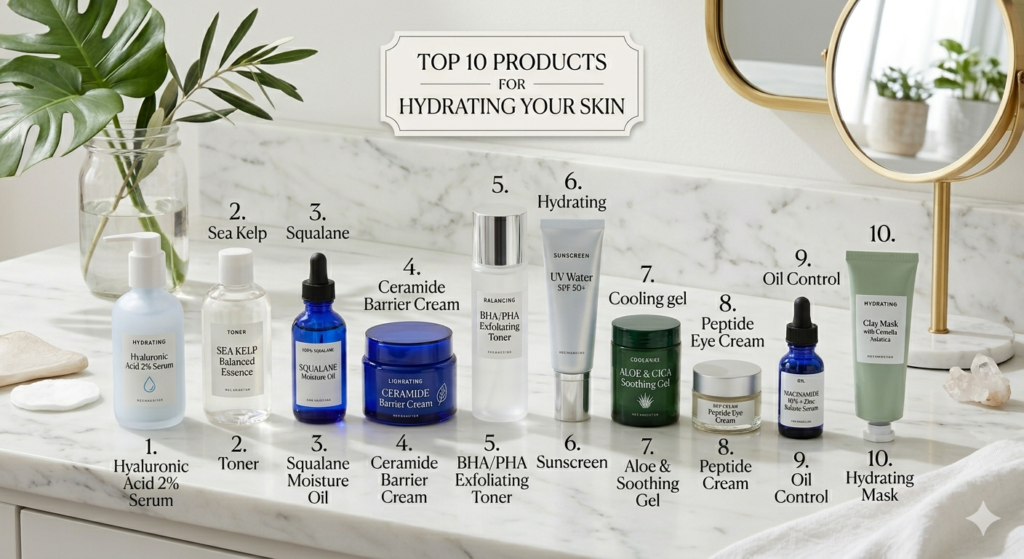
This guide covers the top 10 product types and ingredients for hydrating your skin, how they work, and how to use them effectively.
1. Hyaluronic Acid Serum
Hyaluronic acid is one of the most powerful hydrating ingredients in skincare. It can hold up to 1,000 times its weight in water.
Benefits
- Deep hydration
- Plumps fine lines
- Smooths skin texture
- Improves elasticity
How it works
It draws moisture from the environment into the skin and keeps it there.
Best for
- Dry skin
- Dehydrated skin
- Aging skin
- Oily but dehydrated skin
2. Glycerin-Based Moisturizer
Glycerin is a humectant that pulls water into the skin and helps maintain moisture balance.
Benefits
- Long-lasting hydration
- Softens skin
- Strengthens skin barrier
Why it’s important
It works well even in low humidity environments.
3. Ceramide Moisturizing Cream
Ceramides are lipids that naturally exist in your skin barrier. They help lock moisture in and protect against damage.
Benefits
- Repairs skin barrier
- Reduces dryness
- Prevents moisture loss
- Soothes irritation
Best for
- Extremely dry skin
- Sensitive skin
- Eczema-prone skin
4. Squalane Oil
Squalane is a lightweight, non-greasy oil that mimics your skin’s natural sebum.
Benefits
- Seals in moisture
- Softens skin
- Improves elasticity
- Non-comedogenic (won’t clog pores)
Best for
- Dry skin
- Combination skin
- Sensitive skin
5. Niacinamide Serum
Niacinamide is a multi-functional ingredient that helps improve hydration and skin barrier function.
Benefits
- Reduces water loss
- Improves skin texture
- Controls oil balance
- Reduces redness
Best for
- Oily skin
- Acne-prone skin
- Combination skin
6. Aloe Vera Gel
Aloe vera is a natural soothing and hydrating ingredient.
Benefits
- Instant cooling effect
- Hydrates and soothes irritation
- Reduces redness
Best for
- Sensitive skin
- Sunburned skin
- Inflamed skin
7. Hydrating Toner
Hydrating toners prepare the skin to absorb moisture better.
Benefits
- Boosts hydration levels
- Refreshes skin
- Prepares skin for serums
Key ingredients
- Rose water
- Hyaluronic acid
- Glycerin
8. Sleeping Mask (Overnight Hydration)
Sleeping masks provide intense hydration while you sleep.
Benefits
- Deep overnight moisture
- Repairs skin barrier
- Improves glow
Best for
- Very dry skin
- Dull skin
- Dehydrated skin
9. Sheet Masks
Sheet masks deliver concentrated hydration directly into the skin.
Benefits
- Instant hydration boost
- Cooling effect
- Improves skin softness
Best for
- Quick hydration fix
- Special occasions
- Weekly skincare routine
10. Hydrating Sunscreen
Many people forget that sunscreen can also hydrate the skin.
Benefits
- Protects from UV damage
- Prevents moisture loss
- Reduces premature aging
Key ingredients
- Hyaluronic acid
- Glycerin
- Aloe vera
SPF recommendation
- SPF 30 or higher
Simple Hydrating Skincare Routine
Morning
- Gentle cleanser
- Hyaluronic acid serum
- Moisturizer
- Hydrating sunscreen
Night
- Cleanser
- Hydrating toner
- Serum (niacinamide or HA)
- Moisturizer
- Sleeping mask (optional)
Lifestyle Tips for Better Skin Hydration
- Drink enough water daily
- Avoid hot showers
- Use a humidifier in dry weather
- Eat healthy fats (nuts, fish, seeds)
- Avoid over-cleansing the skin
Common Mistakes That Cause Dry Skin
- Using harsh cleansers
- Skipping moisturizer
- Over-exfoliating
- Not using sunscreen
- Drinking too little water
External Resources
American Academy of Dermatology
AAD Dry Skin Care Tips
Mayo Clinic Skin Hydration Guide
Mayo Clinic Skin Care Information
Healthline Hydration Skincare Guide
Healthline Skin Hydration Tips
WebMD Skin Moisturizing Guide
WebMD Skin Hydration Info
Frequently Asked Questions (FAQs)
What is the best ingredient for skin hydration?
Hyaluronic acid and glycerin are the most effective hydrating ingredients.
How often should I hydrate my skin?
Twice daily—morning and night.
Can oily skin need hydration?
Yes. Oily skin can still be dehydrated.
What is the fastest way to hydrate skin?
Use hyaluronic acid serum and moisturizer together.
Does drinking water improve skin hydration?
Yes, but skincare is still necessary.
Are face oils good for hydration?
Yes, they help seal moisture into the skin.
Can sunscreen dry out skin?
Not if you use hydrating sunscreen formulas.
How long does it take to see hydration results?
Usually within a few days of consistent use.
Can over-washing cause dry skin?
Yes, it strips natural oils.
What is the best moisturizer for dry skin?
Ceramide-rich creams work best.
Are sheet masks effective?
Yes, but results are temporary without routine care.
Can humid weather affect hydration?
Yes, humidity can improve skin moisture levels.
Is aloe vera good for hydration?
Yes, it soothes and hydrates the skin.
Can dehydration cause wrinkles?
Yes, dehydrated skin looks more aged.
Do I need different products for day and night?
Yes, sunscreen for day and richer creams at night are best.
Final Thoughts
Hydrated skin is the foundation of healthy, glowing, and youthful-looking skin. The best hydration routine includes a combination of humectants like hyaluronic acid and glycerin, barrier-repair ingredients like ceramides, and sealing agents like squalane and moisturizers.
Consistency is key. With daily use of hydrating products and healthy lifestyle habits, your skin can become softer, smoother, and more radiant over time.