
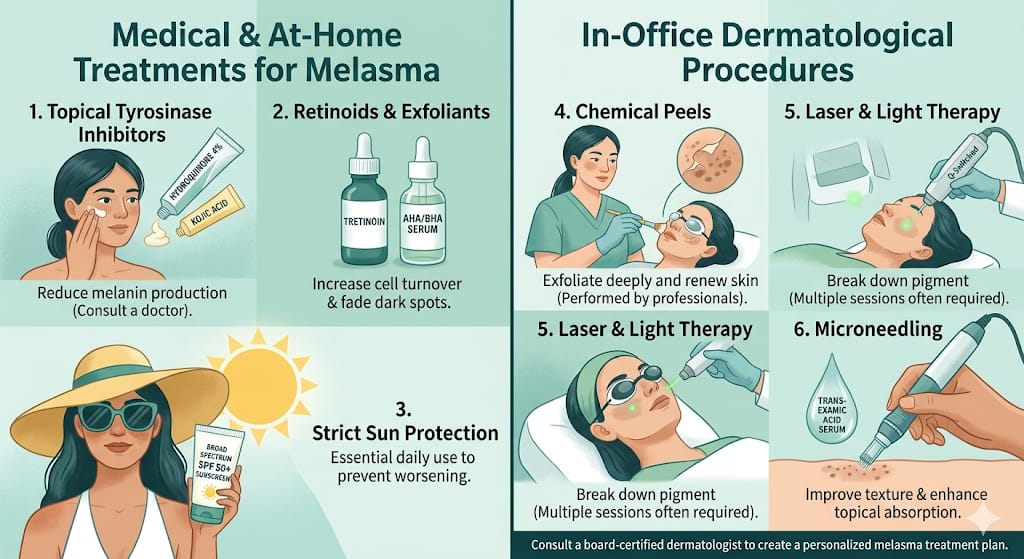
Melasma is one of the most common and frustrating skin pigmentation conditions affecting millions of people worldwide. It appears as dark, discolored patches on the skin, most commonly on the face. Although melasma is harmless, it can significantly affect confidence and emotional well-being due to its persistent and visible nature.
Melasma often develops gradually and may become more noticeable after sun exposure, hormonal changes, pregnancy, or certain medications. Many people struggle to find effective treatments because melasma can be stubborn and may return even after improvement.
The good news is that with the right skincare routine, sun protection, medical treatments, and lifestyle adjustments, melasma can often be managed successfully. Understanding the causes and treatment options is essential for improving skin tone and preventing future flare-ups.
In this comprehensive guide, you will learn everything about melasma, including its causes, symptoms, types, treatments, professional procedures, skincare ingredients, prevention tips, and the best daily routine for clearer and healthier-looking skin.
What Is Melasma?
Melasma is a common skin condition that causes brown, gray-brown, or bluish patches to appear on the skin.
It usually develops on areas frequently exposed to the sun, including:
- Cheeks
- Forehead
- Nose
- Upper lip
- Chin
- Jawline
Melasma occurs due to excess melanin production in the skin.
Melanin is the pigment responsible for skin color.
Who Gets Melasma?
Melasma affects people of all skin types, but it is more common in:
- Women
- People with medium to darker skin tones
- Individuals living in sunny climates
- Pregnant women
- People with a family history of melasma
Women account for the majority of melasma cases.
Types of Melasma
Melasma can be categorized based on the depth of pigmentation.
Epidermal Melasma
Pigment is located in the upper skin layer.
Characteristics include:
- Brown patches
- Well-defined borders
- Better response to treatment
Dermal Melasma
Pigment is deeper within the skin.
Characteristics include:
- Grayish or bluish color
- Less defined borders
- More difficult to treat
Mixed Melasma
This is the most common type and includes both epidermal and dermal pigmentation.
Causes of Melasma
Several factors contribute to melasma development.
Sun Exposure
Ultraviolet radiation is one of the biggest triggers of melasma.
UV rays stimulate melanocytes, the cells responsible for pigment production.
Even small amounts of sun exposure can worsen melasma.
Hormonal Changes
Hormones strongly influence melasma.
This is why melasma is often associated with:
- Pregnancy
- Birth control pills
- Hormone replacement therapy
Melasma during pregnancy is sometimes called “the mask of pregnancy.”
Genetics
A family history of melasma increases the likelihood of developing it.
Heat Exposure
Heat can stimulate pigment production and worsen melasma.
Certain Medications
Some medications increase photosensitivity and pigmentation risk.
Examples include:
- Hormonal medications
- Certain antibiotics
- Anti-seizure drugs
Skin Irritation
Aggressive skincare products and harsh treatments may trigger inflammation and worsen pigmentation.
Stress
Stress may contribute to hormonal fluctuations that affect melasma.
Symptoms of Melasma
Melasma usually causes:
- Flat dark patches
- Symmetrical pigmentation
- Uneven skin tone
- Slow progression
The condition is painless and non-itchy.
Common Areas Affected by Melasma
Melasma commonly appears on:
- Forehead
- Cheeks
- Nose
- Upper lip
- Chin
Less commonly, it may appear on:
- Neck
- Forearms
Is Melasma Permanent?
Melasma can be long-lasting, but many people experience significant improvement with treatment.
Some cases fade naturally, especially pregnancy-related melasma.
However, melasma often returns if triggers are not controlled.
Best Treatments for Melasma
Treating melasma usually requires a combination approach.
Sun Protection
Sun protection is the most important part of melasma treatment.
Without proper sun protection, other treatments may fail.
Use Broad-Spectrum Sunscreen
Choose SPF 30 or higher with protection against:
- UVA rays
- UVB rays
- Visible light
Tinted mineral sunscreens containing iron oxides may provide additional protection against visible light.
Reapply Sunscreen
Reapply every two hours when outdoors.
Wear Protective Clothing
Helpful items include:
- Wide-brimmed hats
- Sunglasses
- UV-protective clothing
Learn more about sun protection:
American Academy of Dermatology Sun Protection Guide
Topical Treatments for Melasma
Several prescription and over-the-counter products can improve pigmentation.
Hydroquinone
Hydroquinone is considered one of the most effective treatments for melasma.
It works by reducing melanin production.
Benefits include:
- Fading dark patches
- Brightening skin tone
- Reducing discoloration
Hydroquinone is usually used short term under medical supervision.
Retinoids
Retinoids increase cell turnover and improve pigment distribution.
Benefits include:
- Smoother texture
- Improved skin renewal
- Better penetration of other treatments
Common retinoids include:
- Retinol
- Tretinoin
- Adapalene
Azelaic Acid
Azelaic acid is a gentle treatment that reduces pigmentation and inflammation.
Benefits include:
- Brightening the skin
- Reducing redness
- Helping acne-prone skin
Kojic Acid
Kojic acid inhibits melanin production and may improve dark patches.
Vitamin C
Vitamin C is an antioxidant that helps brighten skin and protect against free radical damage.
Benefits include:
- More even tone
- Improved radiance
- Collagen support
Niacinamide
Niacinamide helps reduce pigment transfer within the skin.
Benefits include:
- Improved skin barrier
- Reduced redness
- Brighter complexion
Tranexamic Acid
Tranexamic acid has become increasingly popular for melasma treatment.
It may help reduce pigmentation and prevent recurrence.
Cysteamine Cream
Cysteamine is a newer depigmenting ingredient used for stubborn pigmentation.
Triple Combination Creams
Some prescription creams combine:
- Hydroquinone
- Tretinoin
- Corticosteroids
These combination treatments can be highly effective under dermatologist supervision.
Professional Treatments for Melasma
Professional procedures can improve stubborn melasma.
However, aggressive treatments may worsen pigmentation if not performed carefully.
Chemical Peels
Chemical peels exfoliate the skin and reduce pigmentation.
Common peels include:
- Glycolic acid peels
- Salicylic acid peels
- Lactic acid peels
- TCA peels
Benefits include:
- Brighter skin
- More even tone
- Improved texture
Microneedling
Microneedling may help improve melasma when combined with topical treatments.
Benefits include:
- Enhanced product penetration
- Collagen stimulation
- Improved skin texture
Laser Treatments
Laser therapy for melasma requires caution.
Some lasers may worsen pigmentation in darker skin tones.
Common options include:
- Fractional lasers
- Q-switched lasers
- Pico lasers
Laser treatments should only be performed by experienced professionals.
Intense Pulsed Light
IPL therapy may help some cases of pigmentation but is not suitable for everyone.
Oral Treatments for Melasma
In some cases, dermatologists prescribe oral medications.
Oral Tranexamic Acid
Oral tranexamic acid has shown promising results for melasma treatment.
It works by affecting pathways involved in pigmentation.
Medical supervision is required due to possible side effects.
Best Daily Skincare Routine for Melasma
Consistency is essential for managing melasma.
Morning Routine
Gentle Cleanser
Use a mild cleanser that does not irritate the skin.
Antioxidant Serum
Vitamin C or niacinamide can help protect the skin.
Moisturizer
Hydrated skin heals more effectively.
Sunscreen
Apply generous SPF daily.
Evening Routine
Cleanser
Remove sunscreen and impurities gently.
Pigment Treatment
Apply hydroquinone, azelaic acid, or retinoid as directed.
Moisturizer
Use a soothing moisturizer to reduce irritation.
Ingredients to Avoid With Melasma
Certain products may worsen pigmentation.
Avoid:
- Harsh scrubs
- Over-exfoliation
- Fragranced products
- Irritating acids used excessively
- Unprotected sun exposure
Melasma During Pregnancy
Pregnancy-related melasma is extremely common.
Hormonal changes increase melanin production.
Safe pregnancy options may include:
- Sunscreen
- Azelaic acid
- Gentle skincare
- Protective clothing
Pregnant women should consult a doctor before using active ingredients.
Melasma and Skin Tone
Melasma can affect all skin tones but is more common in medium to deep skin tones.
Darker skin contains more active melanocytes, making pigmentation more likely.
Emotional Impact of Melasma
Melasma can affect self-confidence and emotional well-being.
Visible facial pigmentation may lead to:
- Frustration
- Embarrassment
- Anxiety
- Low self-esteem
Supportive skincare and realistic expectations are important.
How Long Does Melasma Treatment Take?
Melasma treatment requires patience.
Visible improvement may take:
- Several weeks
- Several months
Consistency and sun protection are essential.
Can Melasma Return?
Yes, melasma commonly recurs.
Triggers such as sun exposure and hormones may reactivate pigmentation.
Maintenance skincare often helps reduce recurrence.
Foods That Support Healthy Skin
A healthy diet supports skin repair and overall skin health.
Vitamin C Foods
Vitamin C supports collagen production and antioxidant protection.
Sources include:
- Oranges
- Strawberries
- Kiwi
- Bell peppers
Antioxidant-Rich Foods
Antioxidants help protect against oxidative stress.
Good options include:
- Berries
- Green tea
- Spinach
- Tomatoes
Omega-3 Fatty Acids
Omega-3s help reduce inflammation.
Sources include:
- Salmon
- Chia seeds
- Walnuts
Water
Hydration supports healthy skin function.
Lifestyle Tips for Managing Melasma
Avoid Excessive Sun Exposure
Sunlight is the biggest trigger for melasma.
Wear Hats Outdoors
Physical protection helps prevent pigmentation.
Avoid Picking the Skin
Inflammation can worsen discoloration.
Manage Stress
Stress management may help hormonal balance.
Use Gentle Skincare
Protecting the skin barrier is important.
Common Myths About Melasma
Myth 1: Melasma Is Just Dirt or Poor Hygiene
Melasma is a pigmentation condition unrelated to cleanliness.
Myth 2: Melasma Can Be Cured Overnight
Melasma treatment takes time and consistency.
Myth 3: Only Women Get Melasma
Men can also develop melasma.
Myth 4: Sunscreen Is Optional Indoors
Visible light and window exposure may still affect pigmentation.
Myth 5: Stronger Treatments Always Work Better
Aggressive treatments may worsen melasma.
Best Ingredients for Melasma
Hydroquinone
Helps reduce melanin production.
Azelaic Acid
Brightens and calms the skin.
Retinoids
Improve cell turnover.
Vitamin C
Provides antioxidant support.
Niacinamide
Helps improve tone and barrier health.
Tranexamic Acid
Targets pigment pathways.
Most Popular Melasma Treatment Ingredients
Melasma vs Hyperpigmentation
Melasma is a specific type of hyperpigmentation.
Other forms of pigmentation include:
- Post-inflammatory hyperpigmentation
- Sun spots
- Age spots
Melasma is usually more symmetrical and hormonally influenced.
Can Natural Remedies Help Melasma?
Some natural remedies may mildly support skin brightness.
Aloe Vera
May soothe and hydrate the skin.
Licorice Extract
Contains compounds that may reduce pigmentation.
Green Tea
Provides antioxidant protection.
Natural remedies alone are usually insufficient for significant melasma improvement.
Importance of Patience in Melasma Treatment
Melasma management requires long-term consistency.
Improvement usually happens gradually.
Stopping sunscreen or treatment too early may cause relapse.
When to See a Dermatologist
Consult a dermatologist if:
- Pigmentation worsens rapidly
- Over-the-counter products fail
- You want prescription treatments
- Irritation develops
- Pigmentation affects confidence significantly
Professional guidance helps reduce the risk of worsening pigmentation.
Final Thoughts
Melasma is a common but manageable pigmentation condition that affects millions of people worldwide. Although it can be stubborn and recurrent, many effective treatments are available to improve skin tone and reduce dark patches.
The foundation of melasma treatment is daily sun protection combined with gentle, consistent skincare. Ingredients such as hydroquinone, retinoids, azelaic acid, vitamin C, and tranexamic acid can significantly improve pigmentation over time.
Professional treatments like chemical peels, microneedling, and laser therapy may provide additional benefits when performed carefully by experienced professionals.
Most importantly, patience and consistency are essential. Melasma rarely improves overnight, but long-term care and protection can help achieve healthier, brighter, and more even-toned skin.
FAQs About Melasma
What causes melasma?
Melasma is commonly caused by sun exposure, hormones, genetics, and heat.
Is melasma permanent?
Melasma can improve significantly but may return if triggers are not controlled.
Which treatment works best for melasma?
Hydroquinone combined with sunscreen is considered highly effective.
Can sunscreen prevent melasma?
Sunscreen is essential for preventing worsening and recurrence.
Is melasma dangerous?
Melasma is harmless but may affect confidence and appearance.
Can men get melasma?
Yes, men can also develop melasma.
How long does melasma treatment take?
Improvement often takes several weeks to months.
Can pregnancy cause melasma?
Yes, hormonal changes during pregnancy commonly trigger melasma.
Does vitamin C help melasma?
Vitamin C helps brighten skin and provide antioxidant protection.
Is laser treatment safe for melasma?
Lasers may help some cases but require caution because they can worsen pigmentation.
Can melasma disappear naturally?
Some pregnancy-related melasma may fade after childbirth.
Is melasma contagious?
No, melasma is not contagious.
Does stress worsen melasma?
Stress may contribute indirectly through hormonal effects.
Can makeup cover melasma?
Yes, many people use makeup and color correctors to conceal pigmentation.
When should I see a dermatologist?
Consult a dermatologist if melasma becomes severe or difficult to manage.
External Resources
American Academy of Dermatology Melasma Guide
Cleveland Clinic Melasma Information
National Center for Biotechnology Information
Top Ingredients for Melasma Treatment
Comparison of commonly used melasma treatment ingredients based on overall effectiveness.
| ingredient | effectiveness |
|---|---|
| Hydroquinone | 10 |
| Retinoids | 9 |
| Tranexamic Acid | 8 |
| Azelaic Acid | 8 |
| Vitamin C | 7 |