
Aging is a natural process, but modern skincare has made it possible to maintain healthier, smoother, brighter, and firmer-looking skin for longer. Among all skincare products, serums are considered one of the most effective solutions for targeting signs of aging because they contain concentrated active ingredients designed to penetrate deeply into the skin.
Anti-aging serums can help improve:
- Fine lines
- Wrinkles
- Loss of firmness
- Uneven texture
- Dullness
- Hyperpigmentation
- Dryness
- Elasticity
However, choosing the right anti-aging serum can feel overwhelming because there are thousands of products available today. Some focus on hydration, while others target wrinkles, collagen production, or dark spots.
Dermatologists consistently emphasize that the most effective anti-aging ingredients include:
- Retinoids
- Vitamin C
- Hyaluronic acid
- Peptides
- Niacinamide
These ingredients are backed by extensive research and are commonly recommended by skincare experts. (The Consumer’s Guide)
This comprehensive guide explores the top 5 serums for anti-aging, how anti-aging serums work, the best ingredients for mature skin, skincare routines, common mistakes, and frequently asked questions to help you achieve healthier, younger-looking skin.
Why Serums Are Important for Anti-Aging
Serums contain concentrated active ingredients in lightweight formulations that penetrate more deeply into the skin compared to regular moisturizers.
Benefits of Anti-Aging Serums
- Improve fine lines
- Boost hydration
- Brighten dull skin
- Support collagen production
- Improve elasticity
- Reduce dark spots
- Smooth texture
Most dermatologists recommend adding at least one serum to an anti-aging skincare routine.
What Causes Skin Aging?
Understanding skin aging helps explain why certain ingredients are effective.
1. Collagen Loss
Collagen keeps the skin firm and smooth.
As people age, collagen production naturally decreases.
This contributes to:
- Wrinkles
- Sagging
- Thinner skin
2. Sun Damage
UV exposure is one of the biggest causes of premature aging.
Sun damage may lead to:
- Fine lines
- Hyperpigmentation
- Loss of elasticity
3. Dehydration
Dry skin often makes wrinkles appear more noticeable.
4. Oxidative Stress
Pollution and free radicals damage skin cells over time.
5. Lifestyle Factors
Aging may accelerate due to:
- Smoking
- Stress
- Poor sleep
- Poor diet
What Makes a Good Anti-Aging Serum?
A quality serum should contain evidence-based ingredients supported by dermatological research.
Experts often recommend formulas containing:
- Retinol
- Vitamin C
- Hyaluronic acid
- Peptides
- Niacinamide (The Consumer’s Guide)
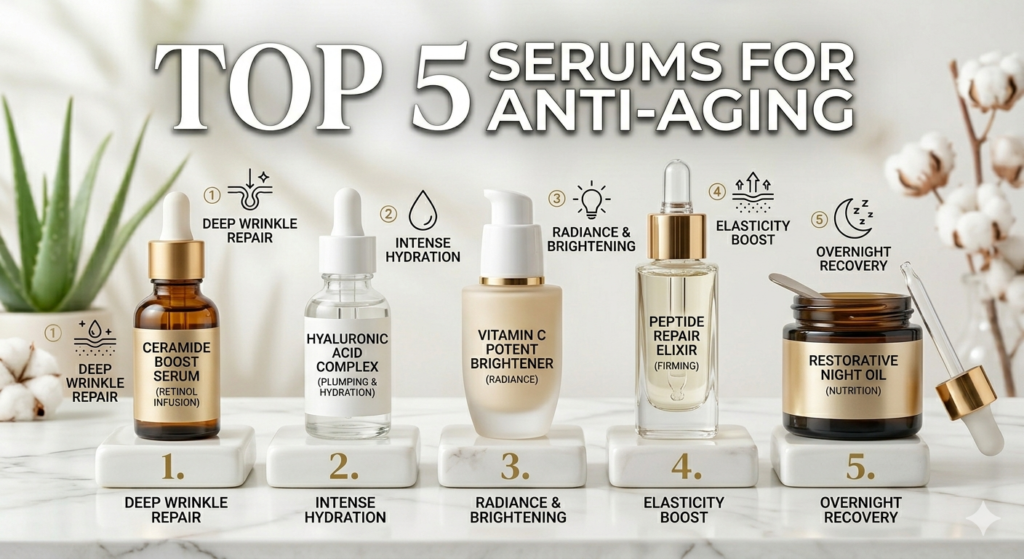
Top 5 Serums for Anti-Aging
1. Retinol Serum
Retinol remains one of the most effective anti-aging ingredients available.
Retinoids are considered the gold standard for improving wrinkles and skin texture. (Derm Spotlight)
Benefits of Retinol Serum
- Boosts collagen production
- Reduces fine lines
- Improves wrinkles
- Smooths texture
- Helps fade dark spots
- Improves skin turnover
Best For
- Fine lines
- Wrinkles
- Mature skin
- Uneven texture
Beginner Tips
Retinol may initially cause:
- Dryness
- Peeling
- Irritation
Start slowly:
- 2–3 nights weekly
Always use sunscreen during the day.
2. Vitamin C Serum
Vitamin C is one of the best antioxidant ingredients for anti-aging.
Dermatologists frequently recommend vitamin C for brightening and collagen support. (Allure)
Benefits of Vitamin C Serum
- Brightens dull skin
- Reduces hyperpigmentation
- Supports collagen production
- Protects against free radicals
- Improves skin tone
Best For
- Sun damage
- Uneven skin tone
- Dark spots
- Dull skin
How to Use
Vitamin C works best in morning skincare routines under sunscreen.
3. Hyaluronic Acid Serum
Hydration is essential for youthful-looking skin.
Hyaluronic acid helps the skin retain moisture and appear plumper. (Forbes)
Benefits of Hyaluronic Acid Serum
- Deep hydration
- Plumps fine lines
- Improves elasticity
- Smooths texture
- Lightweight moisture
Best For
- Dry skin
- Dehydrated skin
- Fine lines
- Sensitive skin
Important Tip
Apply hyaluronic acid to damp skin for best results.
4. Peptide Serum
Peptides are amino acids that help support collagen and elastin production.
Many anti-aging experts recommend peptides for improving firmness. (Vogue)
Benefits of Peptide Serum
- Supports firmness
- Improves elasticity
- Reduces wrinkles
- Strengthens skin barrier
Best For
- Sagging skin
- Mature skin
- Loss of firmness
Peptides are generally gentle and suitable for sensitive skin.
5. Niacinamide Serum
Niacinamide is one of the most versatile skincare ingredients.
Benefits of Niacinamide Serum
- Improves skin barrier
- Brightens uneven tone
- Reduces redness
- Controls oil
- Supports hydration
Best For
- Sensitive skin
- Combination skin
- Hyperpigmentation
- Early aging concerns
Niacinamide pairs well with most skincare ingredients.
How to Choose the Right Anti-Aging Serum
Different skin concerns require different ingredients.
For Wrinkles
Best ingredients:
- Retinol
- Peptides
For Dry Skin
Best ingredients:
- Hyaluronic acid
- Ceramides
For Hyperpigmentation
Best ingredients:
- Vitamin C
- Niacinamide
- Retinol
For Sensitive Skin
Best ingredients:
- Niacinamide
- Peptides
- Hyaluronic acid
For Dullness
Best ingredients:
- Vitamin C
- Glycolic acid
Best Anti-Aging Ingredients Backed by Research
Retinoids
Retinoids have the strongest research support for anti-aging benefits. (The Consumer’s Guide)
Vitamin C
Vitamin C protects the skin from oxidative damage and supports collagen production. (Allure)
Hyaluronic Acid
Hydration improves skin texture and plumpness. (Forbes)
Peptides
Peptides help maintain firmness and elasticity.
Niacinamide
Niacinamide improves barrier function and skin tone.
How to Build an Anti-Aging Skincare Routine
Morning Routine
Step 1: Gentle Cleanser
Use a non-stripping cleanser.
Step 2: Vitamin C Serum
Protects against environmental damage.
Step 3: Moisturizer
Hydration supports healthy skin.
Step 4: Sunscreen
Daily sunscreen is essential.
Dermatologists consistently emphasize sunscreen as the most important anti-aging product. (Vogue)
Night Routine
Step 1: Gentle Cleanser
Remove dirt and makeup gently.
Step 2: Retinol or Peptide Serum
Use anti-aging treatments overnight.
Step 3: Moisturizer
Repair the skin barrier while sleeping.
Why Sunscreen Matters for Anti-Aging
Sun exposure is one of the biggest causes of premature aging.
UV rays contribute to:
- Wrinkles
- Dark spots
- Sagging
- Collagen breakdown
Use:
- SPF 30 or higher
- Broad-spectrum protection
Anti-Aging for Different Skin Types
Oily Skin
Choose lightweight serums.
Best ingredients:
- Niacinamide
- Retinol
Dry Skin
Focus on hydration and barrier repair.
Best ingredients:
- Hyaluronic acid
- Peptides
Sensitive Skin
Avoid harsh exfoliants.
Best ingredients:
- Peptides
- Niacinamide
Combination Skin
Balance hydration and oil control.
Anti-Aging and Collagen Production
Collagen naturally declines with age.
Ingredients that support collagen include:
- Retinol
- Vitamin C
- Peptides
Anti-Aging and Hydration
Hydrated skin appears:
- Smoother
- Brighter
- Healthier
Hyaluronic acid is one of the best hydrating ingredients available. (Forbes)
Common Mistakes When Using Anti-Aging Serums
Using Too Many Active Ingredients
Too many strong ingredients may irritate the skin.
Skipping Sunscreen
Without sunscreen, anti-aging progress may slow significantly.
Over-Exfoliating
Excessive exfoliation damages the skin barrier.
Expecting Instant Results
Most anti-aging ingredients require weeks or months of consistent use.
Applying Products Incorrectly
Layer skincare from thinnest to thickest textures.
Lifestyle Habits That Support Youthful Skin
Sleep Well
Poor sleep increases inflammation and stress hormones.
Eat a Balanced Diet
Antioxidant-rich foods support skin health.
Stay Hydrated
Hydration improves skin appearance.
Avoid Smoking
Smoking accelerates collagen breakdown.
Manage Stress
Stress may worsen inflammation and aging signs.
Anti-Aging and Hyperpigmentation
Aging skin often develops:
- Sunspots
- Uneven tone
- Discoloration
Helpful ingredients include:
- Vitamin C
- Niacinamide
- Retinol
How Long Do Anti-Aging Serums Take to Work?
Results vary depending on:
- Ingredient strength
- Skin type
- Consistency
Many people notice improvements within:
- 4–12 weeks
Retinol often requires longer for visible wrinkle reduction.
Professional Treatments That Complement Serums
Some people combine serums with professional procedures.
Chemical Peels
Improve texture and pigmentation.
Microneedling
Stimulates collagen production.
Laser Treatments
Target wrinkles and discoloration.
Prescription Retinoids
Dermatologists may prescribe stronger retinoids for severe aging concerns.
Emotional Benefits of Healthy Skin
Healthy skin often improves:
- Confidence
- Self-esteem
- Comfort
Remember:
- Aging is natural
- Healthy skin matters more than perfection
- Consistency is key
Best Daily Habits for Healthy Aging
Keep Your Routine Simple
Complicated routines may irritate the skin.
Protect Your Skin Barrier
Healthy skin heals better and retains moisture.
Use Products Consistently
Consistency matters more than expensive products.
Listen to Your Skin
Stop products that cause excessive irritation.
Frequently Asked Questions (FAQs)
1. What is the best serum for anti-aging?
Retinol serums are often considered the gold standard for wrinkles and collagen support. (Derm Spotlight)
2. Can vitamin C reduce wrinkles?
Vitamin C supports collagen production and improves skin brightness. (Allure)
3. Is hyaluronic acid good for aging skin?
Yes. Hyaluronic acid deeply hydrates and plumps fine lines. (Forbes)
4. At what age should I start using anti-aging serums?
Many dermatologists recommend preventative skincare in the mid-20s or later. (Vogue)
5. Should I use retinol every night?
Beginners should start slowly and increase gradually.
6. Is sunscreen important for anti-aging?
Yes. Sunscreen is one of the most important anti-aging products available.
7. Can anti-aging serums remove wrinkles completely?
Serums may improve wrinkles significantly, but they cannot completely stop aging.
8. Can sensitive skin use anti-aging serums?
Yes. Gentle ingredients like niacinamide and peptides work well for sensitive skin.
9. How long does it take to see anti-aging results?
Most people notice improvement within several weeks to months.
10. Can I combine multiple serums?
Yes, but avoid overloading the skin with too many strong active ingredients.
Final Thoughts
Anti-aging serums are among the most effective skincare products for maintaining healthy, youthful-looking skin. Whether your concerns include wrinkles, dullness, dehydration, hyperpigmentation, or loss of firmness, the right serum can significantly improve skin appearance over time.
Retinol, vitamin C, hyaluronic acid, peptides, and niacinamide remain the most trusted and dermatologist-recommended ingredients because they target multiple signs of aging while supporting overall skin health. (The Consumer’s Guide)
However, consistency is more important than perfection. Results require patience, regular use, sunscreen protection, and a healthy lifestyle. Avoid overcomplicating your routine and focus on gentle, evidence-based skincare habits that support the skin barrier.
Healthy aging is not about eliminating every wrinkle. It is about maintaining strong, hydrated, radiant, and comfortable skin throughout every stage of life.
External Links & Resources
- American Academy of Dermatology – Anti-Aging Skincare Tips
- Mayo Clinic – Skin Care and Aging
- Healthline – Best Anti-Aging Ingredients Explained
- Cleveland Clinic – Wrinkles and Aging Skin Guide
- Forbes – Best Hyaluronic Acid Serums
- Vogue – Dermatologist Guide to Anti-Aging Serums
Aging is a natural process, but modern skincare has made it possible to maintain healthier, smoother, brighter, and firmer-looking skin for longer. Among all skincare products, serums are considered one of the most effective solutions for targeting signs of aging because they contain concentrated active ingredients designed to penetrate deeply into the skin.
Anti-aging serums can help improve:
- Fine lines
- Wrinkles
- Loss of firmness
- Uneven texture
- Dullness
- Hyperpigmentation
- Dryness
- Elasticity
However, choosing the right anti-aging serum can feel overwhelming because there are thousands of products available today. Some focus on hydration, while others target wrinkles, collagen production, or dark spots.
Dermatologists consistently emphasize that the most effective anti-aging ingredients include:
- Retinoids
- Vitamin C
- Hyaluronic acid
- Peptides
- Niacinamide
These ingredients are backed by extensive research and are commonly recommended by skincare experts. (The Consumer’s Guide)
This comprehensive guide explores the top 5 serums for anti-aging, how anti-aging serums work, the best ingredients for mature skin, skincare routines, common mistakes, and frequently asked questions to help you achieve healthier, younger-looking skin.
Why Serums Are Important for Anti-Aging
Serums contain concentrated active ingredients in lightweight formulations that penetrate more deeply into the skin compared to regular moisturizers.
Benefits of Anti-Aging Serums
- Improve fine lines
- Boost hydration
- Brighten dull skin
- Support collagen production
- Improve elasticity
- Reduce dark spots
- Smooth texture
Most dermatologists recommend adding at least one serum to an anti-aging skincare routine.
What Causes Skin Aging?
Understanding skin aging helps explain why certain ingredients are effective.
1. Collagen Loss
Collagen keeps the skin firm and smooth.
As people age, collagen production naturally decreases.
This contributes to:
- Wrinkles
- Sagging
- Thinner skin
2. Sun Damage
UV exposure is one of the biggest causes of premature aging.
Sun damage may lead to:
- Fine lines
- Hyperpigmentation
- Loss of elasticity
3. Dehydration
Dry skin often makes wrinkles appear more noticeable.
4. Oxidative Stress
Pollution and free radicals damage skin cells over time.
5. Lifestyle Factors
Aging may accelerate due to:
- Smoking
- Stress
- Poor sleep
- Poor diet
What Makes a Good Anti-Aging Serum?
A quality serum should contain evidence-based ingredients supported by dermatological research.
Experts often recommend formulas containing:
- Retinol
- Vitamin C
- Hyaluronic acid
- Peptides
- Niacinamide (The Consumer’s Guide)
Top 5 Serums for Anti-Aging
1. Retinol Serum
Retinol remains one of the most effective anti-aging ingredients available.
Retinoids are considered the gold standard for improving wrinkles and skin texture. (Derm Spotlight)
Benefits of Retinol Serum
- Boosts collagen production
- Reduces fine lines
- Improves wrinkles
- Smooths texture
- Helps fade dark spots
- Improves skin turnover
Best For
- Fine lines
- Wrinkles
- Mature skin
- Uneven texture
Beginner Tips
Retinol may initially cause:
- Dryness
- Peeling
- Irritation
Start slowly:
- 2–3 nights weekly
Always use sunscreen during the day.
2. Vitamin C Serum
Vitamin C is one of the best antioxidant ingredients for anti-aging.
Dermatologists frequently recommend vitamin C for brightening and collagen support. (Allure)
Benefits of Vitamin C Serum
- Brightens dull skin
- Reduces hyperpigmentation
- Supports collagen production
- Protects against free radicals
- Improves skin tone
Best For
- Sun damage
- Uneven skin tone
- Dark spots
- Dull skin
How to Use
Vitamin C works best in morning skincare routines under sunscreen.
3. Hyaluronic Acid Serum
Hydration is essential for youthful-looking skin.
Hyaluronic acid helps the skin retain moisture and appear plumper. (Forbes)
Benefits of Hyaluronic Acid Serum
- Deep hydration
- Plumps fine lines
- Improves elasticity
- Smooths texture
- Lightweight moisture
Best For
- Dry skin
- Dehydrated skin
- Fine lines
- Sensitive skin
Important Tip
Apply hyaluronic acid to damp skin for best results.
4. Peptide Serum
Peptides are amino acids that help support collagen and elastin production.
Many anti-aging experts recommend peptides for improving firmness. (Vogue)
Benefits of Peptide Serum
- Supports firmness
- Improves elasticity
- Reduces wrinkles
- Strengthens skin barrier
Best For
- Sagging skin
- Mature skin
- Loss of firmness
Peptides are generally gentle and suitable for sensitive skin.
5. Niacinamide Serum
Niacinamide is one of the most versatile skincare ingredients.
Benefits of Niacinamide Serum
- Improves skin barrier
- Brightens uneven tone
- Reduces redness
- Controls oil
- Supports hydration
Best For
- Sensitive skin
- Combination skin
- Hyperpigmentation
- Early aging concerns
Niacinamide pairs well with most skincare ingredients.
How to Choose the Right Anti-Aging Serum
Different skin concerns require different ingredients.
For Wrinkles
Best ingredients:
- Retinol
- Peptides
For Dry Skin
Best ingredients:
- Hyaluronic acid
- Ceramides
For Hyperpigmentation
Best ingredients:
- Vitamin C
- Niacinamide
- Retinol
For Sensitive Skin
Best ingredients:
- Niacinamide
- Peptides
- Hyaluronic acid
For Dullness
Best ingredients:
- Vitamin C
- Glycolic acid
Best Anti-Aging Ingredients Backed by Research
Retinoids
Retinoids have the strongest research support for anti-aging benefits. (The Consumer’s Guide)
Vitamin C
Vitamin C protects the skin from oxidative damage and supports collagen production. (Allure)
Hyaluronic Acid
Hydration improves skin texture and plumpness. (Forbes)
Peptides
Peptides help maintain firmness and elasticity.
Niacinamide
Niacinamide improves barrier function and skin tone.
How to Build an Anti-Aging Skincare Routine
Morning Routine
Step 1: Gentle Cleanser
Use a non-stripping cleanser.
Step 2: Vitamin C Serum
Protects against environmental damage.
Step 3: Moisturizer
Hydration supports healthy skin.
Step 4: Sunscreen
Daily sunscreen is essential.
Dermatologists consistently emphasize sunscreen as the most important anti-aging product. (Vogue)
Night Routine
Step 1: Gentle Cleanser
Remove dirt and makeup gently.
Step 2: Retinol or Peptide Serum
Use anti-aging treatments overnight.
Step 3: Moisturizer
Repair the skin barrier while sleeping.
Why Sunscreen Matters for Anti-Aging
Sun exposure is one of the biggest causes of premature aging.
UV rays contribute to:
- Wrinkles
- Dark spots
- Sagging
- Collagen breakdown
Use:
- SPF 30 or higher
- Broad-spectrum protection
Anti-Aging for Different Skin Types
Oily Skin
Choose lightweight serums.
Best ingredients:
- Niacinamide
- Retinol
Dry Skin
Focus on hydration and barrier repair.
Best ingredients:
- Hyaluronic acid
- Peptides
Sensitive Skin
Avoid harsh exfoliants.
Best ingredients:
- Peptides
- Niacinamide
Combination Skin
Balance hydration and oil control.
Anti-Aging and Collagen Production
Collagen naturally declines with age.
Ingredients that support collagen include:
- Retinol
- Vitamin C
- Peptides
Anti-Aging and Hydration
Hydrated skin appears:
- Smoother
- Brighter
- Healthier
Hyaluronic acid is one of the best hydrating ingredients available. (Forbes)
Common Mistakes When Using Anti-Aging Serums
Using Too Many Active Ingredients
Too many strong ingredients may irritate the skin.
Skipping Sunscreen
Without sunscreen, anti-aging progress may slow significantly.
Over-Exfoliating
Excessive exfoliation damages the skin barrier.
Expecting Instant Results
Most anti-aging ingredients require weeks or months of consistent use.
Applying Products Incorrectly
Layer skincare from thinnest to thickest textures.
Lifestyle Habits That Support Youthful Skin
Sleep Well
Poor sleep increases inflammation and stress hormones.
Eat a Balanced Diet
Antioxidant-rich foods support skin health.
Stay Hydrated
Hydration improves skin appearance.
Avoid Smoking
Smoking accelerates collagen breakdown.
Manage Stress
Stress may worsen inflammation and aging signs.
Anti-Aging and Hyperpigmentation
Aging skin often develops:
- Sunspots
- Uneven tone
- Discoloration
Helpful ingredients include:
- Vitamin C
- Niacinamide
- Retinol
How Long Do Anti-Aging Serums Take to Work?
Results vary depending on:
- Ingredient strength
- Skin type
- Consistency
Many people notice improvements within:
- 4–12 weeks
Retinol often requires longer for visible wrinkle reduction.
Professional Treatments That Complement Serums
Some people combine serums with professional procedures.
Chemical Peels
Improve texture and pigmentation.
Microneedling
Stimulates collagen production.
Laser Treatments
Target wrinkles and discoloration.
Prescription Retinoids
Dermatologists may prescribe stronger retinoids for severe aging concerns.
Emotional Benefits of Healthy Skin
Healthy skin often improves:
- Confidence
- Self-esteem
- Comfort
Remember:
- Aging is natural
- Healthy skin matters more than perfection
- Consistency is key
Best Daily Habits for Healthy Aging
Keep Your Routine Simple
Complicated routines may irritate the skin.
Protect Your Skin Barrier
Healthy skin heals better and retains moisture.
Use Products Consistently
Consistency matters more than expensive products.
Listen to Your Skin
Stop products that cause excessive irritation.
Frequently Asked Questions (FAQs)
1. What is the best serum for anti-aging?
Retinol serums are often considered the gold standard for wrinkles and collagen support. (Derm Spotlight)
2. Can vitamin C reduce wrinkles?
Vitamin C supports collagen production and improves skin brightness. (Allure)
3. Is hyaluronic acid good for aging skin?
Yes. Hyaluronic acid deeply hydrates and plumps fine lines. (Forbes)
4. At what age should I start using anti-aging serums?
Many dermatologists recommend preventative skincare in the mid-20s or later. (Vogue)
5. Should I use retinol every night?
Beginners should start slowly and increase gradually.
6. Is sunscreen important for anti-aging?
Yes. Sunscreen is one of the most important anti-aging products available.
7. Can anti-aging serums remove wrinkles completely?
Serums may improve wrinkles significantly, but they cannot completely stop aging.
8. Can sensitive skin use anti-aging serums?
Yes. Gentle ingredients like niacinamide and peptides work well for sensitive skin.
9. How long does it take to see anti-aging results?
Most people notice improvement within several weeks to months.
10. Can I combine multiple serums?
Yes, but avoid overloading the skin with too many strong active ingredients.
Final Thoughts
Anti-aging serums are among the most effective skincare products for maintaining healthy, youthful-looking skin. Whether your concerns include wrinkles, dullness, dehydration, hyperpigmentation, or loss of firmness, the right serum can significantly improve skin appearance over time.
Retinol, vitamin C, hyaluronic acid, peptides, and niacinamide remain the most trusted and dermatologist-recommended ingredients because they target multiple signs of aging while supporting overall skin health. (The Consumer’s Guide)
However, consistency is more important than perfection. Results require patience, regular use, sunscreen protection, and a healthy lifestyle. Avoid overcomplicating your routine and focus on gentle, evidence-based skincare habits that support the skin barrier.
Healthy aging is not about eliminating every wrinkle. It is about maintaining strong, hydrated, radiant, and comfortable skin throughout every stage of life.