
Eczema is one of the most common skin conditions affecting people of all ages. It can cause dry, itchy, inflamed, and irritated skin that often interferes with daily comfort and confidence. Many individuals search for gentle and effective ways to soothe eczema symptoms without relying entirely on prescription medications. Natural remedies have become increasingly popular because they may help calm inflammation, restore the skin barrier, reduce itching, and support healthier skin.
Although natural treatments may not completely cure eczema, they can play an important role in managing flare-ups and improving overall skin health. The key is understanding which remedies are beneficial, how to use them safely, and how to build a skincare and lifestyle routine that supports eczema-prone skin.
This comprehensive guide explains how to treat eczema with natural remedies, including causes, symptoms, triggers, dietary support, home treatments, skincare tips, lifestyle adjustments, and expert recommendations.
Understanding Eczema
Eczema, also known as atopic dermatitis, is a chronic inflammatory skin condition. It weakens the skin barrier, making the skin more vulnerable to dryness, irritation, allergens, and bacteria.
Common symptoms of eczema include:
- Dry skin
- Intense itching
- Red or inflamed patches
- Cracked skin
- Rough texture
- Flaking or scaling
- Swelling
- Thickened skin from scratching
Eczema can appear anywhere on the body but commonly affects:
- Hands
- Face
- Neck
- Elbows
- Knees
- Feet
The severity of eczema varies from person to person. Some people experience mild dryness while others suffer from painful flare-ups.
Causes of Eczema
Eczema develops due to a combination of genetic and environmental factors.
Common causes and triggers include:
- Family history of eczema or allergies
- Immune system dysfunction
- Dry weather
- Harsh soaps
- Stress
- Allergens
- Fragrances
- Certain fabrics
- Sweating
- Food sensitivities
- Dust mites
- Pet dander
Identifying personal triggers is essential for managing eczema effectively.
Why Natural Remedies Help Eczema
Natural remedies focus on supporting the skin barrier and reducing inflammation without using harsh chemicals.
Benefits of natural eczema remedies may include:
- Reduced itching
- Improved hydration
- Calmer skin
- Less irritation
- Better barrier protection
- Reduced redness
- Fewer flare-ups
Natural treatments work best when combined with consistent skincare habits and trigger management.
Best Natural Remedies for Eczema
Coconut Oil
Virgin coconut oil is one of the most popular natural remedies for eczema. It contains fatty acids that moisturize the skin and help reduce inflammation.
Benefits of coconut oil include:
- Deep hydration
- Antibacterial properties
- Reduced dryness
- Improved skin barrier
Apply virgin coconut oil directly to damp skin after bathing.
Choose cold-pressed, unrefined coconut oil for the best results.
Aloe Vera
Aloe vera is known for its soothing and cooling properties.
Benefits include:
- Reduced inflammation
- Relief from itching
- Improved hydration
- Skin healing support
Pure aloe vera gel can be applied directly to irritated areas.
Avoid products with alcohol or artificial fragrances.
Oatmeal Baths
Colloidal oatmeal is highly effective for calming eczema flare-ups.
Oatmeal helps:
- Reduce itching
- Soothe inflammation
- Moisturize dry skin
- Protect the skin barrier
To prepare an oatmeal bath:
- Grind plain oats into a fine powder.
- Add the powder to lukewarm bath water.
- Soak for 10 to 15 minutes.
- Pat the skin dry gently.
- Apply moisturizer immediately afterward.
Honey
Raw honey has antibacterial and anti-inflammatory properties.
Honey may help:
- Calm irritation
- Prevent infection
- Support wound healing
- Hydrate the skin
Apply a thin layer of raw honey to affected areas for short periods.
Patch-test first to avoid irritation.
Sunflower Seed Oil
Sunflower seed oil helps strengthen the skin barrier and retain moisture.
Benefits include:
- Reduced inflammation
- Improved hydration
- Enhanced skin protection
Apply gently after bathing to lock in moisture.
Shea Butter
Shea butter is rich in fatty acids and vitamins.
It helps:
- Soften dry skin
- Reduce irritation
- Improve moisture retention
- Protect the skin barrier
Use pure, fragrance-free shea butter for eczema-prone skin.
Apple Cider Vinegar
Some people use diluted apple cider vinegar to restore the skin’s acidity.
However, apple cider vinegar may irritate sensitive skin if used improperly.
If using:
- Dilute heavily with water
- Avoid open wounds
- Stop use if burning occurs
Always patch-test before applying to larger areas.
Chamomile
Chamomile has calming properties that may soothe eczema symptoms.
Chamomile can be used in:
- Compresses
- Creams
- Baths
- Herbal teas
Avoid chamomile if allergic to ragweed or related plants.
Calendula
Calendula is often used in natural skincare for its soothing effects.
Potential benefits include:
- Reduced inflammation
- Improved healing
- Relief from irritation
Use eczema-friendly calendula creams without added fragrance.
Tea Tree Oil
Tea tree oil has antibacterial properties but must be used carefully.
Never apply undiluted tea tree oil directly to eczema.
Always dilute it with a carrier oil.
Some individuals may experience irritation, so patch-testing is essential.
Wet Wrap Therapy
Wet wrap therapy is a natural technique often recommended for severe dryness.
Steps include:
- Apply moisturizer to the skin.
- Cover with damp cotton fabric.
- Add a dry layer on top.
- Leave on for several hours or overnight.
Wet wraps help:
- Improve hydration
- Reduce itching
- Calm flare-ups
Best Natural Oils for Eczema
Certain oils may support eczema-prone skin when used properly.
Jojoba Oil
Jojoba oil closely resembles the skin’s natural oils and helps moisturize without clogging pores.
Argan Oil
Argan oil contains vitamin E and antioxidants that help nourish dry skin.
Evening Primrose Oil
Evening primrose oil may support inflammation control in some individuals.
Hemp Seed Oil
Hemp seed oil contains fatty acids that support the skin barrier.
Always choose fragrance-free and pure oils.
Importance of Moisturizing Eczema-Prone Skin
Moisturizing is one of the most important parts of eczema treatment.
Dry skin worsens itching and inflammation.
The best time to moisturize is immediately after bathing.
Choose moisturizers that are:
- Fragrance-free
- Thick and creamy
- Gentle
- Hypoallergenic
Ingredients that support eczema-prone skin include:
- Ceramides
- Colloidal oatmeal
- Glycerin
- Shea butter
- Hyaluronic acid
Natural Bathing Tips for Eczema
Bathing habits significantly affect eczema symptoms.
Use Lukewarm Water
Hot water can dry out the skin and worsen itching.
Keep Baths Short
Limit bathing time to 10 to 15 minutes.
Avoid Harsh Soaps
Use gentle, fragrance-free cleansers.
Pat Skin Dry
Avoid rubbing the skin with towels.
Moisturize Immediately
Apply moisturizer within a few minutes after bathing.
Dietary Support for Eczema
Diet may influence eczema symptoms in some individuals.
Although triggers vary, certain foods may support skin health.
Anti-Inflammatory Foods
Foods rich in antioxidants and healthy fats may help reduce inflammation.
Examples include:
- Fatty fish
- Leafy greens
- Berries
- Nuts
- Seeds
- Olive oil
Probiotic Foods
Gut health may influence eczema.
Foods containing probiotics include:
- Yogurt
- Kefir
- Sauerkraut
- Kimchi
Hydration
Drinking enough water supports healthy skin.
Foods That May Trigger Eczema
Possible triggers vary between individuals.
Common triggers include:
- Dairy
- Eggs
- Soy
- Gluten
- Processed foods
- Artificial additives
Food elimination should be discussed with a healthcare professional.
Stress and Eczema
Stress is a major eczema trigger.
Stress hormones can worsen inflammation and itching.
Natural stress management methods include:
- Meditation
- Deep breathing
- Yoga
- Exercise
- Journaling
- Spending time outdoors
Improving stress management may reduce flare-ups.
Sleep and Eczema
Poor sleep can worsen eczema symptoms.
Itching often becomes more intense at night.
Tips for better sleep include:
- Keeping the bedroom cool
- Moisturizing before bed
- Wearing soft cotton clothing
- Using fragrance-free bedding products
Fabrics and Eczema
Certain fabrics may irritate eczema-prone skin.
Best fabrics include:
- Cotton
- Bamboo
- Soft breathable materials
Avoid:
- Wool
- Rough fabrics
- Tight clothing
Wash clothing with fragrance-free detergent.
Household Changes That Help Eczema
Environmental triggers often contribute to eczema flare-ups.
Helpful adjustments include:
- Using humidifiers in dry weather
- Reducing dust buildup
- Avoiding smoke exposure
- Choosing fragrance-free cleaning products
- Keeping pets out of sleeping areas if sensitive
Best Natural Ingredients for Eczema-Prone Skin
Colloidal Oatmeal
Helps calm itching and irritation.
Ceramides
Strengthen the skin barrier.
Glycerin
Draws moisture into the skin.
Aloe Vera
Provides soothing hydration.
Panthenol
Supports healing and hydration.
Calendula
Helps calm inflammation.
Ingredients to Avoid with Eczema
Some skincare ingredients may worsen symptoms.
Avoid:
- Artificial fragrance
- Alcohol-heavy products
- Harsh exfoliants
- Strong acids
- Sulfates
- Synthetic dyes
Patch-test all new products.
Natural Remedies for Eczema Itching
Itching is one of the most difficult eczema symptoms.
Natural itch relief methods include:
- Cold compresses
- Oatmeal baths
- Aloe vera gel
- Moisturizing frequently
- Wet wrap therapy
- Keeping nails short
Avoid scratching because it damages the skin barrier.
Eczema on Different Parts of the Body
Hand Eczema
Hand eczema often develops from frequent washing and irritants.
Helpful tips:
- Wear gloves during cleaning
- Use gentle soap
- Moisturize after washing
Facial Eczema
Facial eczema requires extra-gentle products.
Use:
- Fragrance-free moisturizers
- Gentle cleansers
- Minimal skincare products
Scalp Eczema
Natural scalp care may include:
- Gentle shampoos
- Tea tree oil dilution
- Coconut oil scalp treatments
Baby Eczema
Babies often develop eczema on the cheeks, arms, and legs.
Natural baby eczema care includes:
- Gentle moisturizers
- Lukewarm baths
- Soft cotton clothing
- Fragrance-free products
Consult a pediatrician before using essential oils on babies.
Eczema and Seasonal Changes
Weather changes can affect eczema symptoms.
Winter Eczema
Cold weather often increases dryness.
Winter care tips:
- Use thicker moisturizers
- Run a humidifier
- Avoid overheating indoors
Summer Eczema
Heat and sweat may trigger flare-ups.
Summer care tips:
- Wear breathable fabrics
- Shower after sweating
- Use lightweight moisturizers
Can Natural Remedies Replace Medical Treatment?
Natural remedies can help manage symptoms, but severe eczema may require medical care.
Consult a healthcare provider if:
- Symptoms become severe
- Skin becomes infected
- Sleep is disrupted
- Over-the-counter products do not help
- Eczema spreads rapidly
A dermatologist can recommend treatment options tailored to your skin.
How Long Do Natural Remedies Take to Work?
Results vary depending on:
- Severity of eczema
- Consistency of treatment
- Trigger management
- Skin sensitivity
Some people notice relief within days, while others need several weeks of consistent care.
Daily Natural Skincare Routine for Eczema
Morning Routine
- Wash with lukewarm water and gentle cleanser
- Apply soothing moisturizer
- Use sunscreen if outdoors
- Wear soft breathable clothing
Evening Routine
- Bathe briefly in lukewarm water
- Apply natural oils or moisturizer
- Use wet wraps if needed
- Keep bedroom cool and comfortable
Best Natural Habits for Managing Eczema
Stay Consistent
Consistency helps maintain skin barrier health.
Avoid Known Triggers
Track flare-ups to identify irritants.
Keep Skin Moisturized
Hydration reduces dryness and itching.
Manage Stress
Mental wellness supports skin health.
Maintain Healthy Sleep
Sleep supports healing and immune balance.
Common Mistakes When Treating Eczema Naturally
Using Too Many Remedies at Once
Introducing multiple treatments simultaneously can irritate the skin.
Using Essential Oils Incorrectly
Undiluted oils may worsen eczema.
Over-Scrubbing the Skin
Harsh exfoliation damages the skin barrier.
Ignoring Food Triggers
Certain foods may contribute to flare-ups.
Using Fragranced Products
Fragrance commonly irritates eczema-prone skin.
Best Supplements for Eczema Support
Some supplements may support skin health.
Possible options include:
- Omega-3 fatty acids
- Vitamin D
- Probiotics
- Zinc
Speak with a healthcare provider before starting supplements.
Emotional Impact of Eczema
Eczema affects more than physical skin health.
People with eczema may experience:
- Anxiety
- Embarrassment
- Sleep disruption
- Low self-esteem
Support from healthcare professionals, family, and communities can help improve emotional well-being.
External Resources for Eczema Support
National Eczema Association
https://nationaleczema.org
American Academy of Dermatology
https://www.aad.org
Mayo Clinic Eczema Information
https://www.mayoclinic.org
Healthline Eczema Guide
https://www.healthline.com
WebMD Eczema Overview
https://www.webmd.com
Cleveland Clinic Eczema Resources
https://my.clevelandclinic.org
National Institutes of Health
https://www.nih.gov
Frequently Asked Questions About Eczema and Natural Remedies
What is the main cause of eczema?
Eczema is caused by a combination of genetics, immune system dysfunction, and environmental triggers.
Can eczema be cured naturally?
There is currently no permanent cure for eczema, but natural remedies may help manage symptoms and reduce flare-ups.
Is coconut oil good for eczema?
Yes. Virgin coconut oil may help moisturize and protect eczema-prone skin.
Are oatmeal baths effective for eczema?
Yes. Colloidal oatmeal baths are commonly used to soothe itching and inflammation.
Does stress worsen eczema?
Yes. Stress is a common trigger for eczema flare-ups.
What foods should people with eczema avoid?
Possible triggers may include dairy, eggs, soy, and processed foods, but triggers vary by individual.
Can aloe vera help eczema?
Aloe vera may soothe irritated skin and provide hydration.
Is eczema contagious?
No. Eczema is not contagious.
How often should eczema-prone skin be moisturized?
Most people benefit from moisturizing at least twice daily.
Are essential oils safe for eczema?
Some essential oils may irritate eczema-prone skin and should always be diluted.
Can weather affect eczema?
Yes. Cold weather, heat, and humidity changes can trigger symptoms.
Is scratching eczema harmful?
Yes. Scratching damages the skin and increases infection risk.
What soap is best for eczema?
Fragrance-free and gentle cleansers are best for eczema-prone skin.
Can probiotics help eczema?
Some research suggests probiotics may support gut and skin health.
What fabric is best for eczema?
Soft cotton and breathable fabrics are usually best.
Is sunlight good for eczema?
Moderate sunlight may help some people, but excessive sun exposure can irritate the skin.
Should people with eczema use hot water?
No. Hot water can dry out the skin and worsen symptoms.
How long do eczema flare-ups last?
Flare-ups vary from person to person and may last days or weeks.
Can humidifiers help eczema?
Yes. Humidifiers may help reduce dryness in dry environments.
When should someone see a doctor for eczema?
Medical care is important if eczema becomes severe, infected, or difficult to manage.
Final Thoughts
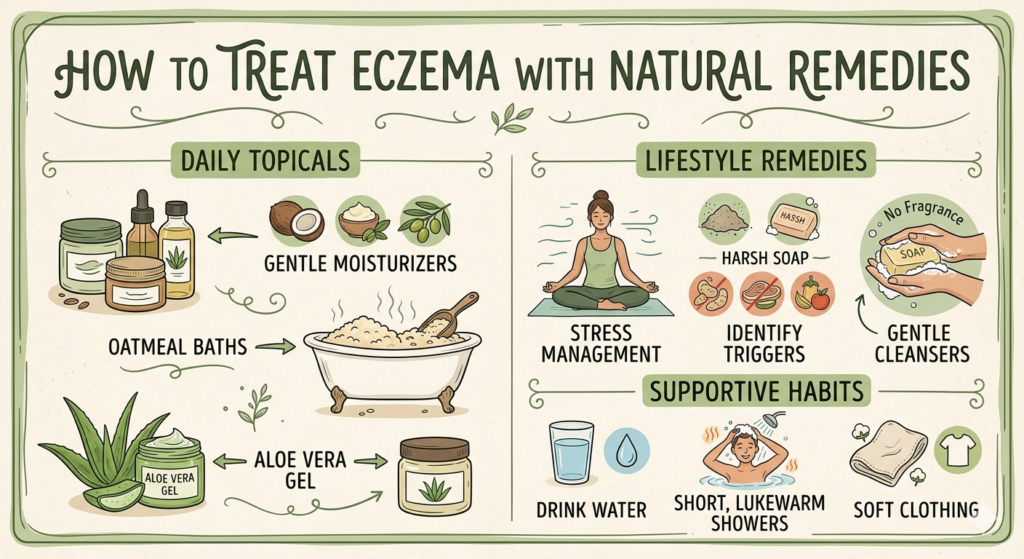
Treating eczema naturally requires patience, consistency, and a gentle approach to skincare and lifestyle habits. Natural remedies such as coconut oil, oatmeal baths, aloe vera, shea butter, and stress management techniques can help soothe symptoms and support healthier skin. The goal is not simply to reduce itching temporarily but to strengthen the skin barrier and prevent future flare-ups.
Every person’s skin is different, so finding the right combination of remedies may take time. Avoid harsh products, moisturize consistently, identify triggers, and maintain healthy daily habits that support skin healing. Natural eczema management works best when combined with medical guidance when needed.
With the right care and routine, many people with eczema can experience calmer, healthier, and more comfortable skin over time.