Mature skin has unique needs that change over time due to the natural aging process. As skin ages, it gradually loses collagen, elasticity, hydration, and its ability to repair itself quickly. This can lead to fine lines, wrinkles, sagging, dryness, uneven tone, and a dull complexion.
However, mature skin is not about “damage” or “decline”—it is simply skin that requires smarter care, better nourishment, and consistent protection. With the right skincare routine, mature skin can remain healthy, radiant, firm, and deeply hydrated at every age.
This guide explains the best skincare routine for mature skin, including causes of aging, essential ingredients, morning and night routines, lifestyle habits, professional treatments, and frequently asked questions.
What Is Mature Skin?
Mature skin generally refers to skin that shows visible signs of aging, often starting in the late 30s to 40s and beyond. These changes include:
- Fine lines and wrinkles
- Loss of firmness
- Reduced elasticity
- Dryness or dehydration
- Uneven skin tone
- Thinner skin texture
- Slower healing
Mature skin is not a skin type—it is a skin condition that evolves with age.
What Causes Skin Aging?
Several internal and external factors contribute to skin aging.
Natural Aging (Intrinsic Aging)
This is genetically driven aging that happens over time:
- Reduced collagen production
- Slower cell turnover
- Decreased oil production
- Thinner skin structure
Sun Damage (Photoaging)
UV exposure is the biggest cause of premature and mature skin aging.
Effects include:
- Wrinkles
- Dark spots
- Sagging
- Loss of elasticity
Lifestyle Factors
- Smoking
- Poor diet
- Stress
- Lack of sleep
- Alcohol consumption
Environmental Damage
- Pollution
- Free radicals
- Harsh weather
Hormonal Changes
Especially in women during menopause:
- Skin becomes drier
- Collagen drops rapidly
- Elasticity reduces
Key Goals for Mature Skin Care
A good mature skin routine focuses on:
- Hydration
- Collagen support
- Barrier repair
- Protection from sun damage
- Brightening uneven tone
- Gentle renewal
Best Ingredients for Mature Skin
Retinol (Vitamin A)
One of the most powerful anti-aging ingredients.
Benefits:
- Reduces wrinkles
- Boosts collagen
- Improves texture
- Fades pigmentation
Hyaluronic Acid
Deep hydration support.
Benefits:
- Plumps skin
- Reduces dryness lines
- Improves elasticity
Vitamin C
Antioxidant protection.
Benefits:
- Brightens skin
- Fights free radicals
- Boosts collagen
Peptides
Support skin structure.
Benefits:
- Improve firmness
- Strengthen skin barrier
Niacinamide
Multi-functional skin support.
Benefits:
- Reduces redness
- Improves tone
- Strengthens barrier
Ceramides
Essential for barrier repair.
Benefits:
- Prevent moisture loss
- Improve skin resilience
Squalane
Mimics natural skin oils.
Benefits:
- Deep nourishment
- Softens skin
- Prevents dryness
Sunscreen (Most Important Step)
Prevents further aging.
Benefits:
- Protects collagen
- Prevents dark spots
- Reduces wrinkles
Best Skincare Routine for Mature Skin
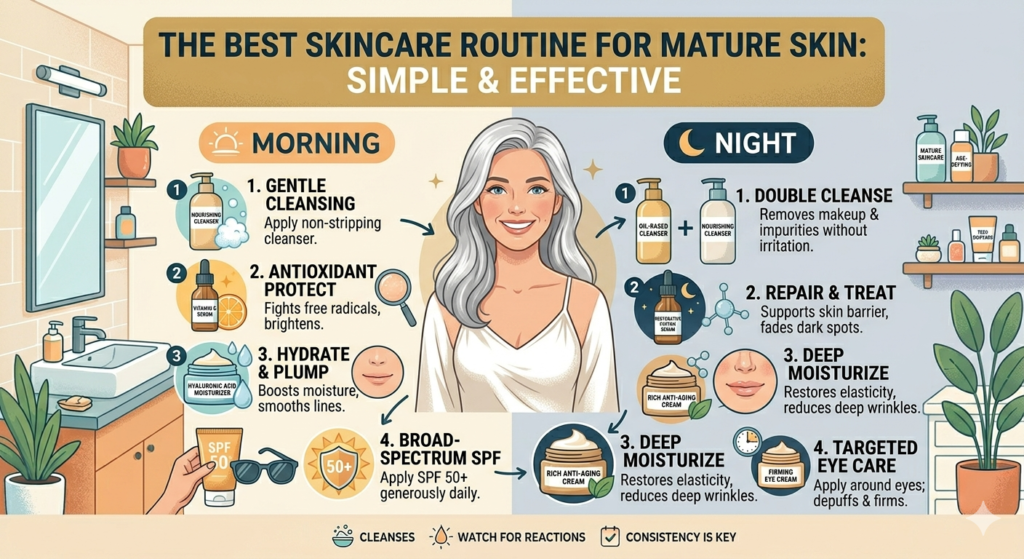
Morning Routine
Step 1: Gentle Cleanser
Use a non-stripping cleanser to avoid dryness.
Step 2: Vitamin C Serum
Protects against environmental damage and brightens skin.
Step 3: Hydrating Serum (Hyaluronic Acid)
Adds moisture and plumps skin.
Step 4: Moisturizer
Locks in hydration and strengthens barrier.
Step 5: Sunscreen (SPF 30+)
The most critical step for anti-aging.
Night Routine
Step 1: Cleanser
Removes makeup, sunscreen, and impurities.
Step 2: Retinol (2–4 times weekly)
Encourages cell turnover and collagen production.
Step 3: Hydrating Serum
Restores moisture overnight.
Step 4: Rich Moisturizer
Supports repair and nourishment.
Step 5: Facial Oil (Optional)
Seals in hydration for very dry skin.
Weekly Skincare Additions
Exfoliation (1–2 times per week)
Helps remove dead skin cells.
Best ingredients:
- Lactic acid
- Glycolic acid
- PHAs
Hydrating Masks
Boost moisture levels and glow.
Eye Creams for Mature Skin
The under-eye area is thinner and more delicate.
Best ingredients:
- Peptides
- Caffeine
- Hyaluronic acid
- Retinol (low strength)
Lifestyle Tips for Mature Skin
Eat Antioxidant-Rich Foods
- Berries
- Leafy greens
- Nuts
- Fish
Stay Hydrated
Water supports skin elasticity.
Sleep Well
Sleep is essential for skin repair.
Manage Stress
Reduces cortisol-related aging.
Avoid Smoking
Smoking accelerates wrinkles and sagging.
Limit Alcohol
Dehydrates skin and weakens barrier.
Exercise Regularly
Improves blood flow and skin glow.
Common Mistakes in Mature Skincare
Using Harsh Cleansers
Strips natural oils and worsens dryness.
Skipping Sunscreen
Accelerates aging significantly.
Over-Exfoliating
Damages already fragile skin.
Using Too Many Actives
Can cause irritation.
Not Moisturizing Enough
Leads to dryness and wrinkles.
Professional Treatments for Mature Skin
Chemical Peels
Improve texture and brightness.
Microneedling
Stimulates collagen production.
Laser Therapy
Reduces wrinkles and pigmentation.
Botox
Reduces dynamic wrinkles.
Dermal Fillers
Restore lost volume.
Consult a dermatologist before procedures.
How Long Does It Take to See Results?
- Hydration improvement: days
- Glow improvement: 1–2 weeks
- Texture improvement: 3–6 weeks
- Wrinkle reduction: 2–3 months
Signs Your Routine Is Working
- Smoother skin
- Brighter complexion
- Improved firmness
- Reduced dryness
- More even tone
Prevention Tips for Long-Term Skin Health
- Use sunscreen daily
- Start anti-aging early
- Avoid smoking and stress
- Follow consistent skincare
- Eat a healthy diet
External Resources
American Academy of Dermatology
AAD Aging Skin Care Guide
Mayo Clinic Skin Aging Information
Mayo Clinic Skin Care Aging
Healthline Mature Skin Care Guide
Healthline Anti-Aging Skincare
WebMD Wrinkle Treatment Guide
WebMD Wrinkle Care
CeraVe Aging Skin Tips
CeraVe Skin Barrier Aging Care
Frequently Asked Questions (FAQs)
What is the best skincare routine for mature skin?
A routine with cleanser, vitamin C, moisturizer, retinol, and sunscreen.
When does skin become mature?
Usually in the late 30s or 40s.
Can mature skin look younger?
Yes, with proper skincare and lifestyle habits.
Is retinol safe for mature skin?
Yes, it is highly recommended.
How often should mature skin be moisturized?
Twice daily or more if needed.
Does sunscreen really prevent aging?
Yes, it is the most important anti-aging step.
Can wrinkles be reversed?
They can be reduced but not completely removed naturally.
Is hyaluronic acid good for mature skin?
Yes, it improves hydration and plumpness.
Can diet affect skin aging?
Yes, healthy foods support skin health.
Is expensive skincare necessary?
No, ingredients matter more than price.
Can stress age your skin?
Yes, chronic stress accelerates aging.
Should mature skin exfoliate?
Yes, but gently and not too often.
What is the biggest cause of skin aging?
Sun exposure.
Can mature skin still break out?
Yes, it is still possible.
When should I see a dermatologist?
For severe wrinkles, pigmentation, or skin concerns.
Final Thoughts
The best skincare routine for mature skin focuses on hydration, protection, collagen support, and gentle renewal. Ingredients like retinol, vitamin C, hyaluronic acid, peptides, and ceramides play a key role in maintaining healthy, youthful-looking skin.
Consistency is more important than complexity. With daily care, sun protection, and healthy lifestyle habits, mature skin can remain radiant, firm, and beautifully healthy at every stage of life.