
Retinol has become one of the most talked-about skincare ingredients in the beauty and dermatology world. From anti-aging creams to dermatologist-recommended serums, retinol is widely recognized for its ability to improve wrinkles, fine lines, uneven skin texture, acne, and dullness. People looking for smoother, firmer, and younger-looking skin often turn to retinol because of its scientifically proven results.
Wrinkles are a natural part of aging, but environmental stress, sun exposure, lifestyle habits, and reduced collagen production can accelerate their appearance. Retinol helps address these issues by increasing cell turnover, stimulating collagen production, and improving overall skin texture. When used correctly, retinol can significantly reduce visible signs of aging and support healthier skin over time.
This complete guide explains the benefits of retinol for wrinkles, how it works, the best ways to use it, possible side effects, skincare routines, expert tips, myths, precautions, and frequently asked questions.
What Is Retinol?
Retinol is a derivative of vitamin A. It belongs to a group of compounds called retinoids, which are widely used in skincare and dermatology.
Retinol works by increasing skin cell turnover and stimulating collagen production. It encourages the skin to renew itself more efficiently, helping reduce wrinkles, fine lines, acne, and discoloration.
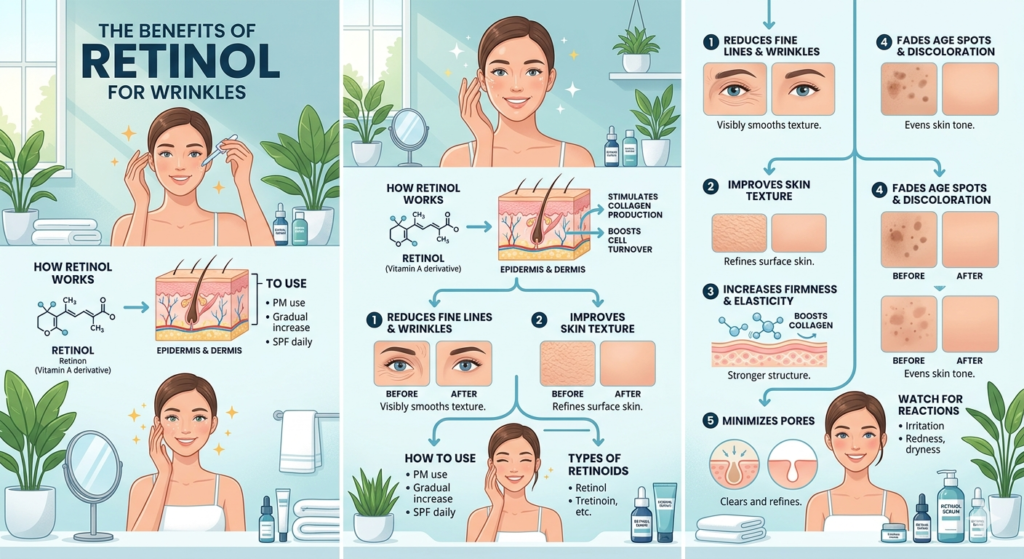
Retinol is commonly found in:
- Serums
- Creams
- Lotions
- Eye creams
- Night treatments
It is available in both over-the-counter and prescription-strength formulas.
How Retinol Works on Wrinkles
As the skin ages, collagen and elastin production naturally decline. Collagen is the protein responsible for keeping the skin firm and smooth.
Retinol helps by:
- Stimulating collagen production
- Increasing skin cell turnover
- Improving elasticity
- Smoothing rough texture
- Reducing fine lines
- Supporting skin renewal
Over time, this process improves skin firmness and reduces visible signs of aging.
Why Wrinkles Develop
Wrinkles form due to both internal and external factors.
Natural Aging
As people age:
- Collagen decreases
- Elastin weakens
- Skin becomes thinner
- Moisture levels decline
These changes contribute to wrinkles and sagging.
Sun Exposure
UV damage is one of the biggest causes of premature aging.
Sun exposure breaks down collagen and accelerates wrinkle formation.
Smoking
Smoking reduces blood flow to the skin and damages collagen.
Repetitive Facial Movements
Smiling, frowning, and squinting repeatedly contribute to expression lines.
Stress and Lack of Sleep
Stress hormones and poor sleep may accelerate skin aging.
Poor Skincare Habits
Skipping sunscreen and using harsh products can worsen wrinkles.
Main Benefits of Retinol for Wrinkles
Retinol offers multiple anti-aging benefits.
Reduces Fine Lines
Retinol smooths fine lines by improving skin renewal and collagen production.
Improves Skin Texture
Retinol helps create smoother, softer skin.
Boosts Collagen Production
Collagen support improves firmness and elasticity.
Fades Hyperpigmentation
Retinol helps reduce sunspots and post-acne marks.
Improves Skin Tone
Uneven skin tone becomes brighter and more balanced over time.
Minimizes Pores
Retinol may reduce the appearance of enlarged pores.
Supports Acne Control
Retinol also helps prevent clogged pores and breakouts.
Enhances Skin Radiance
Increased cell turnover creates a healthier glow.
Best Types of Retinoids
Different forms of vitamin A vary in strength.
Retinol
Retinol is gentler and widely available over the counter.
Retinaldehyde
Retinaldehyde works faster than retinol while remaining relatively gentle.
Adapalene
Adapalene is commonly used for acne treatment but may also support anti-aging.
Tretinoin
Tretinoin is a prescription-strength retinoid known for powerful anti-aging results.
Retinyl Palmitate
This is a milder retinoid suitable for beginners and sensitive skin.
When to Start Using Retinol
Many dermatologists recommend starting retinol in the mid-20s or early 30s as a preventive anti-aging measure.
However, people of different ages may benefit from retinol depending on their skin concerns.
How to Use Retinol Properly
Using retinol correctly reduces irritation and improves results.
Start Slowly
Beginners should use retinol:
- Two or three nights weekly
- In low concentrations
Gradually increase frequency as the skin adjusts.
Apply at Night
Retinol is usually used at night because sunlight can reduce its effectiveness.
Use a Pea-Sized Amount
A small amount is enough for the entire face.
Avoid Sensitive Areas
Be careful around:
- Eyes
- Corners of the nose
- Lips
Moisturize Well
Moisturizer helps reduce dryness and irritation.
Wear Sunscreen Daily
Retinol increases sun sensitivity, making sunscreen essential.
Best Retinol Routine for Wrinkles
Evening Routine
Step 1: Gentle Cleanser
Use a non-stripping cleanser.
Step 2: Allow Skin to Dry
Wait a few minutes after cleansing before applying retinol.
Step 3: Apply Retinol
Use a pea-sized amount.
Step 4: Moisturize
Apply moisturizer to support the skin barrier.
Morning Routine
Step 1: Gentle Cleanser
Cleanse gently.
Step 2: Hydrating Serum
Use hydrating ingredients like hyaluronic acid.
Step 3: Moisturizer
Maintain hydration.
Step 4: Sunscreen
Apply SPF 30 or higher daily.
How Long Does Retinol Take to Work?
Retinol requires consistency and patience.
Typical timelines include:
- Early improvements: 4 to 6 weeks
- Texture improvement: 2 to 3 months
- Wrinkle improvement: 3 to 6 months
Long-term use provides the best anti-aging results.
Common Side Effects of Retinol
Retinol may cause temporary side effects during the adjustment phase.
Common side effects include:
- Dryness
- Peeling
- Redness
- Flaking
- Mild irritation
This adjustment period is often called “retinization.”
How to Reduce Retinol Irritation
Use Moisturizer
Hydration helps protect the skin barrier.
Start with Low Strength
Lower concentrations reduce irritation risk.
Avoid Overuse
Using too much retinol may worsen irritation.
Use the Sandwich Method
Apply moisturizer before and after retinol.
Avoid Combining Strong Actives
Be careful when combining retinol with:
- Strong acids
- Benzoyl peroxide
- Harsh exfoliants
Best Ingredients to Pair with Retinol
Certain ingredients work well alongside retinol.
Hyaluronic Acid
Hydrates and reduces dryness.
Ceramides
Support the skin barrier.
Niacinamide
Calms irritation and balances oil production.
Peptides
Support skin repair and firmness.
Glycerin
Helps maintain hydration.
Ingredients to Avoid Combining with Retinol
Some ingredients may increase irritation.
Use caution with:
- Strong AHAs
- Strong BHAs
- Benzoyl peroxide
- Physical scrubs
Not everyone experiences irritation, but beginners should be careful.
Retinol for Different Skin Types
Oily Skin
Retinol helps reduce oiliness and clogged pores.
Dry Skin
Dry skin benefits from rich moisturizers alongside retinol.
Combination Skin
Combination skin often responds well to lightweight retinol serums.
Sensitive Skin
Sensitive skin should start with lower concentrations and less frequent use.
Mature Skin
Retinol supports collagen production and smoother texture.
Retinol for Under-Eye Wrinkles
Some retinol eye creams target crow’s feet and fine lines.
Use specially formulated eye products because the eye area is delicate.
Can Retinol Prevent Wrinkles?
Yes. Retinol is widely used as a preventive anti-aging ingredient because it supports collagen production before severe wrinkles develop.
Best Retinol Products for Wrinkles
Popular retinol products include:
- Retinol serums
- Retinol creams
- Encapsulated retinol formulas
- Retinol night creams
Look for products labeled:
- Non-comedogenic
- Fragrance-free if sensitive
- Dermatologist-tested
Retinol Myths
Myth: Retinol Thins the Skin
Retinol actually thickens the deeper layers of the skin by supporting collagen production.
Myth: Retinol Works Overnight
Results take time and consistency.
Myth: Retinol Should Burn
Mild irritation may occur initially, but severe burning is not normal.
Myth: Oily Skin Does Not Need Moisturizer with Retinol
All skin types need hydration when using retinol.
Myth: Retinol and Sunscreen Cannot Be Used Together
Sunscreen is essential when using retinol.
Lifestyle Habits That Support Anti-Aging
Retinol works best alongside healthy habits.
Wear Sunscreen Daily
Sun protection prevents collagen breakdown.
Stay Hydrated
Hydration supports healthy skin function.
Eat a Balanced Diet
Skin-friendly foods include:
- Fruits
- Vegetables
- Omega-3 fatty acids
- Antioxidant-rich foods
Sleep Well
Sleep supports skin repair and recovery.
Manage Stress
Stress may accelerate skin aging.
Avoid Smoking
Smoking damages collagen and elastin.
Professional Treatments That Work with Retinol
Some professional treatments complement retinol use.
Chemical Peels
Improve texture and brightness.
Microneedling
Supports collagen production.
Laser Treatments
Help reduce wrinkles and pigmentation.
HydraFacials
Provide hydration and gentle exfoliation.
Consult a dermatologist before combining treatments with retinoids.
Signs Retinol Is Working
Positive signs include:
- Smoother skin
- Brighter complexion
- Reduced fine lines
- Improved texture
- Smaller-looking pores
Signs You Should Reduce Retinol Use
Watch for:
- Severe peeling
- Burning
- Cracking
- Persistent redness
- Painful irritation
Reduce frequency if irritation becomes severe.
Who Should Avoid Retinol?
Certain individuals should consult a healthcare provider before using retinol.
This includes:
- Pregnant individuals
- Breastfeeding individuals
- People with severe skin conditions
- Extremely sensitive skin types
Retinol and Sunscreen
Sunscreen is essential while using retinol.
Without sun protection:
- Skin becomes more vulnerable
- Irritation may worsen
- Hyperpigmentation risk increases
Choose broad-spectrum SPF 30 or higher.
External Resources About Retinol and Anti-Aging
American Academy of Dermatology
AAD Anti-Aging Skin Care Guide
Mayo Clinic Skin Care Information
Mayo Clinic Skin Care Resources
Paula’s Choice Retinol Guide
Paula’s Choice Retinol Information
CeraVe Retinol Education
CeraVe Retinol Tips
Healthline Retinol Guide
Healthline Retinol Benefits
WebMD Anti-Aging Information
WebMD Wrinkle Treatments
Frequently Asked Questions About Retinol for Wrinkles
What is retinol?
Retinol is a vitamin A derivative used to improve wrinkles, acne, and skin texture.
Does retinol really reduce wrinkles?
Yes. Retinol is scientifically proven to improve fine lines and wrinkles over time.
How long does retinol take to work?
Most people notice visible improvement after several weeks to months of consistent use.
Can beginners use retinol?
Yes. Beginners should start slowly with low concentrations.
Should retinol be used every night?
Not initially. Start with two or three nights weekly.
Can retinol cause peeling?
Yes. Mild peeling and dryness are common during adjustment.
Is sunscreen necessary when using retinol?
Yes. Retinol increases sun sensitivity.
Can retinol be used with moisturizer?
Yes. Moisturizer helps reduce irritation.
Is retinol safe for sensitive skin?
Sensitive skin can use retinol carefully with lower strengths and less frequent use.
Can retinol help acne?
Yes. Retinol helps unclog pores and reduce acne.
What age should you start using retinol?
Many people begin in their mid-20s or early 30s.
Can retinol thin the skin?
No. Retinol supports collagen production and improves skin structure.
Should retinol be used during pregnancy?
Pregnant individuals should consult a healthcare provider before using retinoids.
Can retinol brighten the skin?
Yes. Retinol improves cell turnover and skin tone.
What is the best moisturizer to use with retinol?
Hydrating moisturizers with ceramides and hyaluronic acid work well.
Can retinol worsen wrinkles at first?
Temporary dryness may make wrinkles appear more visible initially.
Is prescription retinoid stronger than retinol?
Yes. Prescription retinoids are generally more potent.
Can oily skin use retinol?
Yes. Retinol often benefits oily and acne-prone skin.
Can retinol reduce dark spots?
Yes. Retinol may help fade hyperpigmentation over time.
What should not be mixed with retinol?
Use caution when combining retinol with strong acids and harsh exfoliants.
Final Thoughts
Retinol is one of the most effective and scientifically supported skincare ingredients for reducing wrinkles and improving overall skin quality. By increasing collagen production and speeding up cell turnover, retinol helps smooth fine lines, brighten the complexion, improve texture, and support firmer-looking skin.
Although results take time, consistent use combined with moisturizer and sunscreen can produce significant long-term improvements. The key is starting slowly, protecting the skin barrier, and choosing products suited to your skin type and sensitivity level.
With patience and proper skincare habits, retinol can become a powerful part of an effective anti-aging routine that supports healthier, smoother, and younger-looking skin over time.