Blackheads are one of the most common skincare concerns affecting teenagers and adults alike. They can appear on the nose, forehead, chin, cheeks, chest, back, and other areas where oil production is high. Although blackheads are not usually painful, they can make the skin look uneven, congested, and dull. Many people struggle to remove blackheads permanently because they often return when the pores become clogged again.
The good news is that blackheads can be treated and prevented with the right skincare routine, ingredients, lifestyle habits, and professional treatments. Understanding what causes blackheads and how to care for your skin properly is essential for achieving smoother, clearer skin.
This complete guide explains how to get rid of blackheads naturally and effectively, including causes, treatments, ingredients, skincare routines, prevention methods, home remedies, and professional solutions.
What Are Blackheads?
Blackheads are a type of acne known as open comedones. They form when pores become clogged with:
- Excess oil
- Dead skin cells
- Dirt
- Bacteria
Unlike whiteheads, blackheads remain open at the surface of the skin. When the trapped material is exposed to air, oxidation occurs, causing the surface to appear black or dark brown.
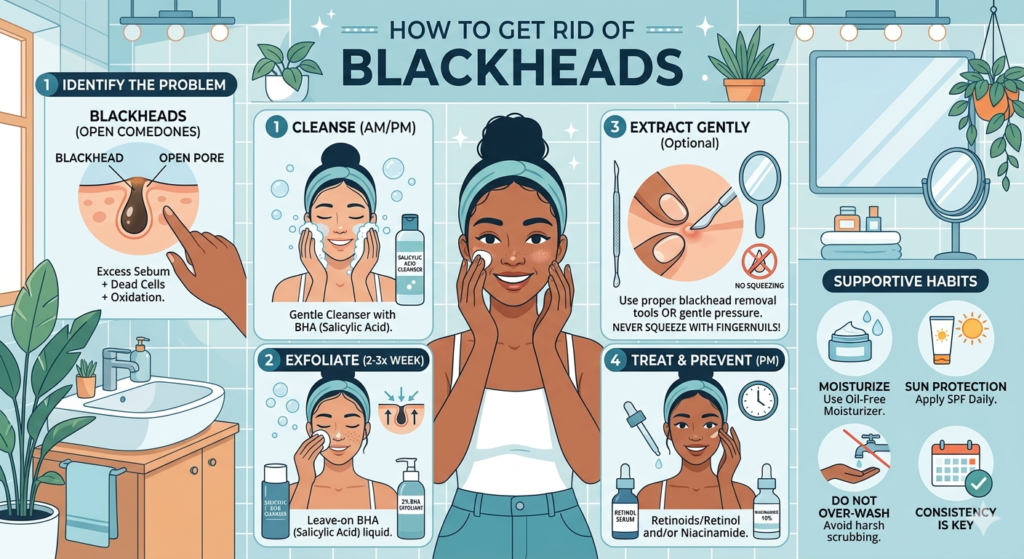
Blackheads are not caused by poor hygiene or dirt alone. They are mainly linked to excess oil production and clogged pores.
Common Areas Where Blackheads Appear
Blackheads usually develop in areas with more sebaceous glands.
Common areas include:
- Nose
- Chin
- Forehead
- Cheeks
- Chest
- Back
- Shoulders
The nose is one of the most common locations because it naturally produces more oil.
What Causes Blackheads?
Several factors contribute to blackhead formation.
Excess Oil Production
When the skin produces too much sebum, pores become more likely to clog.
Dead Skin Cell Buildup
If dead skin cells are not removed properly, they mix with oil and block pores.
Hormonal Changes
Hormones can increase oil production, especially during:
- Puberty
- Menstruation
- Pregnancy
- Stress
Poor Skincare Habits
Using the wrong products or skipping cleansing can worsen blackheads.
Heavy Makeup
Comedogenic makeup products may clog pores.
Sweating and Humidity
Sweat and humid weather may increase congestion.
Diet and Lifestyle
Some individuals notice increased acne and blackheads from:
- Sugary foods
- Processed foods
- Dairy products
- Stress
Are Blackheads the Same as Sebaceous Filaments?
Many people confuse blackheads with sebaceous filaments.
Sebaceous filaments are normal structures inside the pores that help move oil to the skin’s surface. They usually appear gray or flesh-colored and are especially common on the nose.
Blackheads are darker, more noticeable, and involve clogged pores.
Best Ingredients for Removing Blackheads
Certain skincare ingredients are especially effective for blackheads.
Salicylic Acid
Salicylic acid is one of the best treatments for blackheads.
Benefits include:
- Deep pore exfoliation
- Reduced oil buildup
- Prevention of clogged pores
- Smoother texture
Salicylic acid is oil-soluble, allowing it to penetrate deep inside pores.
Retinoids
Retinoids help speed up skin cell turnover and prevent clogged pores.
Benefits include:
- Reduced blackheads
- Improved texture
- Smaller-looking pores
- Reduced acne
Retinol and adapalene are popular options.
Niacinamide
Niacinamide helps regulate oil production and calm inflammation.
Benefits include:
- Oil control
- Reduced redness
- Improved barrier function
- Smaller-looking pores
Clay
Clay absorbs excess oil and helps cleanse pores.
Popular clays include:
- Kaolin clay
- Bentonite clay
- French green clay
Alpha Hydroxy Acids (AHAs)
AHAs such as glycolic acid and lactic acid exfoliate the skin’s surface.
Benefits include:
- Smoother texture
- Brighter skin
- Reduced buildup
Charcoal
Activated charcoal helps absorb impurities and oil.
Best Skincare Routine to Get Rid of Blackheads
Consistency is essential for blackhead treatment.
Morning Routine
Step 1: Gentle Cleanser
Use a cleanser that removes excess oil without stripping the skin.
Look for ingredients like:
- Salicylic acid
- Niacinamide
- Green tea extract
Step 2: Lightweight Toner
Alcohol-free toners help balance the skin.
Step 3: Treatment Serum
Use niacinamide or salicylic acid serums.
Step 4: Moisturizer
Hydration is important even for oily skin.
Choose:
- Oil-free
- Non-comedogenic
- Lightweight moisturizers
Step 5: Sunscreen
Daily sunscreen protects against pigmentation and irritation.
Choose SPF 30 or higher.
Evening Routine
Step 1: Double Cleanse
Remove makeup and sunscreen thoroughly.
Step 2: Exfoliation
Use chemical exfoliants two to three times weekly.
Step 3: Retinoid Treatment
Retinoids help prevent clogged pores.
Step 4: Moisturizer
Maintain hydration and skin barrier health.
How to Remove Blackheads Naturally
Natural remedies may help support blackhead treatment.
Honey
Honey has antibacterial and soothing properties.
Benefits include:
- Reduced inflammation
- Improved hydration
- Gentle cleansing
Aloe Vera
Aloe vera helps calm irritated skin.
Green Tea
Green tea contains antioxidants that may reduce oil production.
Oatmeal
Oatmeal gently exfoliates and soothes the skin.
Steam Treatments
Facial steaming may soften debris inside pores.
Use caution because excessive heat may irritate sensitive skin.
Clay Masks
Clay masks help absorb excess oil and unclog pores.
Use once or twice weekly.
Best Products for Blackheads
Salicylic Acid Cleansers
These help cleanse pores effectively.
Retinol Serums
Retinol improves texture and prevents congestion.
Clay Masks
Clay masks reduce oil buildup.
Pore Strips
Pore strips temporarily remove surface debris but do not prevent blackheads long-term.
Chemical Exfoliants
AHAs and BHAs improve skin turnover.
How to Prevent Blackheads
Prevention is just as important as treatment.
Cleanse Regularly
Wash your face twice daily.
Avoid Heavy Products
Choose non-comedogenic skincare and makeup.
Exfoliate Properly
Regular exfoliation helps prevent buildup.
Remove Makeup Before Bed
Sleeping with makeup increases clogged pores.
Wash Pillowcases Frequently
Dirty pillowcases may transfer oil and bacteria.
Avoid Touching Your Face
Hands can transfer dirt and bacteria.
Wear Sunscreen Daily
Sun damage may worsen skin texture and acne marks.
Common Mistakes People Make When Treating Blackheads
Over-Scrubbing
Harsh scrubs can irritate the skin.
Picking Blackheads
Picking may damage the skin and cause scarring.
Overusing Pore Strips
Frequent pore strip use may irritate pores.
Skipping Moisturizer
Dehydrated skin may produce more oil.
Using Too Many Active Ingredients
Too many strong ingredients can damage the skin barrier.
Professional Treatments for Blackheads
Some blackheads may require professional treatment.
Professional Extractions
Licensed professionals safely remove clogged pores.
Chemical Peels
Chemical peels exfoliate deeply and improve congestion.
HydraFacials
HydraFacials deeply cleanse and hydrate the skin.
Microdermabrasion
This treatment removes surface buildup and improves texture.
Laser Treatments
Some lasers help reduce oil production and acne.
Blackheads on Different Skin Types
Oily Skin
Oily skin is more prone to blackheads because of excess sebum production.
Dry Skin
Dry skin can still develop blackheads due to dead skin buildup.
Combination Skin
Combination skin often develops blackheads in the T-zone.
Sensitive Skin
Sensitive skin requires gentle exfoliation and calming ingredients.
Blackheads on the Nose
The nose naturally contains more sebaceous glands.
Helpful treatments include:
- Salicylic acid
- Clay masks
- Retinoids
- Gentle cleansing
Consistency is important because nose blackheads often return.
Blackheads on the Back and Chest
Body blackheads can result from:
- Sweat
- Tight clothing
- Oil buildup
Helpful treatments include:
- Salicylic acid body washes
- Showering after exercise
- Wearing breathable fabrics
Do Home Extraction Tools Work?
Extraction tools should be used carefully.
Improper use may cause:
- Scarring
- Broken capillaries
- Infection
Professional extraction is safer for stubborn blackheads.
Diet and Blackheads
Diet affects people differently, but some foods may worsen acne and oil production.
Possible triggers include:
- Sugary foods
- Processed foods
- Dairy products
Skin-friendly foods include:
- Fruits
- Vegetables
- Omega-3-rich foods
- Nuts
- Water-rich foods
Stress and Blackheads
Stress hormones may increase oil production and breakouts.
Stress management techniques include:
- Exercise
- Meditation
- Journaling
- Yoga
- Proper sleep
Best Lifestyle Habits for Clear Skin
Stay Hydrated
Water supports healthy skin function.
Sleep Well
Sleep supports skin repair.
Exercise Regularly
Exercise improves circulation and stress management.
Maintain Consistency
Consistent routines work better than aggressive treatments.
Blackhead Myths
Myth: Blackheads Are Dirt
Blackheads are oxidized oil and dead skin cells, not trapped dirt.
Myth: Scrubbing Removes Blackheads Permanently
Aggressive scrubbing may worsen irritation.
Myth: Only Teenagers Get Blackheads
Adults can develop blackheads too.
Myth: Moisturizer Causes Blackheads
Proper moisturizers support skin balance.
Signs Your Blackhead Routine Is Working
Positive signs include:
- Smoother texture
- Fewer clogged pores
- Reduced oiliness
- Clearer skin
- Smaller-looking pores
Signs Your Skin Barrier Is Damaged
Watch for:
- Burning
- Redness
- Tightness
- Increased sensitivity
- Peeling
Reduce strong actives if irritation develops.
How Long Does It Take to Remove Blackheads?
Results depend on consistency and severity.
Typical timelines:
- Mild improvement: 2 to 4 weeks
- Significant improvement: 6 to 12 weeks
Patience is important because skin renewal takes time.
External Resources for Blackhead Treatment
American Academy of Dermatology
AAD Acne Resources
Mayo Clinic Acne Guide
Mayo Clinic Acne Information
Paula’s Choice Ingredient Dictionary
Paula’s Choice Ingredient Guide
CeraVe Skin Care Education
CeraVe Skin Education
Healthline Skin Care Articles
Healthline Acne Guide
WebMD Acne Information
WebMD Acne Guide
Frequently Asked Questions About Blackheads
What causes blackheads?
Blackheads form when pores become clogged with oil and dead skin cells.
Are blackheads permanent?
No. Blackheads can be treated and prevented with proper skincare.
Is salicylic acid good for blackheads?
Yes. Salicylic acid is one of the best ingredients for clearing pores.
Can blackheads disappear naturally?
Some blackheads may improve naturally, but consistent skincare helps significantly.
Should blackheads be squeezed?
Avoid squeezing because it may cause scarring and irritation.
Are pore strips effective?
Pore strips temporarily remove surface debris but do not prevent future blackheads.
Can dry skin get blackheads?
Yes. Dead skin buildup can clog pores even on dry skin.
Is retinol good for blackheads?
Yes. Retinol improves cell turnover and reduces clogged pores.
How often should you exfoliate for blackheads?
Most people benefit from exfoliating two to three times weekly.
Can makeup cause blackheads?
Heavy or comedogenic makeup may clog pores.
Is sunscreen necessary when treating blackheads?
Yes. Sunscreen protects the skin from irritation and hyperpigmentation.
Can diet affect blackheads?
Diet may influence oil production and acne in some individuals.
What is the best cleanser for blackheads?
Gentle cleansers with salicylic acid work well for many people.
Are blackheads a type of acne?
Yes. Blackheads are considered a mild form of acne.
Can stress worsen blackheads?
Yes. Stress hormones may increase oil production.
Is steaming good for blackheads?
Steam may soften debris inside pores but should not be overused.
Do clay masks help blackheads?
Yes. Clay masks absorb excess oil and cleanse pores.
Can oily skin get more blackheads?
Yes. Excess oil production increases the risk of clogged pores.
Are natural remedies effective for blackheads?
Some natural remedies may support treatment, but results vary.
When should you see a dermatologist for blackheads?
Consult a dermatologist if blackheads become severe or resistant to treatment.
Final Thoughts
Blackheads are a common and manageable skincare concern. The best way to get rid of blackheads is through a consistent routine that includes gentle cleansing, chemical exfoliation, hydration, and proper sun protection. Ingredients like salicylic acid, niacinamide, retinoids, and clay can significantly improve skin texture and reduce clogged pores over time.
Avoid aggressive scrubbing, overusing harsh products, or squeezing blackheads because these habits can damage the skin and worsen irritation. Instead, focus on maintaining healthy skin barrier function while keeping pores clean and balanced.
With patience, consistency, and the right skincare products, blackheads can become less noticeable, less frequent, and easier to manage for healthier and clearer-looking skin.