
Psoriasis is a chronic skin condition that affects millions of people worldwide. It is not just a cosmetic issue but an immune-related condition that causes skin cells to grow too quickly, leading to thick, scaly patches on the skin. These patches can be itchy, painful, inflamed, and sometimes emotionally distressing for those who experience them.
Although psoriasis cannot be completely cured, it can be effectively managed with the right skincare routine, lifestyle changes, and medical treatments. Proper skincare plays a major role in reducing flare-ups, soothing irritation, and improving skin comfort and appearance.
This complete guide explains how to treat psoriasis with skincare, including causes, symptoms, types, best ingredients, daily routines, natural remedies, medical treatments, lifestyle habits, and frequently asked questions.
What Is Psoriasis?
Psoriasis is a long-term autoimmune skin condition where the immune system speeds up skin cell production. Instead of taking weeks to renew, skin cells build up in just a few days, forming thick patches on the skin’s surface.
These patches are often:
- Red or pink
- Covered with white or silver scales
- Dry and cracked
- Itchy or painful
Psoriasis commonly appears on:
- Elbows
- Knees
- Scalp
- Lower back
- Nails
- Hands and feet
Types of Psoriasis
There are several types of psoriasis, each with different characteristics.
Plaque Psoriasis
The most common type, causing raised, scaly patches.
Guttate Psoriasis
Small, drop-shaped lesions often triggered by infections.
Inverse Psoriasis
Appears in skin folds such as underarms and groin.
Pustular Psoriasis
Characterized by white pustules surrounded by redness.
Erythrodermic Psoriasis
A rare but severe form causing widespread redness and peeling.
Nail Psoriasis
Affects fingernails and toenails, causing pitting and discoloration.
Causes of Psoriasis
Psoriasis is an immune-mediated condition influenced by multiple factors.
Immune System Dysfunction
The immune system mistakenly attacks healthy skin cells.
Genetics
Family history increases the risk of developing psoriasis.
Triggers
Common triggers include:
- Stress
- Infections
- Cold weather
- Skin injuries
- Certain medications
- Alcohol consumption
Hormonal Changes
Hormonal shifts may worsen symptoms in some individuals.
Symptoms of Psoriasis
Symptoms vary depending on severity and type.
Common symptoms include:
- Thick red patches
- White or silver scales
- Dry skin
- Itching or burning
- Cracked skin that may bleed
- Nail changes
Is Psoriasis Contagious?
No. Psoriasis is not contagious. It cannot be spread through touch, sharing items, or physical contact.
Why Skincare Matters in Psoriasis
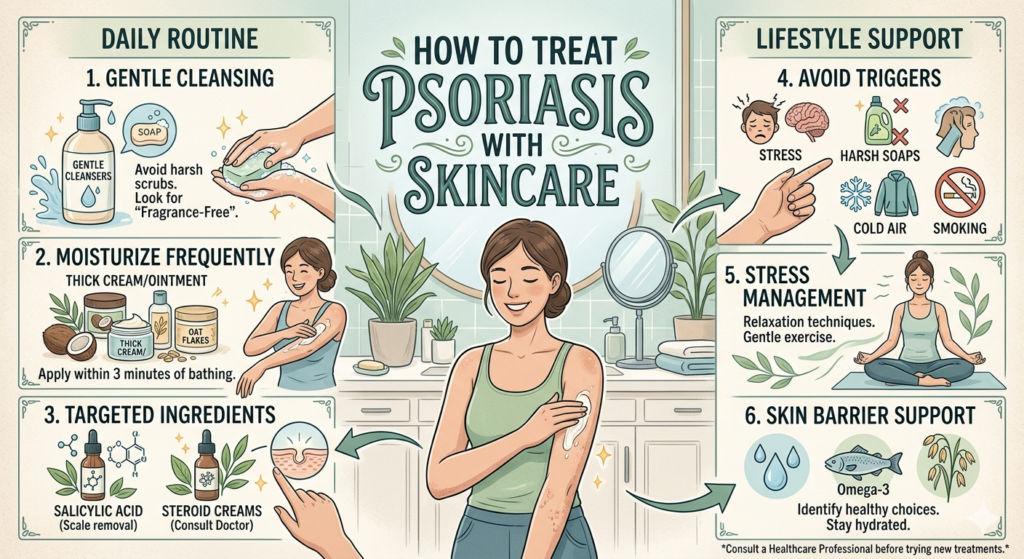
Although psoriasis is an internal immune condition, skincare plays a crucial role in managing symptoms.
Proper skincare helps:
- Reduce inflammation
- Moisturize dry skin
- Prevent cracking and bleeding
- Reduce itching
- Improve skin barrier function
- Decrease flare-ups
Best Skincare Goals for Psoriasis
A psoriasis-friendly skincare routine focuses on:
- Hydration
- Barrier repair
- Gentle cleansing
- Reducing inflammation
- Avoiding irritation
Best Ingredients for Psoriasis
Certain skincare ingredients help manage symptoms effectively.
Ceramides
Ceramides restore and strengthen the skin barrier.
Urea
Urea helps soften thick, scaly skin and improve hydration.
Salicylic Acid
Salicylic acid helps remove dead skin cells and reduce scaling.
Colloidal Oatmeal
Soothes itching and irritation.
Aloe Vera
Provides cooling and anti-inflammatory benefits.
Glycerin
Hydrates and locks in moisture.
Shea Butter
Deeply nourishes dry, cracked skin.
Coal Tar
Helps slow down skin cell growth in psoriasis.
Niacinamide
Reduces inflammation and supports the skin barrier.