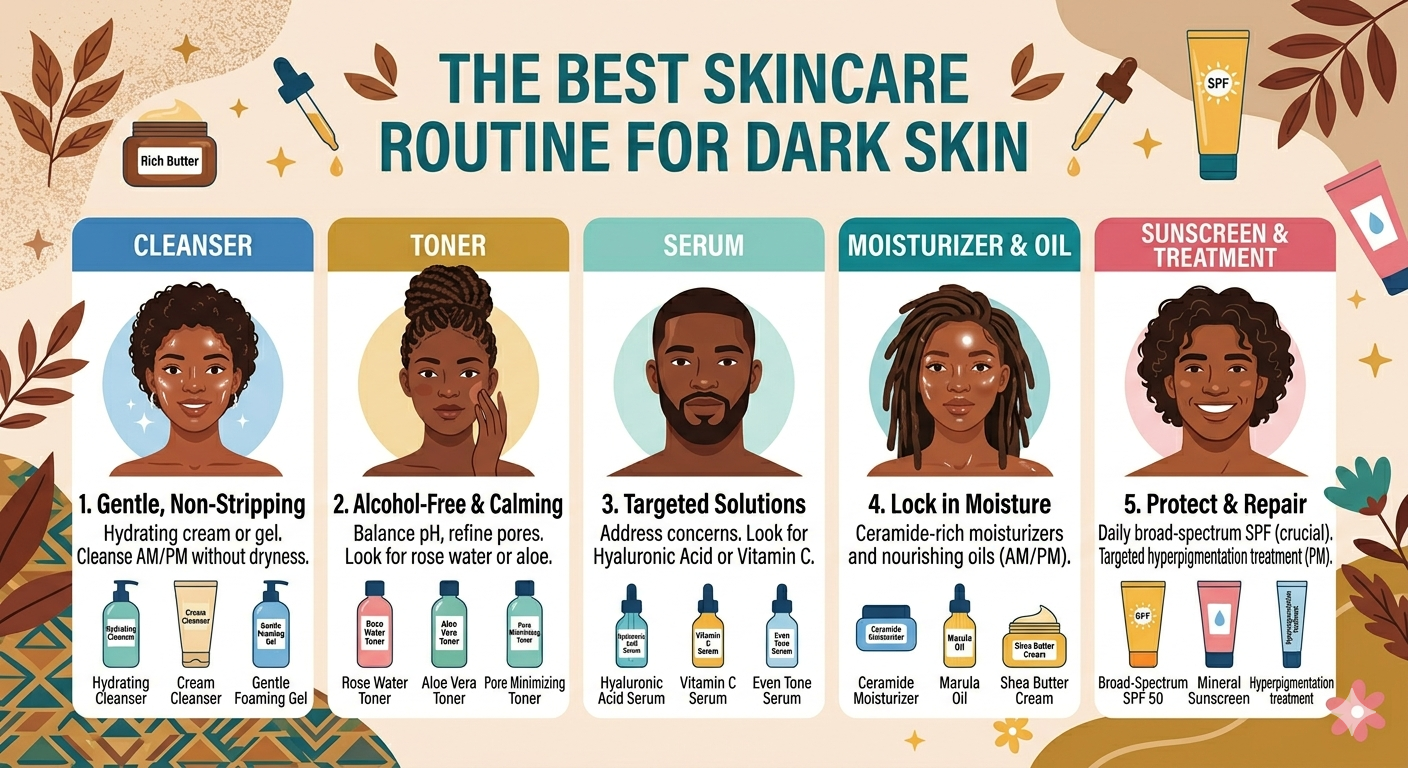
Vitamin C is one of the most popular and scientifically supported skincare ingredients for achieving brighter, smoother, and healthier-looking skin. Among its many skincare benefits, one of the most impressive is its ability to reduce dark spots and improve uneven skin tone. Whether dark spots are caused by acne scars, sun damage, aging, or hormonal changes, vitamin C has become a favorite ingredient for people seeking a radiant complexion.
Dark spots can affect confidence and make the skin appear dull or uneven. Many individuals spend years trying different creams and treatments without seeing lasting improvement. Fortunately, vitamin C offers a gentle yet powerful solution that works for many skin types when used consistently and correctly.
This complete guide explains the benefits of vitamin C for dark spots, how it works, the best forms of vitamin C, how to use it properly, skincare routines, side effects, prevention tips, and frequently asked questions.
What Are Dark Spots?
Dark spots are areas of skin that become darker than the surrounding skin because of excess melanin production.
Melanin is the pigment responsible for skin color. When the skin experiences inflammation or damage, it may produce extra melanin, leading to discoloration.
Dark spots may appear as:
- Brown spots
- Red marks
- Gray patches
- Uneven pigmentation
They can vary in size and intensity.
Common Causes of Dark Spots
Several factors contribute to dark spots.
Sun Exposure
UV rays stimulate melanin production and are one of the biggest causes of pigmentation.
Acne Scars
Inflammation from acne can leave post-inflammatory hyperpigmentation.
Hormonal Changes
Hormonal fluctuations may trigger melasma and uneven pigmentation.
Aging
Age spots often appear after years of sun exposure.
Skin Injuries
Cuts, burns, and irritation can lead to discoloration.
Inflammation
Skin inflammation from eczema or irritation may leave marks behind.
What Is Vitamin C?
Vitamin C is a powerful antioxidant naturally found in the skin and certain foods.
In skincare, vitamin C is widely used because it helps:
- Brighten skin
- Protect against free radicals
- Improve collagen production
- Fade pigmentation
- Support healthy skin tone
Vitamin C is commonly found in:
- Serums
- Creams
- Moisturizers
- Masks
How Vitamin C Helps Dark Spots
Vitamin C targets dark spots through multiple mechanisms.
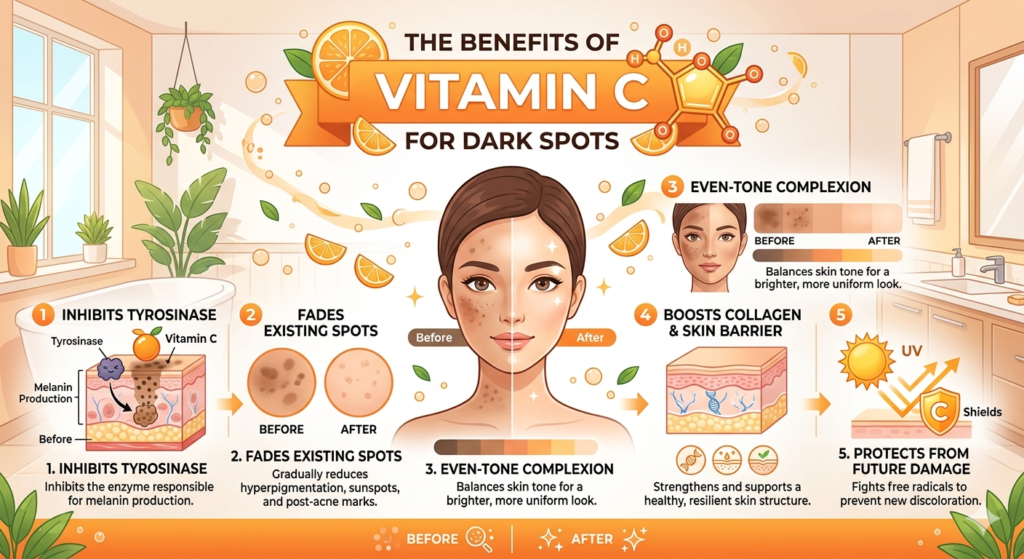
Reduces Melanin Production
Vitamin C inhibits tyrosinase, an enzyme involved in melanin production.
This helps reduce hyperpigmentation over time.
Brightens Skin Tone
Vitamin C supports a more radiant complexion.
Provides Antioxidant Protection
Antioxidants help defend the skin against environmental stress.
Supports Collagen Production
Collagen support improves skin texture and recovery.
Helps Fade Post-Acne Marks
Vitamin C may gradually reduce discoloration from acne.
Improves Overall Skin Health
Consistent use can create smoother and healthier-looking skin.
Types of Vitamin C Used in Skincare
Different forms of vitamin C vary in stability and strength.
L-Ascorbic Acid
This is the purest and most researched form of vitamin C.
Benefits include:
- Strong brightening effects
- Powerful antioxidant protection
However, it may irritate sensitive skin.
Sodium Ascorbyl Phosphate
A gentler and more stable form often suitable for acne-prone skin.
Magnesium Ascorbyl Phosphate
Known for hydrating and brightening properties.
Ascorbyl Glucoside
A stable form that gradually converts into vitamin C on the skin.
Tetrahexyldecyl Ascorbate
An oil-soluble form that penetrates deeply into the skin.
Main Benefits of Vitamin C for Dark Spots
Vitamin C offers many skin benefits beyond brightening.
Fades Hyperpigmentation
Vitamin C helps reduce dark marks caused by acne and sun damage.
Improves Skin Radiance
The skin often appears brighter and healthier.
Supports Anti-Aging
Vitamin C helps reduce fine lines and wrinkles by supporting collagen.
Protects Against Environmental Damage
Pollution and UV rays contribute to premature aging.
Reduces Dullness
Vitamin C improves overall skin vibrancy.
Enhances Skin Texture
Regular use may create smoother skin.
Best Skin Types for Vitamin C
Vitamin C benefits many skin types.
Oily Skin
Lightweight vitamin C serums work well for oily skin.
Dry Skin
Hydrating vitamin C formulas help brighten and moisturize.
Combination Skin
Combination skin often responds well to balanced serum formulations.
Sensitive Skin
Gentler derivatives may work better for sensitive skin.
Acne-Prone Skin
Vitamin C may help post-acne marks and inflammation.
How to Use Vitamin C Properly
Correct use improves results and reduces irritation.
Apply to Clean Skin
Vitamin C works best on freshly cleansed skin.
Use in the Morning
Many people apply vitamin C during the daytime because of its antioxidant benefits.
Follow with Moisturizer
Moisturizer supports hydration and barrier function.
Wear Sunscreen Daily
Sunscreen protects against UV-induced pigmentation.
Start Slowly
Sensitive skin should begin with lower concentrations.
Best Vitamin C Skincare Routine for Dark Spots
Morning Routine
Step 1: Gentle Cleanser
Use a non-stripping cleanser.
Step 2: Vitamin C Serum
Apply a few drops evenly.
Step 3: Moisturizer
Hydrate the skin.
Step 4: Sunscreen
Apply SPF 30 or higher.
Evening Routine
Step 1: Cleanser
Remove dirt and sunscreen.
Step 2: Treatment Products
Optional treatments may include retinoids or niacinamide.
Step 3: Moisturizer
Support overnight repair.
Best Ingredients to Pair with Vitamin C
Certain ingredients work well alongside vitamin C.
Hyaluronic Acid
Hydrates and plumps the skin.
Niacinamide
Supports barrier health and reduces redness.
Vitamin E
Enhances antioxidant protection.
Ferulic Acid
Improves vitamin C stability and effectiveness.
Ceramides
Strengthen the skin barrier.
Ingredients to Use Carefully with Vitamin C
Some combinations may irritate sensitive skin.
Use caution with:
- Strong exfoliating acids
- Benzoyl peroxide
- High-strength retinoids
Not everyone experiences irritation, but beginners should introduce products gradually.
How Long Does Vitamin C Take to Fade Dark Spots?
Results depend on:
- Skin type
- Pigmentation severity
- Product strength
- Consistency
Typical timelines include:
- Early brightness improvement: 2 to 4 weeks
- Dark spot fading: 6 to 12 weeks
- Significant improvement: several months
Consistency is important.
Common Side Effects of Vitamin C
Vitamin C is generally well tolerated, but some individuals may experience:
- Mild irritation
- Tingling
- Redness
- Dryness
Patch-testing new products is recommended.
Signs Your Vitamin C Product Has Oxidized
Vitamin C can become unstable over time.
Signs include:
- Dark orange or brown color
- Unusual smell
- Reduced effectiveness
Store products away from heat and sunlight.
Best Concentration of Vitamin C
Concentrations vary depending on skin tolerance.
Beginners
- 5% to 10%
Experienced Users
- 15% to 20%
Higher strengths may increase irritation risk.
Vitamin C and Sunscreen
Vitamin C and sunscreen work very well together.
Vitamin C helps:
- Reduce free radical damage
- Support UV defense
However, vitamin C does not replace sunscreen.
Can Vitamin C Prevent Dark Spots?
Yes. Vitamin C helps reduce oxidative stress and may help prevent future pigmentation.
Vitamin C for Acne Marks
Post-inflammatory hyperpigmentation from acne often improves with consistent vitamin C use.
Vitamin C for Melasma
Vitamin C may support melasma treatment alongside sunscreen and dermatologist guidance.
Vitamin C for Sun Damage
Sunspots and UV-related pigmentation may improve over time.
Natural Sources of Vitamin C
Vitamin C is found in many foods.
Examples include:
- Oranges
- Strawberries
- Kiwi
- Bell peppers
- Broccoli
- Lemons
A balanced diet supports overall skin health.
Lifestyle Habits That Help Fade Dark Spots
Wear Sunscreen Daily
Sun protection is essential.
Avoid Picking Pimples
Picking increases pigmentation risk.
Stay Hydrated
Hydration supports skin recovery.
Eat Antioxidant-Rich Foods
Healthy nutrition supports skin repair.
Sleep Well
Skin repairs itself during sleep.
Manage Stress
Stress may worsen inflammation.
Professional Treatments for Dark Spots
Professional procedures may improve stubborn pigmentation.
Chemical Peels
Chemical peels exfoliate pigmented skin cells.
Laser Treatments
Lasers target excess pigmentation.
Microneedling
Microneedling may improve texture and discoloration.
Microdermabrasion
Helps remove surface pigmentation gradually.
Consult a dermatologist before professional procedures.
Common Mistakes When Using Vitamin C
Skipping Sunscreen
Sun exposure may worsen dark spots.
Using Too Many Active Ingredients
Too many strong products may irritate the skin.
Applying on Damaged Skin
Compromised skin barriers may react more strongly.
Expecting Overnight Results
Vitamin C requires consistent long-term use.
Storing Products Improperly
Heat and sunlight reduce stability.
Myths About Vitamin C
Myth: Vitamin C Works Instantly
Brightening takes time and consistency.
Myth: Oily Skin Cannot Use Vitamin C
Lightweight serums work well for oily skin.
Myth: Vitamin C Replaces Sunscreen
Sunscreen is still essential.
Myth: Higher Concentration Is Always Better
Stronger formulas may irritate sensitive skin.
Myth: Vitamin C Is Only for Aging Skin
Vitamin C benefits many skin concerns and ages.
Signs Your Vitamin C Routine Is Working
Positive signs include:
- Brighter complexion
- Reduced pigmentation
- Smoother texture
- Healthier glow
- More even skin tone
Signs Your Skin Barrier Is Irritated
Watch for:
- Burning
- Peeling
- Severe redness
- Tightness
Reduce frequency if irritation develops.
Who Should Use Vitamin C?
Vitamin C benefits individuals concerned about:
- Dark spots
- Dullness
- Uneven skin tone
- Sun damage
- Early aging
External Resources About Vitamin C and Dark Spots
American Academy of Dermatology
AAD Hyperpigmentation Information
Mayo Clinic Skin Care Guide
Mayo Clinic Skin Care Resources
Paula’s Choice Vitamin C Guide
Paula’s Choice Vitamin C Information
Healthline Vitamin C Benefits
Healthline Vitamin C Skin Guide
CeraVe Brightening Skincare Advice
CeraVe Vitamin C Information
WebMD Hyperpigmentation Guide
WebMD Dark Spot Information
Frequently Asked Questions About Vitamin C for Dark Spots
What does vitamin C do for dark spots?
Vitamin C helps reduce excess melanin and brighten uneven skin tone.
Can vitamin C fade acne scars?
Vitamin C may help fade post-inflammatory pigmentation from acne.
How long does vitamin C take to work?
Visible improvement often appears after several weeks of consistent use.
Is vitamin C suitable for sensitive skin?
Gentler forms may work well for sensitive skin.
Should vitamin C be used in the morning or night?
Many people prefer morning use for antioxidant protection.
Can vitamin C be used daily?
Yes. Most people can use vitamin C daily.
Does vitamin C help wrinkles?
Yes. Vitamin C supports collagen production and anti-aging benefits.
Is sunscreen necessary with vitamin C?
Yes. Sunscreen helps prevent further pigmentation.
What concentration is best for beginners?
Lower concentrations such as 5% to 10% are often suitable for beginners.
Can oily skin use vitamin C?
Yes. Lightweight serums work well for oily skin.
Can vitamin C irritate the skin?
Some people may experience mild irritation initially.
What color should vitamin C serum be?
Fresh vitamin C serums are usually clear or pale yellow.
Can vitamin C help melasma?
Vitamin C may support melasma treatment with consistent use and sun protection.
Is vitamin C safe for acne-prone skin?
Yes. Certain forms are especially suitable for acne-prone skin.
Can vitamin C brighten dull skin?
Yes. Vitamin C helps improve skin radiance.
Does vitamin C exfoliate the skin?
Vitamin C mainly acts as an antioxidant and brightening ingredient rather than a strong exfoliant.
Can vitamin C reduce sun damage?
Vitamin C helps reduce oxidative stress and pigmentation from UV exposure.
Should vitamin C be refrigerated?
Some products benefit from cool storage, but follow manufacturer instructions.
Can vitamin C be combined with niacinamide?
Yes. Vitamin C and niacinamide often work well together.
When should someone see a dermatologist for dark spots?
Consult a dermatologist for severe, persistent, or worsening pigmentation.
Final Thoughts
Vitamin C is one of the most effective and versatile skincare ingredients for reducing dark spots and improving overall skin radiance. By helping reduce melanin production, protecting against environmental stress, and supporting collagen formation, vitamin C can gradually create brighter, smoother, and healthier-looking skin.
Consistency is the key to seeing results. Daily sunscreen, gentle skincare, proper hydration, and patience are all important parts of a successful brightening routine. Whether dark spots are caused by acne, sun damage, aging, or hormonal changes, vitamin C can become a powerful addition to long-term skincare.
With the right product selection and regular use, vitamin C can help restore a more even skin tone while supporting healthier and more radiant skin over time.