
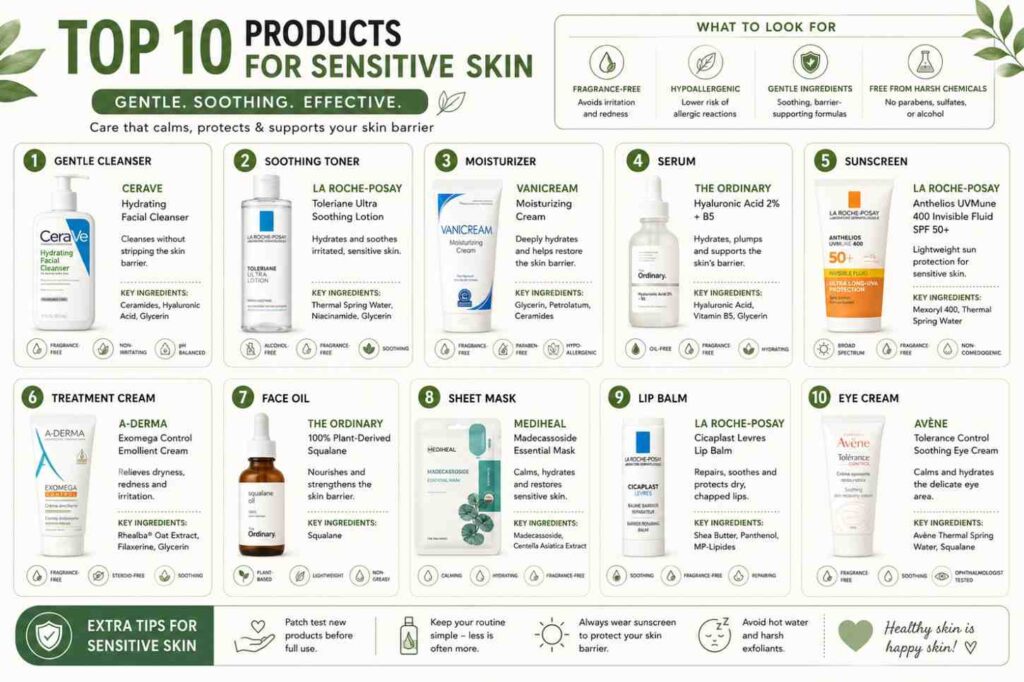
Complete Expert Guide for Gentle Skincare
Sensitive skin requires a highly careful and informed skincare approach because it reacts easily to ingredients, environmental changes, and even overuse of products. Small mistakes in product selection—such as using strong fragrances, harsh exfoliants, or high-concentration actives—can quickly lead to redness, irritation, breakouts, or long-term damage to the skin barrier. That is why choosing the right products is not just about preference, but about skin safety and long-term health.
In this guide, the focus is not only on listing the Top 10 Products for Sensitive Skin but also on helping you understand why certain formulations are safer and more effective. Products designed for sensitive skin usually prioritize gentle cleansing agents, minimal ingredients, and barrier-supporting components like ceramides, glycerin, and panthenol. These ingredients help calm inflammation while maintaining hydration and protection.
Instead of relying on strong or aggressive treatments, sensitive skin care is built around consistency and simplicity. A well-structured routine uses fewer products but ensures each one serves a clear purpose—cleanse, hydrate, protect, and repair. This reduces the risk of triggering sensitivity while gradually strengthening the skin’s natural defense system over time.
Ultimately, building the right routine for sensitive skin is about understanding your skin’s limits and choosing products that support rather than stress it. When you prioritize gentle formulations and avoid unnecessary irritation, you create a stable foundation for healthier, calmer, and more resilient skin.
Understanding Sensitive Skin and Its Needs
Sensitive skin is often misunderstood as a temporary reaction, but in most cases, it is linked to a consistently weakened or over-reactive skin barrier. When the skin’s protective outer layer is compromised, it becomes less effective at retaining moisture and blocking external irritants. As a result, even simple triggers such as face wash, weather changes, or water temperature can lead to discomfort, redness, or irritation.
Individuals with sensitive skin commonly experience symptoms like stinging, tightness, dryness, or redness after using everyday skincare products. Environmental factors such as pollution, UV exposure, humidity changes, and seasonal shifts can further intensify these reactions. This is why selecting the right skincare is crucial, especially when considering the Top 10 Products for Sensitive Skin, as every product should support barrier repair and reduce irritation.
It is also important to understand that sensitive skin is not limited to dry skin types alone. Oily and combination skin can also become sensitive when the barrier is damaged due to over-exfoliation, harsh ingredients, or improper skincare routines. Because of this, dermatologists often emphasize barrier-strengthening ingredients over focusing only on skin type classification.
Another key point is that sensitivity varies from person to person and can change over time. A product that works today may cause irritation later if the skin barrier becomes more fragile due to stress, environmental exposure, or excessive product use. This makes careful product selection and routine consistency essential for long-term skin comfort and stability.
What Defines Sensitive Skin?
Sensitive skin is defined by an increased reactivity to external and internal triggers such as skincare ingredients, weather conditions, and environmental pollutants. Unlike medical skin conditions like eczema or rosacea, it is a general skin state where nerve endings become more responsive and the protective barrier is less effective than normal.
Because of this heightened sensitivity, even mild or well-formulated products can sometimes cause discomfort. Common reactions include burning sensations, itching, flushing, or tightness shortly after application. In some cases, sensitivity may be genetic, while in others it develops gradually due to overuse of active ingredients, harsh exfoliation, or environmental damage.
Understanding this definition is important because it helps distinguish between temporary irritation and ongoing skin sensitivity. While irritation may occur occasionally in anyone, sensitive skin requires a consistent gentle-care approach focused on soothing and strengthening the barrier rather than aggressively treating surface concerns.
Common Symptoms of Sensitivity
The most common symptoms of sensitive skin include redness, dryness, burning sensations, and tightness after cleansing or applying skincare products. Some individuals may also experience flaking, breakouts, or uneven texture due to a weakened skin barrier that cannot properly protect or retain moisture.
These symptoms may appear immediately after product application or develop gradually with continued use of irritating ingredients. External factors such as cold weather, heat, pollution, or stress can further worsen these reactions, making the skin feel reactive and unpredictable over time.
In more severe cases, the skin may become easily inflamed or uncomfortable even when using products labeled as “gentle,” highlighting the importance of carefully choosing formulations designed specifically for sensitive skin support.
Why Choosing the Right Products Matters
Choosing the wrong skincare products can significantly weaken the skin barrier and worsen sensitivity over time. Harsh ingredients such as alcohol, artificial fragrance, and strong surfactants can strip the skin of its natural oils, leaving it exposed, dehydrated, and more reactive to environmental stress.
On the other hand, well-formulated products designed for sensitive skin help restore hydration, calm inflammation, and support barrier repair. Ingredients like ceramides, glycerin, and panthenol play a key role in strengthening the skin’s natural defense system while reducing irritation and discomfort.
This is why dermatologist-recommended skincare often focuses on simple, minimal-ingredient formulations. The goal is not to overload the skin with active ingredients but to restore balance, protect the barrier, and maintain long-term skin health through gentle and consistent care..
How to Choose Products for Sensitive Skin
Selecting skincare for sensitive skin requires more than just looking for labels like “gentle” or “hypoallergenic.” It involves understanding ingredient science, formulation balance, and how a product interacts with a weakened or reactive skin barrier. When choosing from the Top 10 Products for Sensitive Skin, the main goal should always be to reduce irritation while improving hydration, comfort, and long-term skin protection.
One of the most important principles is simplicity. Products with fewer ingredients are generally better tolerated because they reduce the chances of irritation or allergic reactions. However, simple does not mean ineffective. The best sensitive-skin formulations combine minimal ingredient lists with scientifically backed soothing and barrier-repairing components that actively support skin health.
Another key factor is pH balance. Healthy skin naturally maintains a slightly acidic pH, which helps protect the barrier and support the skin microbiome. If skincare products are too alkaline, they can disrupt this balance and increase sensitivity over time. For this reason, dermatologists often recommend pH-balanced cleansers and moisturizers that work in harmony with the skin’s natural environment.
Finally, packaging plays an important role in product safety for sensitive skin. Airless pumps and sealed containers help reduce exposure to air, bacteria, and contamination, which keeps formulations stable for longer. This is especially important for reactive skin types, as even small contamination or ingredient degradation can trigger irritation.
| Category | Recommended Options | Purpose in Sensitive Skin Care | Why It Matters (AEO Insight) |
|---|---|---|---|
| Barrier Repair Ingredients | Ceramides, Hyaluronic Acid, Glycerin | Restore skin barrier and lock moisture | Strengthens weak skin barrier and reduces irritation triggers |
| Soothing Agents | Niacinamide, Colloidal Oatmeal, Aloe Vera | Calm redness and inflammation | Helps reduce visible sensitivity and discomfort |
| Cleansing Type | Cream-based or non-foaming cleansers | Gentle removal of dirt without stripping oil | Prevents over-drying and barrier damage |
| Sunscreen Type | Mineral (Zinc Oxide, Titanium Dioxide) | UV protection without irritation | Minimizes chemical reaction on reactive skin |
| Product Formula | Fragrance-free, Alcohol-free, Hypoallergenic | Reduce allergic reactions | Lowers risk of flare-ups and skin stress |
Ingredients to Look For
When selecting skincare for sensitive skin, certain ingredients are especially beneficial because they help repair the skin barrier and reduce inflammation. Key ingredients include ceramides, hyaluronic acid, glycerin, and niacinamide, all of which work together to improve hydration, comfort, and skin resilience.
Ceramides are particularly important because they naturally exist in the skin and help maintain its protective barrier structure. Hyaluronic acid draws moisture into the skin, while glycerin helps retain hydration for longer periods. Niacinamide is widely used for its ability to calm redness, strengthen the barrier, and improve overall skin texture.
These ingredients are commonly found in dermatologist-recommended formulations and form the foundation of many products included in the Top 10 Products for Sensitive Skin. Their main advantage is that they support healing and stability rather than aggressively altering the skin.
Ingredients to Avoid
Sensitive skin should be especially cautious with ingredients that can disrupt the skin barrier or trigger irritation. Common irritants include alcohol denat, synthetic fragrance, sulfates, and strong exfoliating acids such as high-concentration AHAs and BHAs.
Fragrance is one of the most frequent causes of skin reactions because it contains multiple chemical compounds that may trigger allergies or inflammation. Similarly, sulfates are harsh cleansing agents that can strip the skin of its natural oils, leading to dryness, tightness, and increased sensitivity.
Avoiding these ingredients is essential for maintaining long-term skin stability and preventing unnecessary flare-ups. Choosing gentle, fragrance-free, and sulfate-free formulations helps protect the skin barrier and supports overall skin health.
Importance of Patch Testing
Patch testing is a simple but highly important step that is often overlooked when trying new skincare products. Before applying any new product to the face, it should first be tested on a small area of skin, such as behind the ear or on the inner arm.
After applying, it is important to wait at least 24 hours and observe for any signs of redness, itching, burning, or irritation. This precaution helps identify potential reactions before the product is used on more sensitive areas of the face.
Consistent patch testing significantly reduces the risk of widespread irritation and is especially important when introducing new items from the Top 10 Products for Sensitive Skin into a daily skincare routine.
Top 10 Products for Sensitive Skin (Overview)
The Top 10 Products for Sensitive Skin are carefully selected based on ingredient safety, dermatologist recommendations, and real-world performance across different skin types. These products are specifically designed to support hydration, strengthen the skin barrier, and reduce inflammation rather than aggressively targeting skin concerns that may trigger irritation.
Most of these formulations are fragrance-free, hypoallergenic, and non-comedogenic, meaning they are less likely to clog pores or cause breakouts. This makes them suitable for a wide range of sensitive skin types, including dry, oily, combination, and acne-prone skin. The focus is on maintaining skin balance while minimizing the risk of adverse reactions.
What makes these products especially effective is their long-term approach to skin health. Instead of providing quick but temporary relief, they gradually strengthen the skin barrier, improve moisture retention, and reduce overall sensitivity over time. This helps the skin become more resilient against environmental stressors like pollution, UV exposure, and weather changes.
Another key factor is consistency in usage. Sensitive skin responds best to stable routines that avoid frequent product switching or overload of active ingredients. These carefully selected products are designed for daily use, ensuring the skin remains calm, hydrated, and supported without being overwhelmed.
What Makes These Products Effective?
These products are effective because they rely on well-researched, dermatologist-approved ingredients that directly support skin repair and hydration. Instead of harsh exfoliants or aggressive actives, they include calming agents like ceramides, oat extract, panthenol, and niacinamide. These ingredients help reduce redness, reinforce the skin barrier, and restore moisture balance.
Another important reason for their effectiveness is their ability to support long-term skin stability. Rather than giving instant but short-lived results, they gradually improve the skin’s natural defense system. With consistent use, the skin becomes less reactive and more resistant to environmental triggers such as pollution, weather changes, and stress.
They are also effective because they avoid unnecessary additives that often cause irritation. Ingredients like artificial fragrances, synthetic dyes, and harsh preservatives are excluded in most of these formulations. This reduces the chances of allergic reactions and makes the products safer for daily use on sensitive skin.
How We Selected These Products
The selection process is based on dermatologist recommendations, ingredient safety research, and real-world user feedback. Each product included in the Top 10 Products for Sensitive Skin was carefully evaluated to ensure it performs well for sensitive, reactive, or barrier-damaged skin types.
We focused on products that consistently deliver visible improvements in hydration, comfort, and skin calmness. Clinical credibility and professional skincare expertise played an important role in narrowing down the most reliable options.
We also prioritized ingredient transparency and formulation safety. Only products with clearly listed ingredients and minimal risk of irritation were considered. This ensures users can trust exactly what they are applying to their skin.
Categories Covered in This List
Gentle cleansers are included because they remove dirt, oil, and impurities without stripping the skin’s natural moisture barrier. These products use mild cleansing agents that maintain hydration while keeping the skin clean and balanced.
Hydrating moisturizers are another key category because they help lock in moisture and strengthen the skin barrier. They often contain ingredients like ceramides, glycerin, and hyaluronic acid, which improve hydration and reduce dryness or irritation.
Mineral sunscreens are essential for protecting sensitive skin from UV damage. They use physical filters such as zinc oxide and titanium dioxide, which are generally better tolerated and help prevent pigmentation, aging, and inflammation.
Best Gentle Cleansers for Sensitive Skin
Cleansing is the first and most important step in any skincare routine, but for sensitive skin, it must be done with extreme care. Harsh cleansers can strip natural oils and damage the skin barrier, leading to increased sensitivity. That is why the cleansers included in the Top 10 Products for Sensitive Skin are formulated to be extremely gentle and non-stripping.
These cleansers focus on removing dirt and impurities without disrupting the skin’s natural moisture balance. They often include hydrating and soothing agents that help maintain softness after washing. Instead of leaving the skin tight or dry, they aim to keep it calm, balanced, and comfortable.
A well-formulated gentle cleanser also helps prepare the skin for the next steps in a routine. By protecting the barrier during cleansing, it ensures better absorption of moisturizers and treatments without causing irritation.
| Product Type | Example Brands (from article) | Skin Benefit Focus | Ideal Skin Concern | GEO Value (Search Context Use) |
|---|---|---|---|---|
| Gentle Cleanser | CeraVe, Cetaphil, La Roche-Posay | Non-stripping cleansing | Dry, reactive, irritated skin | High trust cleanser category for sensitive skin users |
| Moisturizer | CeraVe, Vanicream, Aveeno | Barrier repair + hydration | Dryness, flaking, redness | Most searched sensitive skin hydration solutions |
| Sunscreen | Mineral SPF (Zinc Oxide based) | UV protection without irritation | Sun sensitivity, redness flare-ups | Essential daily protection for sensitive skin routines |
| Barrier Cream | Vanicream, CeraVe Healing Cream | Deep skin barrier repair | Damaged or over-exfoliated skin | High-value recovery skincare segment |
| Soothing Lotion | Aveeno Oat-based formulas | Anti-inflammatory calming effect | Itching, irritation, eczema-prone skin | Frequently recommended dermatology category |
CeraVe Hydrating Cleanser
CeraVe Hydrating Cleanser is designed with ceramides and hyaluronic acid, making it highly effective for restoring and maintaining the skin barrier. It cleanses without creating excessive foam, which helps prevent dryness and irritation.
This cleanser is especially suitable for dry and sensitive skin because it maintains hydration throughout the cleansing process. Instead of stripping moisture, it supports the skin’s natural protective layer.
With regular use, it helps improve overall skin comfort and reduces tightness after washing. It is a reliable option for daily use in sensitive skincare routines.
Cetaphil Gentle Skin Cleanser
Cetaphil Gentle Skin Cleanser is a well-known dermatologist-recommended product that is formulated for mild, non-irritating cleansing. It is designed to work even on highly reactive or compromised skin.
It can be used with or without water, making it flexible for different skincare routines and preferences. Its lightweight formula removes impurities without disrupting the skin’s natural barrier.
This cleanser is especially useful for people who experience frequent irritation, as it helps maintain skin balance while keeping the cleansing process extremely gentle.
La Roche-Posay Toleriane Cleanser
La Roche-Posay Toleriane Cleanser is formulated with soothing thermal water, which helps calm irritation and reduce redness in sensitive skin. It is specifically designed for allergy-prone and reactive skin types.
Its minimalist formulation reduces the risk of irritation caused by unnecessary additives. This makes it suitable for users who react easily to complex skincare products.
With consistent use, it helps maintain a calm and balanced complexion while supporting the skin’s natural barrier function.
Best Moisturizers for Skin Barrier Repair
Moisturizers are one of the most important steps in repairing and maintaining a healthy skin barrier, especially for sensitive skin. When the skin barrier becomes weak, it loses its ability to hold moisture and protect against external irritants, leading to dryness, redness, and irritation. The moisturizers in the Top 10 Products for Sensitive Skin are specifically chosen to restore this balance and improve overall skin resilience.
These moisturizers work by deeply hydrating the skin and replenishing essential lipids that naturally exist in the outer layer of the skin. This helps reduce moisture loss and gradually improves the skin’s protective function. Over time, the skin becomes softer, calmer, and less reactive to environmental stressors such as pollution, weather changes, and skincare products.
Another important benefit of barrier-repair moisturizers is their ability to soothe inflammation while strengthening the skin at the same time. This dual action is especially important for sensitive skin types, as it helps reduce discomfort while supporting long-term healing and stability. Consistent use is key to achieving visible and lasting improvement in skin health.
Vanicream Moisturizing Cream
Vanicream Moisturizing Cream is specifically designed for highly sensitive skin. It contains no fragrance, dyes, or common irritants, making it one of the safest options for reactive or allergy-prone skin types.
Its thick, protective texture creates a strong moisture barrier on the skin that helps prevent water loss throughout the day. This makes it especially effective for extremely dry or compromised skin that needs intense hydration and protection.
With regular use, it helps restore skin comfort by reducing tightness, dryness, and irritation. It is widely recommended for individuals who need a simple yet highly effective moisturizer without unnecessary additives.
CeraVe Moisturizing Cream
This cream contains essential ceramides and hyaluronic acid that help restore the skin barrier. It provides long-lasting hydration and is suitable for both face and body use, making it a versatile option for daily skincare.
The ceramides work by replenishing the skin’s natural lipids, while hyaluronic acid attracts and retains moisture within the skin. Together, they help improve hydration levels and strengthen the skin’s protective layer.
Over time, consistent use helps reduce dryness, improve texture, and support overall skin resilience. It is especially beneficial for people dealing with chronic sensitivity or barrier damage.
Aveeno Daily Moisturizing Lotion
Aveeno uses colloidal oatmeal, which is known for its soothing and anti-inflammatory properties. It helps calm irritation while maintaining softness and hydration in sensitive skin.
The colloidal oatmeal forms a protective layer on the skin that locks in moisture and reduces itching, redness, and discomfort. This makes it particularly useful for skin that reacts easily to environmental triggers.
With continued use, it helps improve overall skin smoothness and comfort. It is a lightweight yet effective moisturizer suitable for daily use on sensitive and easily irritated skin.
Best Sunscreens for Sensitive Skin Protection
Sun protection is non-negotiable for sensitive skin because UV exposure can significantly worsen inflammation, trigger redness, and weaken the skin barrier over time. Without proper protection, the skin becomes more reactive and prone to long-term damage such as pigmentation, premature aging, and persistent sensitivity. This is why sunscreen is a core part of the Top 10 Products for Sensitive Skin routine.
However, many chemical sunscreens contain active UV filters that can penetrate the skin and sometimes cause irritation in reactive skin types. Because of this, dermatologists often recommend mineral-based sunscreens for sensitive skin as they are generally gentler and more stable.
Mineral sunscreens are especially important because they form a protective layer on the skin’s surface that physically blocks UV rays. This makes them less likely to trigger irritation while still providing effective broad-spectrum protection for daily use.
Mineral Sunscreens and Why They Matter
Mineral sunscreens use zinc oxide and titanium dioxide as their main active ingredients. These minerals are known for their gentle nature and low risk of irritation, making them ideal for sensitive and reactive skin types.
Unlike chemical filters, these ingredients do not need to absorb into the skin to work. Instead, they sit on the surface and reflect UV rays, which reduces the chance of triggering inflammation or allergic reactions.
Because of their stability and safety profile, mineral sunscreens are often recommended for individuals dealing with chronic sensitivity, rosacea, or a compromised skin barrier.
Key Features to Look For
When choosing a sunscreen for sensitive skin, it is important to look for fragrance-free formulations, as added fragrance is one of the most common irritants. Non-comedogenic formulas are also essential to prevent clogged pores and breakouts.
Dermatologist-tested products provide an extra level of trust because they are evaluated for safety and skin compatibility. Lightweight textures are also preferable, as heavy formulas may feel uncomfortable or cause buildup on reactive skin.
These features ensure that sunscreen not only protects the skin but also supports overall comfort and daily usability without causing irritation.
How Sunscreen Prevents Irritation
Sunscreen plays a major role in preventing irritation by protecting the skin from UV-induced inflammation. UV rays can weaken the skin barrier, making it more sensitive to environmental triggers and skincare products.
Regular use of sunscreen helps maintain barrier strength and reduces the likelihood of flare-ups caused by sun exposure. It also minimizes redness, dryness, and long-term damage that can worsen sensitivity over time.
By consistently applying sunscreen, the skin stays more stable, balanced, and protected, which is essential for maintaining long-term skin health in sensitive skin types.
Ingredients That Help vs Ingredients to Avoid
Understanding ingredients is essential for managing sensitive skin effectively because the skin reacts directly to what is applied on its surface. Many products in the Top 10 Products for Sensitive Skin are carefully selected based on safe, barrier-supporting ingredient profiles that reduce irritation and improve long-term skin health.
Beneficial ingredients focus on restoring hydration, calming inflammation, and repairing the skin barrier, while harmful ingredients often disrupt this balance and trigger redness, dryness, or sensitivity. Knowing the difference helps you make safer skincare choices and avoid unnecessary skin damage.
Over time, using the right ingredients consistently helps the skin become more resilient and less reactive to environmental stressors such as pollution, weather changes, and harsh skincare products. This balance is key to maintaining healthy, calm skin.
Beneficial Ingredients
Key beneficial ingredients include ceramides, niacinamide, hyaluronic acid, and oat extract. These ingredients work together to deeply hydrate the skin, reduce irritation, and strengthen the natural protective barrier.
Ceramides help rebuild the skin’s outer layer, niacinamide reduces redness and improves texture, hyaluronic acid boosts moisture retention, and oat extract provides soothing and anti-inflammatory benefits.
When used regularly, these ingredients significantly improve skin comfort and resilience, making them essential components in sensitive skincare routines and many products in the Top 10 Products for Sensitive Skin.
Harmful Ingredients
Ingredients like fragrance, alcohol, and sulfates can be harmful for sensitive skin because they often strip natural oils and weaken the skin barrier. This leads to dryness, irritation, and increased reactivity.
Fragrance is one of the most common triggers of allergic reactions, while alcohol can cause excessive dryness and tightness. Sulfates, commonly found in cleansers, may strip away essential moisture and disrupt the skin’s natural balance.
Avoiding these ingredients is crucial for maintaining long-term skin stability and preventing flare-ups, especially for individuals with already compromised or reactive skin barriers.
Ingredient Comparison Table
| Good Ingredients | Benefits | Harmful Ingredients | Risks |
|---|---|---|---|
| Ceramides | Barrier repair | Fragrance | Irritation |
| Niacinamide | Reduces redness | Alcohol | Dryness |
| Oat extract | Soothe skin | Sulfates | Stripping oils |
Common Skincare Mistakes with Sensitive Skin
Many people unintentionally worsen sensitive skin conditions by using incorrect routines or overly complex skincare systems. Even when using the Top 10 Products for Sensitive Skin, mistakes in application, layering, or frequency can significantly reduce product effectiveness and increase irritation.
Sensitive skin requires a gentle and consistent approach, but many users tend to overcorrect issues by adding too many products or switching routines too frequently. This disrupts the skin barrier and prevents it from properly healing or stabilizing over time.
Understanding these common mistakes is important because avoiding them is just as essential as choosing the right products. A simple, balanced routine is often far more effective than a complicated one.
Over-Exfoliation
Excessive exfoliation is one of the most damaging mistakes for sensitive skin because it directly strips away the protective outer layer of the skin. This barrier is essential for retaining moisture and protecting against environmental irritants.
When exfoliation is done too frequently or with strong acids, it leads to increased redness, dryness, and long-term sensitivity. Instead of improving skin texture, it weakens the skin and makes it more reactive over time.
For sensitive skin, exfoliation should always be minimal and gentle, focusing on skin support rather than aggressive resurfacing.
Using Too Many Products
Layering too many active ingredients or products at once can overwhelm sensitive skin and increase the risk of irritation. Each product adds a new variable, and combining too many can disrupt the skin’s natural balance.
This often results in reactions such as stinging, redness, or breakouts, even if individual products are gentle on their own. Sensitive skin performs better with a simplified routine that focuses on core essentials.
A minimal approach allows the skin to adapt, recover, and respond positively to treatments without unnecessary stress.
Ignoring Skin Barrier Repair
Ignoring skin barrier repair is a major mistake because a weak barrier is the root cause of most sensitivity issues. Without proper repair, the skin remains dry, reactive, and easily irritated.
Moisturization and barrier-supporting ingredients are essential for restoring balance and maintaining long-term skin health. Skipping this step slows down recovery and increases ongoing sensitivity.
Consistent use of barrier-repair products helps strengthen the skin’s defenses, reduce water loss, and improve overall resilience.
Frequently Asked Questions
Frequently Asked Questions (FAQs) are an important part of any fitness guide because they provide quick, clear answers to the most common doubts people have. Instead of going through long explanations, readers can use FAQs to understand key concepts in a simple and direct way.
In fitness, people often struggle with similar concerns such as workout routines, diet plans, progress timelines, and motivation. FAQs help simplify these topics and make it easier to apply practical steps in real life.
They also serve as a quick summary of the most important points covered in a guide. By reviewing FAQs, readers can reinforce their understanding and make better decisions about their fitness journey.
What are the best products for sensitive skin?
The best products for sensitive skin are those that prioritize gentleness, hydration, and barrier repair. This includes mild cleansers that do not strip natural oils, fragrance-free moisturizers that restore moisture balance, and mineral sunscreens that protect the skin without causing irritation. These products are commonly included in the Top 10 Products for Sensitive Skin because they focus on calming and strengthening the skin rather than using harsh or aggressive ingredients.
Choosing the right products also depends on consistency and simplicity. A minimal routine using well-formulated basics is often more effective than using multiple active products that may overwhelm the skin. Over time, these gentle products help reduce redness, dryness, and overall skin sensitivity.
The key is to support the skin barrier so it can naturally defend itself against environmental stressors and maintain long-term health and stability.
Which ingredients should sensitive skin avoid?
Sensitive skin should avoid ingredients that are known to disrupt or irritate the skin barrier. These include alcohol (especially alcohol denat), synthetic fragrance, sulfates, and strong exfoliating acids such as high-concentration AHAs and BHAs.
These ingredients can strip the skin of its natural oils, leading to dryness, tightness, and increased reactivity. Fragrance is especially problematic because it contains multiple compounds that can trigger allergic reactions in sensitive individuals.
Avoiding these irritants helps maintain skin balance and reduces the risk of flare-ups, making it easier to build a stable and comfortable skincare routine.
Is ceramide good for sensitive skin?
Yes, ceramides are extremely beneficial for sensitive skin because they help rebuild and strengthen the skin barrier. They are naturally found in the skin and play a key role in maintaining moisture and protection.
When ceramide levels are low, the skin becomes dry, weak, and more prone to irritation. Using ceramide-based products helps replenish what the skin loses, improving hydration and reducing sensitivity over time.
Regular use of ceramide-rich skincare leads to a healthier, more resilient skin barrier that can better withstand environmental stressors and reduce overall discomfort.
Can sunscreen irritate sensitive skin?
Yes, some sunscreens—especially chemical filters—can irritate sensitive skin because they absorb into the skin and may cause reactions in certain individuals. This can lead to stinging, redness, or discomfort.
However, mineral sunscreens are generally much safer for sensitive skin. They use physical filters like zinc oxide and titanium dioxide, which sit on the surface of the skin instead of being absorbed.
These formulations provide effective UV protection while minimizing the risk of irritation, making them the preferred choice for sensitive and reactive skin types.
Conclusion
The Top 10 Products for Sensitive Skin focus on calming, hydrating, and protecting the skin barrier through gentle and scientifically backed formulations. By choosing the right cleanser, moisturizer, and sunscreen, you can significantly reduce irritation and support long-term skin recovery and balance.
Consistent use of well-formulated products is more important than constantly switching routines or using multiple active ingredients. When the skin barrier is properly supported, sensitivity gradually decreases and overall skin health improves.
Ingredient awareness also plays a key role in achieving results. Avoiding irritants while focusing on barrier-repairing ingredients ensures that the skin remains stable, comfortable, and less reactive over time.