Keratosis pilaris (KP) is a very common, harmless skin condition that causes small, rough bumps on the skin. It often appears on the upper arms, thighs, cheeks, and sometimes the buttocks. Many people describe it as “chicken skin” because of its rough, bumpy texture.
Although keratosis pilaris is not dangerous or contagious, it can be frustrating cosmetically. The good news is that it can be managed and significantly improved with the right skincare routine, exfoliation, hydration, and consistent care.
This complete guide explains how to treat keratosis pilaris, its causes, symptoms, best ingredients, skincare routines, medical treatments, lifestyle tips, and FAQs.
What Is Keratosis Pilaris?
Keratosis pilaris is a skin condition where keratin (a protective protein in skin) builds up and blocks hair follicles. This creates small, hard bumps on the skin.
These bumps may:
- Feel rough like sandpaper
- Be skin-colored, red, or white
- Appear in clusters
- Sometimes cause mild itching or dryness
Where Does Keratosis Pilaris Appear?
Most common areas:
- Upper arms
- Thighs
- Buttocks
- Cheeks (especially in children and teens)
Is Keratosis Pilaris Harmful?
No. KP is:
- Not contagious
- Not painful (usually)
- Not dangerous
- Purely cosmetic in most cases
Causes of Keratosis Pilaris
Keratosis pilaris happens when keratin builds up and blocks hair follicles.
Excess Keratin Production
The main cause is overproduction of keratin, which traps hair inside follicles.
Genetic Factors
KP often runs in families.
Dry Skin
Dry skin makes bumps more visible and rough.
Skin Conditions
KP is more common in people with:
- Eczema
- Atopic dermatitis
- Sensitive skin
Hormonal Changes
Often worsens during puberty.
Weather Conditions
Cold, dry weather can make KP worse.
Symptoms of Keratosis Pilaris
- Small rough bumps
- Dry, flaky skin
- Mild redness
- Sandpaper-like texture
- Occasional itching
Best Ingredients for Keratosis Pilaris Treatment
Alpha Hydroxy Acids (AHAs)
Examples:
- Glycolic acid
- Lactic acid
Benefits:
- Exfoliate dead skin
- Smooth rough texture
- Unclog pores
Beta Hydroxy Acid (Salicylic Acid)
Benefits:
- Penetrates pores
- Reduces buildup
- Improves smoothness
Urea
One of the best ingredients for KP.
Benefits:
- Softens keratin buildup
- Deep hydration
- Improves rough skin
Ceramides
Benefits:
- Repair skin barrier
- Reduce dryness
- Improve texture
Hyaluronic Acid
Benefits:
- Deep hydration
- Smooth skin appearance
Retinoids
Benefits:
- Increase cell turnover
- Prevent clogged follicles
- Improve long-term texture
Best Skincare Routine for Keratosis Pilaris
Morning Routine
Step 1: Gentle Cleanser
Use a mild, non-drying body wash.
Step 2: Hydrating Lotion
Apply moisturizer immediately after showering.
Best ingredients:
- Urea
- Ceramides
- Shea butter
Step 3: Sunscreen (if exposed areas)
Prevents redness and irritation.
Night Routine
Step 1: Cleanse Skin
Use gentle cleansing.
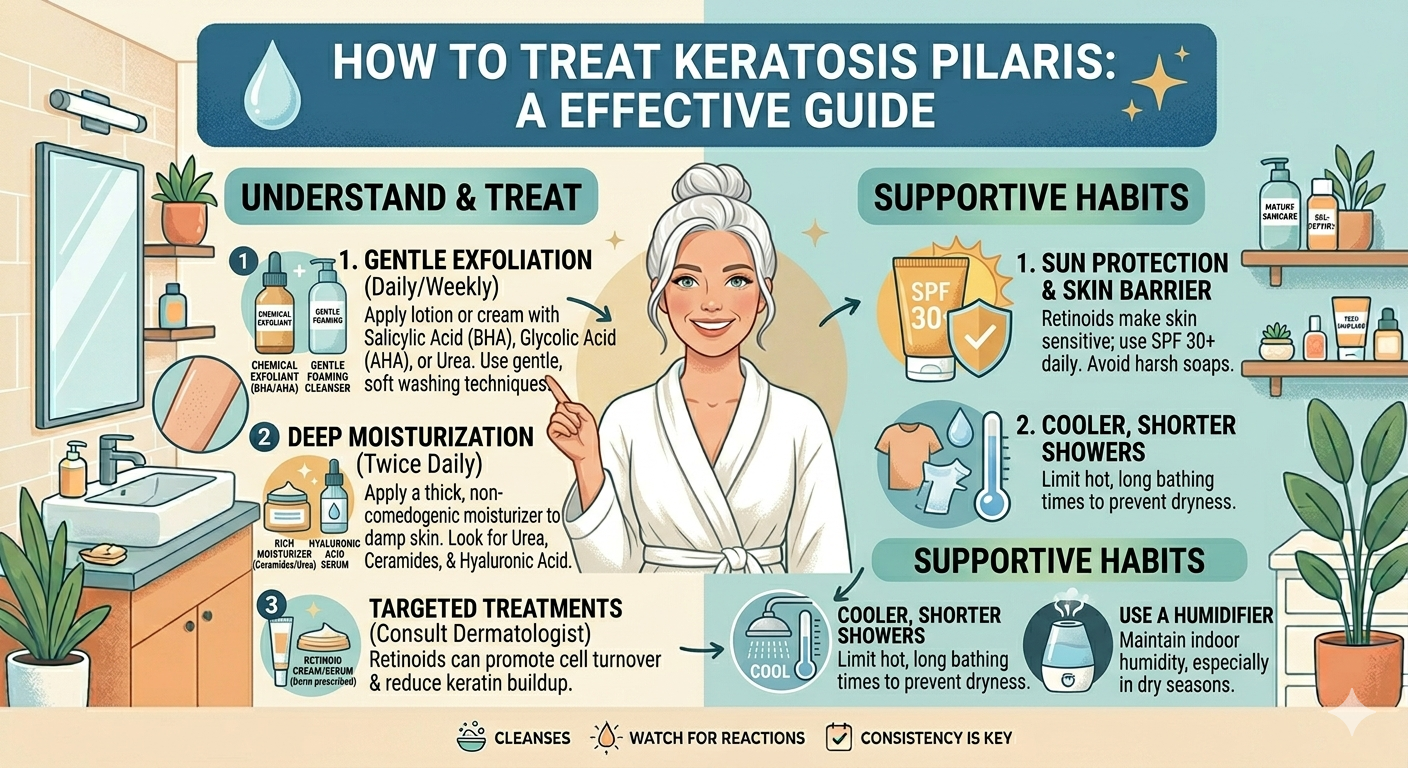
Step 2: Exfoliating Treatment (2–4 times weekly)
Choose:
- Lactic acid lotion
- Salicylic acid body treatment
Step 3: Moisturizer
Apply thick, nourishing lotion.
Weekly Care Routine
Chemical Exfoliation
Use AHAs or BHAs 2–3 times per week.
Hydrating Body Masks
Help soften rough patches.
Dry Brushing (Optional)
May help improve circulation and exfoliation gently.
Medical Treatments for Keratosis Pilaris
Prescription Retinoids
Stronger than over-the-counter options.
Laser Therapy
Helps reduce redness and improve texture.
Microdermabrasion
Removes outer layer of dead skin.
Dermatologist-Grade Creams
Stronger urea or acid-based treatments.
Natural Remedies for Keratosis Pilaris
Coconut Oil
Moisturizes and softens skin.
Aloe Vera
Soothes irritation.
Oatmeal Baths
Calms dry, rough skin.
Honey
Helps with hydration and mild healing.
Note: Natural remedies help moisturize but do not remove KP alone.
Lifestyle Tips for Managing KP
Moisturize Daily
Most important step.
Avoid Harsh Scrubs
Can irritate and worsen bumps.
Use Lukewarm Water
Hot water worsens dryness.
Wear Soft Fabrics
Reduces irritation.
Stay Hydrated
Improves skin condition from within.
Humid Environment
Helps reduce dryness.
Common Mistakes in KP Treatment
Over-Exfoliating
Leads to irritation and redness.
Expecting Instant Results
KP improves slowly over weeks.
Skipping Moisturizer
Worsens rough texture.
Using Harsh Soaps
Strips natural oils.
Picking or Scratching
Can cause inflammation.
How Long Does It Take to Treat Keratosis Pilaris?
- Mild improvement: 2–4 weeks
- Moderate improvement: 1–3 months
- Long-term smoothness: ongoing maintenance
KP is chronic, so maintenance is required.
Can Keratosis Pilaris Be Cured?
There is no permanent cure, but it can be controlled very effectively.
Signs Treatment Is Working
- Smoother skin
- Less redness
- Reduced bumps
- Softer texture
Best Body Care Routine Summary
Daily
- Gentle cleanser
- Hydrating moisturizer
2–4 Times Weekly
- Chemical exfoliation
Ongoing
- Sun protection
- Hydration
External Resources
American Academy of Dermatology
AAD Keratosis Pilaris Guide
Mayo Clinic Skin Condition Info
Mayo Clinic Keratosis Pilaris
Healthline KP Treatment Guide
Healthline Keratosis Pilaris Treatment
WebMD Skin Bumps Overview
WebMD Keratosis Pilaris
Frequently Asked Questions (FAQs)
What is keratosis pilaris caused by?
It is caused by keratin buildup blocking hair follicles.
Is keratosis pilaris permanent?
It is chronic but manageable.
Can KP go away naturally?
It may improve with age but often needs care.
Is keratosis pilaris harmful?
No, it is harmless.
What is the fastest treatment for KP?
Urea, lactic acid, and salicylic acid work best.
Does moisturizing help KP?
Yes, it is essential.
Can diet affect KP?
Indirectly, hydration and nutrition help skin health.
Does sun exposure help KP?
It may temporarily improve appearance but is not treatment.
Can scrubbing remove KP?
No, harsh scrubbing worsens it.
Can KP appear on the face?
Yes, especially in children and teens.
What worsens keratosis pilaris?
Dry skin, harsh products, and cold weather.
Can laser treat KP?
Yes, it can improve redness and texture.
Is KP linked to acne?
No, but both involve clogged follicles.
When should I see a doctor?
If KP becomes severe or inflamed.
Can KP be prevented?
It can be controlled but not fully prevented.
Final Thoughts
Keratosis pilaris is a harmless but persistent skin condition caused by keratin buildup in hair follicles. While it cannot be permanently cured, it can be greatly improved with consistent care.
The most effective approach includes gentle cleansing, regular moisturization, and chemical exfoliation using ingredients like urea, lactic acid, and salicylic acid. With patience and a proper routine, skin can become significantly smoother, softer, and healthier-looking over time.