
Choosing the right skincare is one of the most important steps in achieving healthy, clear, and balanced skin. Many people struggle with breakouts, dryness, oiliness, sensitivity, or uneven texture simply because they are using products that do not match their skin type.
Skincare is not “one size fits all.” A product that works perfectly for one person may cause irritation or breakouts in another. The key is understanding your skin type, identifying your skin concerns, and selecting ingredients that support your skin’s natural barrier.
This guide explains how to choose the right skincare for your skin type in detail, including skin type identification, ingredient selection, routines, product layering, common mistakes, and FAQs.
What Does Skin Type Mean?
Your skin type refers to how your skin behaves naturally. It is influenced by genetics, environment, hormones, and lifestyle.
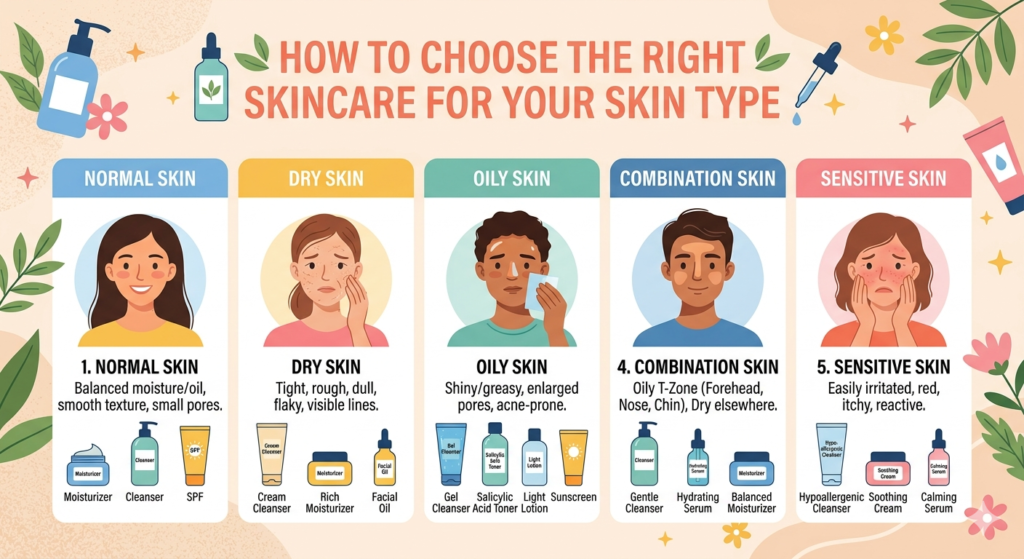
The five main skin types are:
- Normal skin
- Oily skin
- Dry skin
- Combination skin
- Sensitive skin
Each type has different needs and requires different care.
How to Identify Your Skin Type
Before choosing skincare products, you must understand your skin type.
Step 1: Wash Your Face
Use a gentle cleanser and pat dry.
Step 2: Wait 1–2 Hours
Do not apply any products.
Step 3: Observe Your Skin
- Oily all over → Oily skin
- Tight and flaky → Dry skin
- Oily T-zone, dry cheeks → Combination skin
- Redness or irritation → Sensitive skin
- Balanced, smooth → Normal skin
1. Skincare for Oily Skin
Oily skin produces excess sebum, leading to shine, clogged pores, and acne.
Best Ingredients for Oily Skin
- Salicylic acid
- Niacinamide
- Clay (kaolin, bentonite)
- Zinc
- Retinoids
What to Avoid
- Heavy oils
- Thick creams
- Alcohol-based harsh products
Best Routine for Oily Skin
Morning
- Gel cleanser
- Niacinamide serum
- Lightweight moisturizer
- Oil-free sunscreen
Night
- Cleanser
- Salicylic acid or retinoid
- Lightweight moisturizer
Common Issues
- Acne
- Blackheads
- Large pores
2. Skincare for Dry Skin
Dry skin lacks moisture and natural oils, leading to flakiness and tightness.
Best Ingredients
- Hyaluronic acid
- Ceramides
- Glycerin
- Squalane
- Shea butter
What to Avoid
- Strong exfoliants
- Alcohol-heavy toners
- Harsh cleansers
Best Routine for Dry Skin
Morning
- Cream cleanser
- Hydrating serum
- Rich moisturizer
- Sunscreen
Night
- Gentle cleanser
- Hydrating serum
- Thick moisturizer or sleeping mask
Common Issues
- Flaky skin
- Dullness
- Tightness
3. Skincare for Combination Skin
Combination skin has both oily and dry areas.
Best Ingredients
- Niacinamide
- Hyaluronic acid
- Lightweight AHAs
- Gel moisturizers
What to Avoid
- Heavy creams all over face
- Over-drying cleansers
Best Routine
Morning
- Gentle cleanser
- Niacinamide serum
- Lightweight moisturizer
- Sunscreen
Night
- Cleanser
- Treatment (salicylic acid on T-zone if needed)
- Hydrating moisturizer
Common Issues
- Oily T-zone
- Dry cheeks
4. Skincare for Sensitive Skin
Sensitive skin reacts easily to products and environmental triggers.
Best Ingredients
- Aloe vera
- Centella asiatica
- Ceramides
- Panthenol
- Oat extract
What to Avoid
- Fragrance
- Strong acids
- Alcohol-based products
- Harsh scrubs
Best Routine
Morning
- Gentle cleanser
- Soothing serum
- Barrier moisturizer
- Sunscreen (mineral preferred)
Night
- Gentle cleanser
- Hydrating serum
- Barrier repair moisturizer
Common Issues
- Redness
- Burning sensation
- Irritation
5. Normal Skin
Normal skin is balanced and not too oily or dry.
Best Ingredients
- Vitamin C
- Niacinamide
- Hyaluronic acid
- Peptides
Best Routine
Morning
- Gentle cleanser
- Antioxidant serum
- Moisturizer
- Sunscreen
Night
- Cleanser
- Treatment serum
- Moisturizer
How to Choose Products Based on Skin Concerns
Acne-Prone Skin
Use:
- Salicylic acid
- Benzoyl peroxide
- Retinoids
Hyperpigmentation
Use:
- Vitamin C
- Alpha arbutin
- Niacinamide
Anti-Aging
Use:
- Retinol
- Peptides
- Hyaluronic acid
Dull Skin
Use:
- AHAs
- Vitamin C
- Exfoliating serums
How to Layer Skincare Correctly
Step Order
- Cleanser
- Toner (optional)
- Serum (light to heavy)
- Moisturizer
- Sunscreen (morning only)
Rule of Thumb
- Thin products first
- Thick products last
Common Skincare Mistakes
Using Too Many Products
Overloading skin causes irritation.
Ignoring Sunscreen
Leads to aging and pigmentation.
Changing Products Too Quickly
Skin needs time to adjust.
Over-Exfoliating
Damages skin barrier.
Not Moisturizing Oily Skin
All skin types need hydration.
How Long Does It Take to See Results?
- Hydration: 1–3 days
- Acne improvement: 2–4 weeks
- Brightening: 4–8 weeks
- Anti-aging: 2–3 months
Tips for Choosing the Right Products
Read Ingredient Lists
Focus on active ingredients, not marketing.
Patch Test New Products
Apply on small area first.
Start Slowly
Introduce one product at a time.
Match Products to Your Skin Type
Not trends.
External Resources
American Academy of Dermatology – Skin Care Basics
AAD Skin Care Routine Guide
Mayo Clinic – Skin Health Information
Mayo Clinic Skin Care Tips
Healthline – Skin Type Guide
Healthline Skin Types Explained
WebMD – Skincare Routine Basics
WebMD Skin Care Routine Guide
Frequently Asked Questions (FAQs)
How do I know my skin type?
Wash your face and observe oiliness or dryness after 1–2 hours.
Can skin type change over time?
Yes, due to age, hormones, or climate.
What is the best skincare routine for all skin types?
Cleanser, moisturizer, and sunscreen are essential for everyone.
Can oily skin use moisturizer?
Yes, it is necessary.
What ingredients should beginners start with?
Niacinamide and hyaluronic acid are beginner-friendly.
Should I use different products in morning and night?
Yes, especially sunscreen in the morning.
Can I mix different active ingredients?
Yes, but carefully and not all at once.
How often should I change skincare products?
Only if needed; give products 4–6 weeks to work.
Is expensive skincare better?
Not always; ingredients matter more than price.
Do I need toner?
Optional depending on skin needs.
Final Thoughts
Choosing the right skincare for your skin type is the foundation of healthy skin. Once you understand whether your skin is oily, dry, combination, sensitive, or normal, you can select products that support your skin instead of harming it.
The most effective skincare routine is simple, consistent, and tailored to your needs—not based on trends. With the right ingredients and habits, your skin can become clearer, healthier, and more balanced over time.