
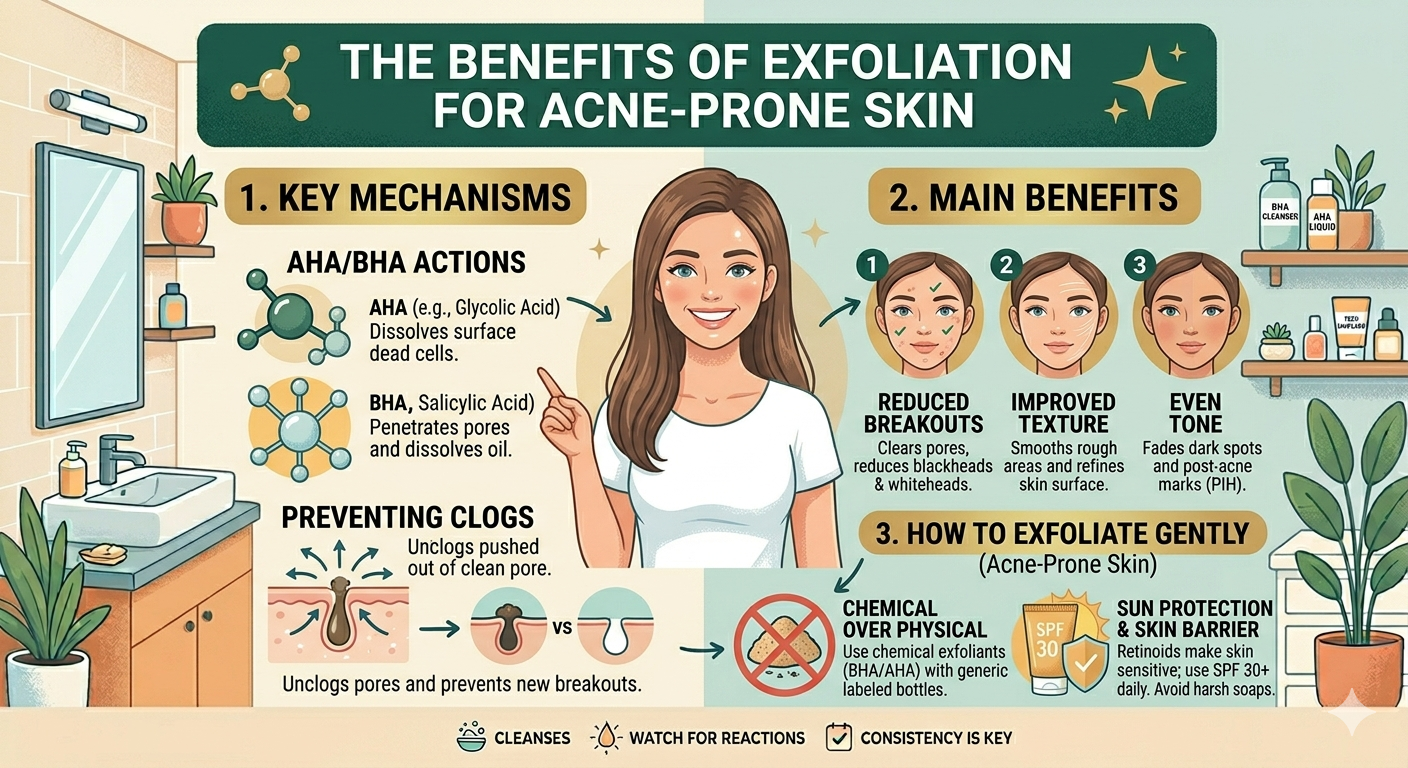
Exfoliation is one of the most important—but also most misunderstood—steps in skincare, especially for acne-prone skin. When done correctly, exfoliation can help unclog pores, reduce breakouts, smooth skin texture, fade acne marks, and improve the effectiveness of other skincare products. However, when overdone or done incorrectly, it can irritate the skin and worsen acne.
For people struggling with blackheads, whiteheads, pimples, or recurring breakouts, understanding exfoliation is a game-changer. The key is not to avoid exfoliation, but to use the right type, frequency, and ingredients for acne-prone skin.
This complete guide explains the benefits of exfoliation for acne-prone skin, how it works, types of exfoliation, best ingredients, skincare routines, common mistakes, professional treatments, and FAQs.
What Is Exfoliation?
Exfoliation is the process of removing dead skin cells from the surface of the skin. The skin naturally sheds dead cells, but this process can slow down, especially in acne-prone skin.
When dead skin cells accumulate, they can:
- Clog pores
- Trap oil (sebum)
- Mix with bacteria
- Lead to blackheads, whiteheads, and acne
Exfoliation helps speed up this process and keeps pores clear.
Why Acne-Prone Skin Needs Exfoliation
Acne-prone skin tends to produce more oil and shed skin cells unevenly. This creates the perfect environment for clogged pores.
Exfoliation helps by:
- Preventing pore blockages
- Reducing oil buildup
- Keeping skin surface smooth
- Improving skin renewal
Types of Exfoliation
There are three main types of exfoliation:
1. Chemical Exfoliation (Best for Acne-Prone Skin)
Chemical exfoliants use acids or enzymes to dissolve dead skin cells.
Common types:
- AHAs (Alpha Hydroxy Acids)
- BHAs (Beta Hydroxy Acids)
- PHAs (Polyhydroxy Acids)
2. Physical Exfoliation
Uses scrubs or tools to manually remove dead skin.
Examples:
- Face scrubs
- Brushes
- Sponges
3. Enzyme Exfoliation
Uses natural enzymes from fruits like papaya or pineapple.
Why Chemical Exfoliation Is Best for Acne-Prone Skin
Chemical exfoliants work inside the pores rather than just on the surface.
They:
- Unclog pores deeply
- Reduce inflammation
- Improve acne and texture
- Are gentler when used correctly
Best Exfoliating Ingredients for Acne-Prone Skin
Salicylic Acid (BHA)
The most important exfoliant for acne-prone skin.
Benefits:
- Penetrates oil in pores
- Clears blackheads and whiteheads
- Reduces inflammation
- Prevents breakouts
Glycolic Acid (AHA)
Benefits:
- Removes surface dead skin
- Brightens skin tone
- Fades acne marks
- Improves texture
Lactic Acid (AHA)
A gentler option.
Benefits:
- Hydrates while exfoliating
- Suitable for sensitive acne-prone skin
Mandelic Acid
Very gentle and effective.
Benefits:
- Reduces acne
- Improves pigmentation
- Good for sensitive skin
Benzoyl Peroxide (Technically not an exfoliant, but acne treatment)
Benefits:
- Kills acne-causing bacteria
- Reduces inflammation
Polyhydroxy Acids (PHAs)
Benefits:
- Gentle exfoliation
- Suitable for sensitive skin
- Improves skin barrier
Key Benefits of Exfoliation for Acne-Prone Skin
1. Unclogs Pores
Exfoliation removes dead skin cells and oil buildup that block pores.
2. Reduces Blackheads and Whiteheads
By keeping pores clear, exfoliation reduces comedones.
3. Prevents New Breakouts
Regular exfoliation stops acne before it starts.
4. Smooths Skin Texture
Helps reduce roughness and uneven skin surface.
5. Fades Acne Marks
Exfoliation speeds up skin renewal, helping fade post-acne pigmentation.
6. Improves Product Absorption
Skincare products penetrate better on exfoliated skin.
7. Controls Excess Oil
Helps balance sebum production over time.
8. Brightens Dull Skin
Removes dead skin buildup that causes dullness.
How to Exfoliate Acne-Prone Skin Safely
Step-by-Step Routine
Step 1: Cleanse Skin
Use a gentle cleanser to remove dirt and oil.
Step 2: Apply Exfoliant
Use chemical exfoliant (like salicylic acid or glycolic acid).
Step 3: Moisturize
Hydration is essential to prevent irritation.
Step 4: Sunscreen (Morning Only)
Protects newly exfoliated skin from UV damage.
Best Frequency for Exfoliation
- Mild acne: 2–3 times per week
- Sensitive skin: 1–2 times per week
- Oily skin: 3–4 times per week (if tolerated)
Best Skincare Routine for Acne-Prone Skin with Exfoliation
Morning Routine
- Gentle cleanser
- Niacinamide serum
- Lightweight moisturizer
- Sunscreen
Night Routine
- Cleanser
- Chemical exfoliant (2–3 times weekly)
- Retinoid (on alternate nights)
- Moisturizer
Weekly Routine
- Clay mask (1–2 times weekly)
- Hydrating mask (as needed)
Common Mistakes in Exfoliation
Over-Exfoliating
Can damage skin barrier and worsen acne.
Using Harsh Scrubs
Physical scrubs can cause micro-tears.
Not Moisturizing
Leads to dryness and irritation.
Skipping Sunscreen
Makes acne marks worse.
Using Too Many Actives Together
Can cause inflammation and breakouts.
Professional Exfoliation Treatments
Chemical Peels
Deep exfoliation performed by dermatologists.
Microdermabrasion
Removes outer skin layer for smoother texture.
Laser Treatments
Targets acne scars and pigmentation.
Dermaplaning
Removes dead skin and fine hair.
Natural Exfoliation Options
Oatmeal
Gentle soothing exfoliant.
Yogurt (Lactic Acid)
Mild natural exfoliation.
Honey and Sugar Scrubs (Caution)
Can be too harsh for acne-prone skin if used incorrectly.
Important Note
Natural exfoliation is not as effective as chemical exfoliation for acne.
How Long Does It Take to See Results?
- Clearer pores: 1–2 weeks
- Reduced acne: 2–4 weeks
- Improved texture: 4–8 weeks
- Faded acne marks: 6–12 weeks
Signs You Are Over-Exfoliating
- Redness
- Burning sensation
- Increased breakouts
- Dry, tight skin
- Flaking
How to Fix Over-Exfoliation
- Stop exfoliating temporarily
- Use gentle cleanser
- Apply ceramide moisturizer
- Avoid active ingredients
Who Should Exfoliate?
- Acne-prone skin
- Oily skin
- Combination skin
- People with clogged pores
Who Should Be Careful?
- Very sensitive skin
- Eczema-prone skin
- Extremely dry skin
External Resources
American Academy of Dermatology
AAD Acne Treatment Guide
Mayo Clinic Acne Information
Mayo Clinic Acne Care
Healthline Exfoliation Guide
Healthline Exfoliation Skincare
WebMD Acne Treatment Overview
WebMD Acne Care Guide
Frequently Asked Questions (FAQs)
Is exfoliation good for acne-prone skin?
Yes, when done correctly it helps clear pores and reduce breakouts.
How often should I exfoliate acne-prone skin?
2–3 times per week is usually ideal.
What is the best exfoliant for acne?
Salicylic acid is the most effective.
Can exfoliation remove acne scars?
It helps fade them but does not remove deep scars completely.
Can I exfoliate every day?
Not recommended for most skin types.
Is scrubbing good for acne?
No, it can irritate and worsen acne.
Should I moisturize after exfoliating?
Yes, always.
Can exfoliation cause purging?
Yes, temporary purging can happen with active ingredients.
What happens if I over-exfoliate?
Skin becomes irritated, dry, and more acne-prone.
Can oily skin exfoliate more often?
Yes, but still with caution.
Is chemical exfoliation better than physical?
Yes, especially for acne-prone skin.
Can I use retinol and exfoliant together?
Yes, but not on the same night.
Does exfoliation remove blackheads?
Yes, it helps significantly.
When will I see results?
Usually within 2–4 weeks.
Do I need sunscreen after exfoliation?
Yes, always essential.
Final Thoughts
Exfoliation is one of the most powerful tools for managing acne-prone skin when used correctly. It helps unclog pores, reduce breakouts, improve texture, and fade acne marks. However, balance is key—over-exfoliation can damage the skin barrier and worsen acne.
The best approach is to use gentle chemical exfoliants like salicylic acid, glycolic acid, or lactic acid in moderation, combined with hydration and sun protection. With consistency and care, exfoliation can transform acne-prone skin into clearer, smoother, and healthier-looking skin over time.