
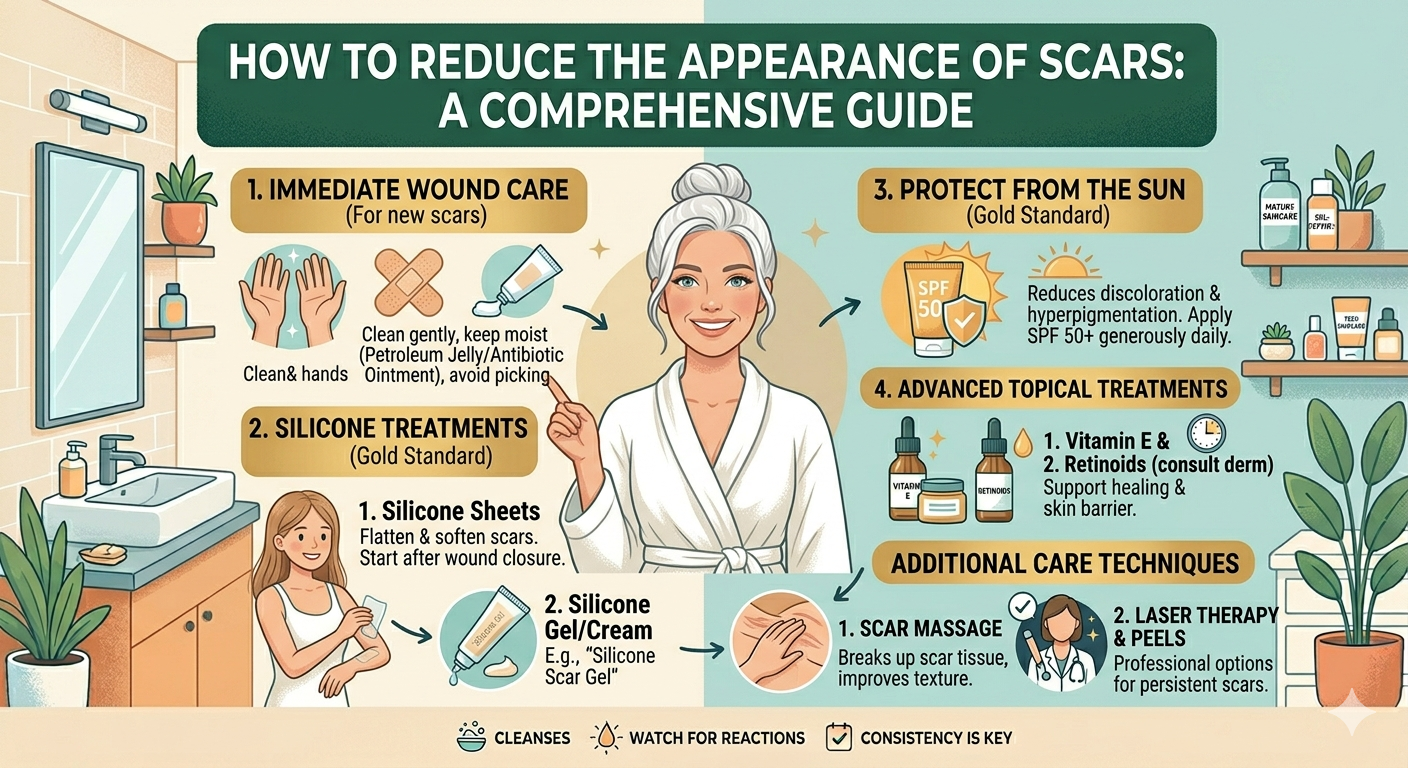
Scars are a natural part of the skin’s healing process, but they often remain long after the original wound or acne has healed. Whether they come from acne, cuts, burns, surgery, or skin irritation, scars can affect skin texture, tone, and confidence.
While scars cannot always be completely erased, their appearance can often be significantly reduced with the right combination of skincare, ingredients, treatments, and consistent habits. The key is understanding what type of scar you have and choosing the right approach for it.
This complete guide explains how to reduce the appearance of scars, including types of scars, causes, best ingredients, skincare routines, professional treatments, prevention tips, and FAQs.
What Are Scars?
Scars form when the skin repairs itself after injury. When the deeper layer of skin (dermis) is damaged, the body produces collagen fibers to heal the wound. These fibers often look different from normal skin, creating a scar.
Scars may appear:
- Flat or raised
- Dark, red, or lighter than surrounding skin
- Smooth or textured
- Permanent or fading over time
Types of Scars
Understanding the type of scar is essential for treatment.
1. Atrophic Scars (Depressed Scars)
These scars form when the skin loses tissue.
Common types:
- Ice pick scars
- Boxcar scars
- Rolling scars
- Acne pits
2. Hypertrophic Scars
Raised scars that stay within the wound boundary.
3. Keloid Scars
Raised scars that grow beyond the original injury site and may continue growing.
4. Post-Inflammatory Marks (PIH & PIE)
Not true scars but discoloration left after healing.
- PIH: Dark brown or black marks
- PIE: Red or pink marks
Causes of Scarring
Scars can form due to:
- Acne breakouts
- Picking or squeezing pimples
- Cuts or injuries
- Burns
- Surgery
- Skin infections
- Poor wound healing
How Scars Form in the Skin
When the skin is injured:
- The body sends signals to repair damage
- Collagen is produced rapidly
- The new tissue forms differently than normal skin
- A visible scar is left behind
Deeper injuries usually create more visible scars.
Best Ingredients to Reduce the Appearance of Scars
Retinoids (Retinol, Tretinoin)
Retinoids increase skin cell turnover and collagen production.
Benefits:
- Smooth uneven texture
- Fade acne scars
- Improve skin regeneration
Vitamin C
A powerful antioxidant for skin repair.
Benefits:
- Brightens dark scars
- Boosts collagen
- Improves skin tone
Niacinamide
Helps repair and calm skin.
Benefits:
- Reduces redness
- Fades dark marks
- Strengthens skin barrier
Alpha Hydroxy Acids (AHAs)
Includes glycolic acid and lactic acid.
Benefits:
- Exfoliates dead skin
- Improves texture
- Fades surface scars
Salicylic Acid (BHA)
Best for acne-prone skin and prevention.
Benefits:
- Clears pores
- Prevents new breakouts
- Reduces inflammation
Azelaic Acid
Excellent for acne scars and redness.
Benefits:
- Reduces pigmentation
- Calms inflammation
- Improves skin tone
Silicone Gel
One of the most effective treatments for raised scars.
Benefits:
- Flattens scars
- Softens texture
- Improves appearance over time
Hyaluronic Acid
Supports skin healing.
Benefits:
- Hydrates deeply
- Improves skin plumpness
- Supports repair process
Sunscreen (Most Important Step)
Prevents scars from worsening.
Benefits:
- Stops darkening of scars
- Protects healing skin
- Prevents pigmentation
Best Skincare Routine for Scar Reduction
Morning Routine
Step 1: Gentle Cleanser
Removes oil and impurities without irritation.
Step 2: Vitamin C Serum
Brightens skin and fades pigmentation.
Step 3: Moisturizer
Supports barrier repair and hydration.
Step 4: Sunscreen (SPF 30+)
Essential to prevent scars from darkening.
Night Routine
Step 1: Cleanser
Removes dirt, oil, and sunscreen.
Step 2: Retinoid Treatment (2–4 times weekly)
Boosts collagen and improves texture.
Step 3: Hydrating Serum
Helps repair and calm skin.
Step 4: Moisturizer
Supports overnight healing.
Weekly Routine
Chemical Exfoliation (1–2 times weekly)
- Glycolic acid
- Lactic acid
- Mandelic acid
Professional Treatments for Scars
Microneedling
Stimulates collagen production to improve texture.
Laser Therapy
Targets deep scars and pigmentation.
Chemical Peels
Remove damaged outer layers of skin.
Dermal Fillers
Used for deep acne scars.
Subcision
Breaks fibrous scar tissue under the skin.
Steroid Injections
Used for keloid and hypertrophic scars.
Consult a dermatologist before treatment.
Natural Remedies for Scars
Aloe Vera
Soothes and promotes healing.
Honey
Has antibacterial and healing properties.
Turmeric
Reduces inflammation.
Rosehip Oil
Supports skin regeneration.
Note: Natural remedies are supportive and not replacements for medical treatments.
How Long Does It Take to Reduce Scars?
- Dark spots: 2–8 weeks
- Mild scars: 1–3 months
- Deep scars: 3–12 months or longer
- Professional treatments: gradual improvement over several sessions
Lifestyle Tips for Scar Healing
Avoid Picking Skin
Prevents new scars from forming.
Eat Skin-Friendly Foods
- Vitamin C-rich fruits
- Protein
- Antioxidants
Stay Hydrated
Helps skin repair faster.
Get Enough Sleep
Supports collagen production.
Manage Stress
Reduces inflammation and breakouts.
Common Mistakes When Treating Scars
Expecting Quick Results
Scar fading takes time.
Skipping Sunscreen
Makes scars darker and more visible.
Over-Exfoliating
Damages skin barrier.
Using Too Many Actives
Can irritate skin and worsen scars.
Picking Pimples
Main cause of acne scars.
Types of Scars and Best Treatments
Dark Scars (PIH)
Best treated with:
- Vitamin C
- Niacinamide
- Sunscreen
Red Scars (PIE)
Best treated with:
- Azelaic acid
- Niacinamide
- Sun protection
Deep Scars
Best treated with:
- Microneedling
- Laser therapy
- Retinoids
Raised Scars
Best treated with:
- Silicone gel
- Steroid injections
Prevention of Scars
- Treat acne early
- Avoid picking pimples
- Use sunscreen daily
- Keep skin moisturized
- Use gentle skincare products
Signs Your Scar Treatment Is Working
- Gradual fading of discoloration
- Smoother skin texture
- Reduced redness
- More even tone
External Resources
American Academy of Dermatology
AAD Scar Treatment Guide
Mayo Clinic Scar Information
Mayo Clinic Scars Overview
Healthline Scar Removal Guide
Healthline Scar Treatment Tips
WebMD Scar Care Guide
WebMD Scar Treatment Options
CeraVe Skin Repair Information
CeraVe Scar Care Guide
Frequently Asked Questions (FAQs)
Can scars be completely removed?
No, but they can be significantly reduced.
What is the fastest way to fade scars?
Retinoids, vitamin C, and sunscreen together work best.
Do scars fade naturally?
Yes, many fade over time.
How long do scars take to heal?
Weeks to months depending on severity.
Does sunscreen help scars?
Yes, it prevents darkening.
Can acne scars disappear?
Some fade, others need treatment.
Is retinol good for scars?
Yes, it improves texture and tone.
Do natural remedies remove scars?
They may help slightly but are not enough alone.
Can laser remove scars?
It can greatly improve their appearance.
What causes permanent scars?
Deep skin injury and poor healing.
Can I prevent scars?
Yes, with proper skin care.
Does picking pimples cause scars?
Yes, it is a major cause.
Are dark spots scars?
They are post-inflammatory marks.
When should I see a dermatologist?
For deep or persistent scars.
Can diet help scars heal?
Yes, nutrition supports skin repair.
Final Thoughts
Scars are a natural result of the skin’s healing process, but their appearance can often be greatly improved with the right care. The most effective approach combines retinoids, vitamin C, niacinamide, exfoliating acids, and daily sunscreen use.
For deeper or stubborn scars, professional treatments like microneedling, laser therapy, or chemical peels may be necessary. With consistency, patience, and proper care, scars can become much less visible, helping the skin look smoother, healthier, and more even over time.