
Oily skin can feel frustrating, unpredictable, and difficult to manage. One day your skin may look fresh and glowing, while the next day it appears greasy, shiny, and prone to breakouts. Many people with oily skin struggle to find products that balance oil production without causing dryness or irritation. The good news is that oily skin can be managed effectively with the right skincare routine, healthy habits, and proper product selection.
A consistent skincare routine does more than reduce shine. It helps protect the skin barrier, prevent acne, minimize enlarged pores, improve skin texture, and create a healthy complexion. Understanding how oily skin works is the first step toward building a routine that actually delivers results.
This complete guide explains the best skincare routine for oily skin, including morning and night steps, ingredients to look for, products to avoid, lifestyle habits, common mistakes, seasonal adjustments, and expert tips. Whether you deal with occasional oiliness or severe acne-prone skin, this article will help you create a routine that supports healthier and clearer skin.
Understanding Oily Skin
Oily skin occurs when the sebaceous glands produce excess sebum. Sebum is a natural oil that helps protect and moisturize the skin. While sebum is necessary for healthy skin, overproduction can lead to clogged pores, acne, blackheads, whiteheads, and excessive shine
Several factors contribute to oily skin, including:
- Genetics
- Hormonal changes
- Stress
- Humid weather
- Diet
- Overwashing the face
- Using harsh skincare products
- Lack of hydration
People with oily skin often notice:
- A shiny appearance, especially on the forehead, nose, and chin
- Enlarged pores
- Frequent acne breakouts
- Blackheads and whiteheads
- Makeup that slides off easily
Although oily skin can be challenging, it also has advantages. Oily skin tends to age more slowly than dry skin because natural oils help maintain moisture and elasticity.
Why a Proper Skincare Routine Matters
Many people make the mistake of trying to remove all oil from their skin. This can actually make the problem worse. When the skin becomes too dry, it may respond by producing even more oil.
A proper skincare routine should focus on:
- Balancing oil production
- Keeping pores clear
- Maintaining hydration
- Strengthening the skin barrier
- Preventing inflammation
- Reducing acne breakouts
Consistency is the key to success. Using the right products daily can significantly improve oily skin over time.
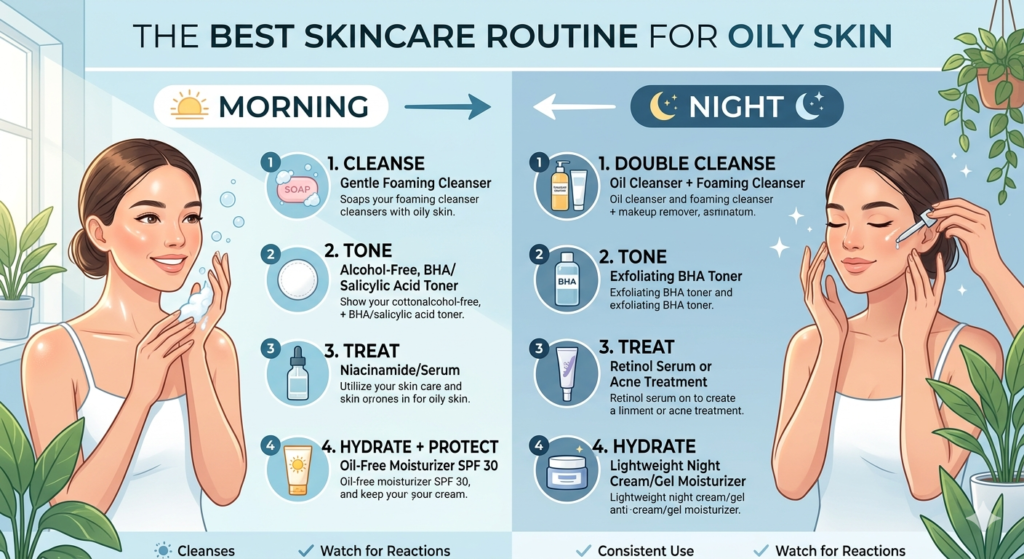
The Ideal Morning Skincare Routine for Oily Skin
Morning skincare helps prepare the skin for the day by controlling oil, protecting against environmental damage, and maintaining hydration.
Step 1: Use a Gentle Cleanser
Cleansing is the foundation of every skincare routine. For oily skin, choose a gentle foaming or gel cleanser that removes excess oil without stripping the skin.
Look for ingredients such as:
- Salicylic acid
- Niacinamide
- Tea tree oil
- Zinc
- Green tea extract
Avoid cleansers that contain high amounts of alcohol or harsh sulfates because they can irritate the skin.
A good cleanser should:
- Remove dirt and oil
- Clean pores effectively
- Maintain the skin barrier
- Leave the skin feeling fresh, not tight
Wash your face with lukewarm water rather than hot water. Hot water can increase oil production and irritation.
Step 2: Apply a Toner
Toners can help remove leftover impurities and balance the skin after cleansing. Modern toners are designed to hydrate and refine pores rather than dry out the skin.
For oily skin, choose alcohol-free toners with ingredients like:
- Witch hazel
- Niacinamide
- Rose water
- Green tea
- Centella asiatica
Toners can help:
- Reduce excess shine
- Calm inflammation
- Improve skin texture
- Prepare the skin for serums and moisturizers
Step 3: Use a Lightweight Serum
Serums deliver concentrated ingredients that target specific skin concerns. Oily skin benefits from lightweight, non-comedogenic serums.
Best serum ingredients for oily skin include:
Niacinamide
Niacinamide helps regulate oil production, minimize pores, reduce redness, and strengthen the skin barrier.
Salicylic Acid
Salicylic acid penetrates deep into pores to dissolve excess oil and dead skin cells.
Hyaluronic Acid
Even oily skin needs hydration. Hyaluronic acid provides moisture without making the skin greasy.
Vitamin C
Vitamin C brightens the skin, fades acne marks, and protects against environmental stress.
Step 4: Apply an Oil-Free Moisturizer
One of the biggest myths about oily skin is that moisturizer should be avoided. Skipping moisturizer can actually cause the skin to produce more oil.
Choose moisturizers labeled:
- Oil-free
- Non-comedogenic
- Lightweight
- Gel-based
Good ingredients include:
- Hyaluronic acid
- Ceramides
- Aloe vera
- Glycerin
Moisturizing helps:
- Maintain hydration
- Balance oil production
- Support the skin barrier
- Reduce irritation
Step 5: Wear Sunscreen Every Day
Sunscreen is essential for all skin types, including oily skin. Sun damage can worsen acne scars, increase inflammation, and accelerate aging.
Look for sunscreens that are:
- Oil-free
- Matte finish
- Non-comedogenic
- Broad-spectrum SPF 30 or higher
Gel sunscreens and lightweight fluid sunscreens work especially well for oily skin.
Benefits of sunscreen include:
- Protection against UV damage
- Prevention of hyperpigmentation
- Reduced premature aging
- Improved skin health
The Ideal Night Skincare Routine for Oily Skin
Nighttime is when the skin repairs and regenerates itself. A proper evening routine helps remove impurities and treat skin concerns more effectively.
Step 1: Double Cleanse
If you wear makeup or sunscreen, double cleansing is highly effective.
Start with:
- Micellar water
- Cleansing balm
- Oil cleanser designed for oily skin
Follow with a gentle foaming cleanser.
Double cleansing helps remove:
- Makeup
- Sunscreen
- Dirt
- Excess oil
- Pollution particles
Step 2: Exfoliate Two to Three Times Weekly
Exfoliation removes dead skin cells and helps keep pores clear.
The best exfoliants for oily skin are chemical exfoliants such as:
- Salicylic acid
- Glycolic acid
- Lactic acid
Avoid harsh physical scrubs because they can irritate the skin and worsen breakouts.
Benefits of exfoliation include:
- Smoother texture
- Reduced clogged pores
- Fewer breakouts
- Brighter complexion
- Better absorption of skincare products
Do not over-exfoliate. Excessive exfoliation can damage the skin barrier and increase oiliness.
Step 3: Apply Treatment Products
Nighttime is the best time to use active treatments.
Retinol
Retinol helps reduce acne, improve skin texture, minimize pores, and control oil production.
Start slowly by using retinol two or three nights per week.
Benzoyl Peroxide
Benzoyl peroxide targets acne-causing bacteria and helps reduce breakouts.
Azelaic Acid
Azelaic acid reduces inflammation, acne, and hyperpigmentation.
Niacinamide
Niacinamide can also be used at night to support the skin barrier and regulate oil.
Step 4: Moisturize
Night moisturizers help repair and hydrate the skin while you sleep.
Choose lightweight formulas that support the skin barrier without clogging pores.
Ingredients to look for include:
- Ceramides
- Peptides
- Panthenol
- Hyaluronic acid
Best Ingredients for Oily Skin
Understanding skincare ingredients helps you choose products that truly benefit oily skin.
Salicylic Acid
Salicylic acid is one of the best ingredients for oily and acne-prone skin. It exfoliates inside the pores and helps prevent breakouts.
Niacinamide
Niacinamide regulates sebum production, improves texture, and reduces redness.
Hyaluronic Acid
This ingredient hydrates the skin without adding oil.
Retinol
Retinol improves acne, fine lines, enlarged pores, and uneven texture.
Clay
Clay masks absorb excess oil and deeply cleanse the pores.
Zinc
Zinc helps reduce inflammation and regulate oil production.
Tea Tree Oil
Tea tree oil has antibacterial properties that help reduce acne.
Green Tea Extract
Green tea helps calm inflammation and reduce excess sebum.
Ingredients to Avoid for Oily Skin
Certain ingredients may worsen oiliness or clog pores.
Avoid:
- Heavy oils
- Thick creams
- Alcohol-heavy products
- Harsh scrubs
- Fragranced products if sensitive
- Comedogenic ingredients
Always patch-test new products before using them regularly.
Weekly Skincare Treatments for Oily Skin
Clay Masks
Clay masks are excellent for oily skin because they absorb excess oil and remove impurities.
Popular clay types include:
- Bentonite clay
- Kaolin clay
- French green clay
Use clay masks once or twice weekly.
Sheet Masks
Hydrating sheet masks with calming ingredients can help balance oily skin.
Look for:
- Aloe vera
- Green tea
- Centella asiatica
- Hyaluronic acid
Spot Treatments
Spot treatments help reduce active acne quickly.
Ingredients include:
- Sulfur
- Salicylic acid
- Benzoyl peroxide
Common Mistakes People with Oily Skin Make
Overwashing the Face
Washing the face too frequently can strip natural oils and trigger more sebum production.
Skipping Moisturizer
Dehydrated skin often becomes oilier.
Using Harsh Products
Strong products may damage the skin barrier and increase irritation.
Over-Exfoliating
Too much exfoliation can lead to redness, sensitivity, and breakouts.
Not Wearing Sunscreen
Sun damage worsens inflammation and acne marks.
Picking at Acne
Picking pimples can cause scarring and spread bacteria.
Best Lifestyle Habits for Oily Skin
Skincare products are important, but lifestyle habits also affect the skin.
Stay Hydrated
Drinking enough water helps maintain skin balance.
Eat a Balanced Diet
Some people notice improvements by reducing:
- Sugary foods
- Processed foods
- Excess dairy
- Greasy fast foods
Include foods rich in:
- Omega-3 fatty acids
- Fruits
- Vegetables
- Antioxidants
Manage Stress
Stress hormones can increase oil production and acne.
Stress management techniques include:
- Exercise
- Meditation
- Yoga
- Adequate sleep
Change Pillowcases Frequently
Dirty pillowcases can transfer oil and bacteria to the skin.
Avoid Touching Your Face
Touching the face spreads dirt and bacteria.
How Weather Affects Oily Skin
Summer Skincare Tips
Hot and humid weather often increases oil production.
In summer:
- Use lightweight gel moisturizers
- Choose mattifying sunscreen
- Use blotting papers
- Cleanse properly after sweating
Winter Skincare Tips
Cold weather may dehydrate oily skin.
In winter:
- Use hydrating products
- Avoid overly harsh cleansers
- Maintain moisturizer use
Makeup Tips for Oily Skin
Makeup can look beautiful on oily skin when the right products are used.
Use a Mattifying Primer
Primers help control shine and improve makeup longevity.
Choose Oil-Free Foundation
Look for long-wear and non-comedogenic formulas.
Set Makeup with Powder
Translucent powder helps reduce shine.
Use Setting Spray
Setting sprays improve makeup wear throughout the day.
Remove Makeup Thoroughly
Never sleep with makeup on because it can clog pores.
Skincare Routine for Acne-Prone Oily Skin
Acne-prone oily skin requires extra care.
Morning Routine
- Gentle cleanser
- Niacinamide serum
- Lightweight moisturizer
- Sunscreen
Evening Routine
- Double cleanse
- Salicylic acid treatment
- Retinol or acne treatment
- Moisturizer
Be patient with acne treatments. Many ingredients take several weeks to show results.
Skincare Routine for Sensitive Oily Skin
Sensitive oily skin needs calming and gentle products.
Choose:
- Fragrance-free products
- Gentle cleansers
- Minimal active ingredients
- Soothing moisturizers
Ingredients that help sensitive oily skin include:
- Centella asiatica
- Oat extract
- Panthenol
- Ceramides
Avoid using too many active ingredients at once.
How Hormones Affect Oily Skin
Hormonal fluctuations can significantly increase oil production.
Common triggers include:
- Puberty
- Menstrual cycles
- Pregnancy
- Stress
- Hormonal conditions
If severe acne or oiliness persists, consulting a dermatologist may help identify underlying hormonal issues.
How Long Does It Take to Improve Oily Skin?
Results depend on the products used, skin condition, and consistency.
Typical timelines:
- Hydration improvements: a few days
- Reduced oiliness: 2 to 4 weeks
- Acne improvement: 6 to 12 weeks
- Texture and scarring improvement: several months
Consistency matters more than using many products.
Building a Simple Skincare Routine for Beginners
If you are new to skincare, start with the basics.
Basic Morning Routine
- Cleanser
- Moisturizer
- Sunscreen
Basic Night Routine
- Cleanser
- Treatment product
- Moisturizer
Once your skin adjusts, you can slowly introduce additional products.
How to Choose Products for Oily Skin
Always read labels carefully.
Look for terms such as:
- Oil-free
- Non-comedogenic
- Lightweight
- Gel-based
- Fragrance-free
Avoid buying products simply because they are trending online.
Natural Remedies for Oily Skin
Some natural ingredients may support oily skin management.
Aloe Vera
Aloe vera can calm inflammation and provide lightweight hydration.
Green Tea
Green tea contains antioxidants that help reduce inflammation.
Honey
Honey has antibacterial and soothing properties.
Oatmeal
Oatmeal can calm irritated skin.
Natural remedies should still be patch-tested before use.
Professional Treatments for Oily Skin
If home skincare is not enough, professional treatments may help.
Chemical Peels
Chemical peels exfoliate the skin and improve acne.
HydraFacial
HydraFacial treatments deeply cleanse and hydrate the skin.
Laser Treatments
Some laser treatments help reduce oil production and acne scars.
Microneedling
Microneedling can improve acne scars and skin texture.
Consult a licensed dermatologist or skincare professional before starting professional treatments.
The Importance of Skin Barrier Health
The skin barrier protects against moisture loss and environmental damage.
Signs of a damaged skin barrier include:
- Redness
- Irritation
- Burning
- Increased breakouts
- Excessive oiliness
To maintain a healthy barrier:
- Avoid harsh products
- Moisturize regularly
- Use sunscreen daily
- Avoid over-exfoliating
Best Order to Apply Skincare Products
Correct product order improves effectiveness.
Morning Order
- Cleanser
- Toner
- Serum
- Moisturizer
- Sunscreen
Evening Order
- Makeup remover
- Cleanser
- Exfoliant or treatment
- Serum
- Moisturizer
Apply products from thinnest to thickest texture.
Signs Your Skincare Routine Is Working
A successful skincare routine may result in:
- Reduced oiliness
- Fewer breakouts
- Smaller-looking pores
- Smoother texture
- Balanced hydration
- Brighter complexion
Healthy skin takes time and consistency.
Signs Your Skincare Routine Is Not Working
You may need to adjust your routine if you notice:
- Increased irritation
- Excessive dryness
- More breakouts
- Burning sensation
- Persistent redness
Introduce new products gradually to identify possible triggers.
Best Habits for Long-Term Skin Health
Be Consistent
Consistency delivers better results than constantly switching products.
Protect Your Skin from the Sun
Daily sunscreen use is essential.
Avoid Sleeping with Makeup
Clean skin supports healthy pores and barrier function.
Get Enough Sleep
Sleep supports skin repair and hormonal balance.
Exercise Regularly
Exercise improves circulation and overall health.
Recommended External Resources
American Academy of Dermatology
https://www.aad.org
Mayo Clinic Skin Care Guide
https://www.mayoclinic.org
CeraVe Skincare Education
https://www.cerave.com
La Roche-Posay Skincare Advice
https://www.laroche-posay.us
Paula’s Choice Ingredient Dictionary
https://www.paulaschoice.com
National Eczema Association Skin Care Tips
https://nationaleczema.org
Healthline Skin Care Articles
https://www.healthline.com
WebMD Skin Care Information
https://www.webmd.com
Frequently Asked Questions About Oily Skin
What causes oily skin?
Oily skin is mainly caused by overactive sebaceous glands. Genetics, hormones, stress, and weather can also contribute.
Can oily skin be cured permanently?
Oily skin cannot usually be cured permanently, but it can be managed effectively with proper skincare and healthy habits.
Should oily skin use moisturizer?
Yes. Moisturizer helps maintain hydration and prevent the skin from producing excess oil.
How many times should oily skin wash the face?
Most people with oily skin should wash their face twice daily.
Is sunscreen necessary for oily skin?
Yes. Sunscreen protects against UV damage, hyperpigmentation, and premature aging.
Which cleanser is best for oily skin?
Gentle foaming or gel cleansers with salicylic acid or niacinamide work well for many people.
Can oily skin become dehydrated?
Yes. Oily skin can still lack water and become dehydrated.
Are facial oils bad for oily skin?
Not always. Some lightweight oils may support the skin barrier, but heavy oils may clog pores.
Does diet affect oily skin?
Diet may influence acne and oil production in some individuals.
Is exfoliation necessary for oily skin?
Yes, but it should be done carefully. Two or three times weekly is usually enough.
What is the best ingredient for oily acne-prone skin?
Salicylic acid is one of the most effective ingredients for oily and acne-prone skin.
Can stress increase oily skin?
Yes. Stress hormones may stimulate oil production.
Why does my skin become oily after washing?
Harsh cleansers can strip the skin, causing it to produce more oil.
Should oily skin avoid makeup?
No. Oil-free and non-comedogenic makeup products can work well for oily skin.
How long does it take for skincare products to work?
Most skincare products require several weeks of consistent use before noticeable improvements appear.
Is oily skin more prone to acne?
Yes. Excess oil can clog pores and contribute to acne formation.
Can oily skin age slower?
Oily skin may develop wrinkles more slowly because natural oils help maintain moisture.
Are clay masks good for oily skin?
Yes. Clay masks absorb excess oil and help cleanse pores.
Can oily skin use hyaluronic acid?
Yes. Hyaluronic acid hydrates without making the skin greasy.
What should oily skin avoid?
Oily skin should avoid harsh alcohol-based products, over-exfoliation, and heavy pore-clogging products.
Final Thoughts
Managing oily skin does not require complicated routines or expensive products. The most effective skincare routine for oily skin focuses on balance rather than removing every trace of oil. Gentle cleansing, proper hydration, targeted treatments, and consistent sun protection are the foundations of healthy skin.
Understanding your skin type and choosing products with suitable ingredients can dramatically improve oil control, reduce acne, and support long-term skin health. Patience is essential because skincare results take time. A simple and consistent routine often delivers better outcomes than using too many products at once.
With the right habits and skincare approach, oily skin can become healthier, clearer, smoother, and more balanced over time.