
Rosacea is a chronic inflammatory skin condition that primarily affects the face. It often appears as persistent redness, flushing, visible blood vessels, sensitivity, and sometimes acne-like bumps. While rosacea is not dangerous, it can significantly impact confidence, comfort, and quality of life.
Unlike temporary redness, rosacea is a long-term condition that requires ongoing care rather than a one-time treatment. Many people notice that their skin reacts strongly to triggers such as heat, spicy foods, stress, alcohol, or harsh skincare products.
The good news is that rosacea can be managed effectively with the right skincare routine, lifestyle adjustments, and dermatologist-approved ingredients. While there is no permanent cure, symptoms can often be significantly reduced with consistency and gentle care.
This guide explains what rosacea is, its causes, triggers, types, best skincare ingredients, routines, lifestyle changes, treatments, mistakes to avoid, and frequently asked questions.
What Is Rosacea?
Rosacea is a chronic skin condition that causes inflammation and visible blood vessels, mainly on the central face.
Common symptoms include:
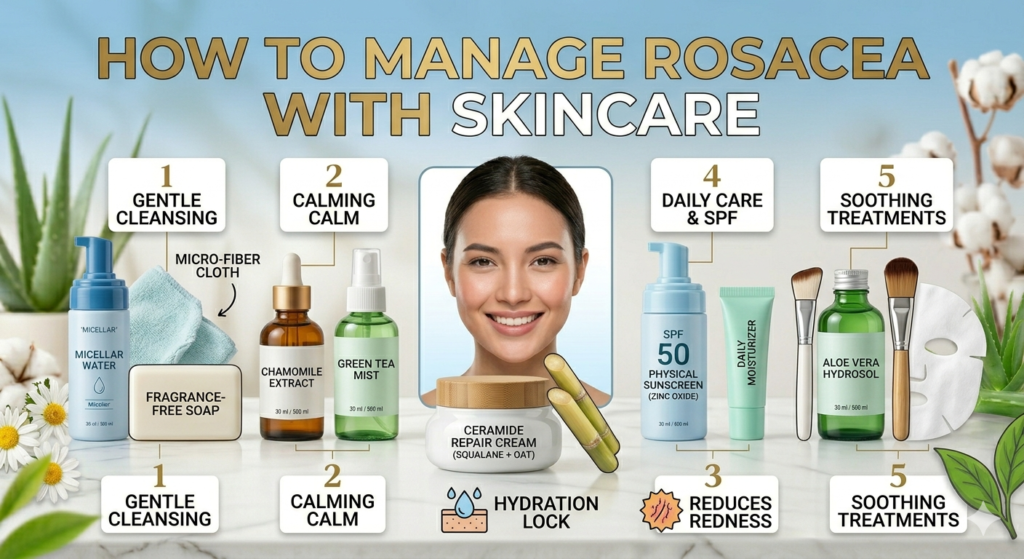
- Facial redness
- Flushing
- Burning or stinging
- Visible blood vessels
- Acne-like bumps
- Skin sensitivity
- Dryness
Rosacea often affects the cheeks, nose, forehead, and chin.
According to dermatology experts, rosacea is a long-term inflammatory disorder that requires careful skincare management. (aad.org)
Types of Rosacea
Understanding the type of rosacea helps determine the best treatment approach.
1. Erythematotelangiectatic Rosacea (ETR)
This type mainly causes:
- Redness
- Flushing
- Visible blood vessels
2. Papulopustular Rosacea
This type resembles acne and includes:
- Red bumps
- Pustules
- Inflammation
3. Phymatous Rosacea
This rare type can cause skin thickening, often on the nose.
4. Ocular Rosacea
Affects the eyes, causing:
- Irritation
- Dryness
- Redness
- Burning sensation
What Causes Rosacea?
The exact cause of rosacea is not fully understood, but several factors contribute.
1. Genetics
Rosacea often runs in families.
2. Immune System Response
Overactive immune responses may cause inflammation.
3. Blood Vessel Sensitivity
Facial blood vessels may be more reactive.
4. Environmental Triggers
Common triggers include:
- Sun exposure
- Heat
- Cold wind
- Pollution
5. Skin Barrier Dysfunction
A weakened skin barrier makes skin more reactive.
Dermatologists emphasize that barrier repair is essential in rosacea management. (mayoclinic.org)
Common Rosacea Triggers
Avoiding triggers is a key part of managing rosacea.
External Triggers
- Sun exposure
- Hot weather
- Cold weather
- Wind
- Skincare irritation
Dietary Triggers
- Spicy foods
- Alcohol
- Hot beverages
Lifestyle Triggers
- Stress
- Exercise-induced heat
- Lack of sleep
Best Skincare Goals for Rosacea
Managing rosacea focuses on:
- Reducing inflammation
- Strengthening the skin barrier
- Avoiding irritation
- Preventing flare-ups
- Calming redness
Best Skincare Ingredients for Rosacea
Certain ingredients are especially helpful for calming rosacea-prone skin.
Niacinamide
Niacinamide is one of the most effective ingredients for redness and inflammation.
Benefits
- Reduces redness
- Strengthens barrier
- Calms irritation
- Improves skin tone
Azelaic Acid
Azelaic acid is widely recommended for rosacea.
Benefits
- Reduces redness
- Treats bumps
- Anti-inflammatory
- Helps pigmentation
Centella Asiatica (Cica)
Cica is a soothing botanical ingredient.
Benefits
- Calms irritation
- Reduces inflammation
- Supports healing
Ceramides
Ceramides restore the skin barrier.
Benefits
- Prevent moisture loss
- Strengthen skin barrier
- Reduce sensitivity
Hyaluronic Acid
Hydrates without irritation.
Benefits
- Lightweight hydration
- Improves comfort
- Reduces dryness
Colloidal Oatmeal
Oat-based ingredients are very soothing.
Benefits
- Reduces itching
- Calms redness
- Protects barrier
Green Tea Extract
Green tea is rich in antioxidants.
Benefits
- Anti-inflammatory
- Reduces redness
- Protects skin
Best Skincare Routine for Rosacea
Morning Routine
Step 1: Gentle Cleanser
Use:
- Fragrance-free
- Sulfate-free
- Non-foaming cleansers
Step 2: Soothing Serum
Best options:
- Niacinamide
- Azelaic acid (low strength)
Step 3: Moisturizer
Use barrier-repair creams.
Step 4: Sunscreen
Daily SPF is essential for rosacea management.
Dermatologists strongly recommend sunscreen for rosacea patients. (aad.org)
Night Routine
Step 1: Gentle Cleansing
Remove dirt gently without scrubbing.
Step 2: Treatment Serum
Use calming ingredients such as:
- Azelaic acid
- Niacinamide
- Cica
Step 3: Moisturizer
Repair and soothe overnight.
Sunscreen and Rosacea
Sun exposure is one of the biggest rosacea triggers.
Best Sunscreen Type
- Mineral sunscreen
- Zinc oxide
- Titanium dioxide
These are usually less irritating than chemical sunscreens.
Lifestyle Changes to Manage Rosacea
1. Avoid Heat Exposure
Heat can trigger flushing.
2. Manage Stress
Stress is a common flare-up trigger.
3. Eat a Balanced Diet
Avoid known trigger foods.
4. Exercise Carefully
Avoid overheating during workouts.
5. Protect Skin in Weather Changes
Use scarves, hats, and protective clothing.
Natural Remedies for Rosacea
Some gentle natural ingredients may help soothe skin.
Aloe Vera
- Soothes irritation
- Hydrates skin
- Reduces redness
Green Tea Compress
- Calms inflammation
- Reduces swelling
Oatmeal Masks
- Relieves itching
- Supports barrier repair
Chamomile Extract
- Anti-inflammatory
- Soothing effects
Important Warning
Not all natural remedies are safe. Avoid harsh DIY treatments.
Avoid:
- Lemon juice
- Alcohol-based toners
- Strong essential oils
These can worsen rosacea.
Ingredients to Avoid in Rosacea
Some skincare ingredients can trigger flare-ups.
Avoid:
- Fragrance
- Alcohol denat
- Menthol
- Eucalyptus oil
- Strong exfoliating acids (high concentrations)
- Physical scrubs
These may irritate sensitive skin.
Rosacea vs Acne
Rosacea is often mistaken for acne.
Rosacea:
- Redness
- Flushing
- Sensitivity
- No blackheads
Acne:
- Blackheads
- Whiteheads
- Oily skin
- Comedones
Rosacea and Skin Barrier Damage
A damaged barrier worsens rosacea symptoms.
Signs of Barrier Damage:
- Burning
- Stinging
- Redness
- Sensitivity
Repairing the barrier is essential.
Best Moisturizers for Rosacea
Look for:
- Ceramides
- Glycerin
- Squalane
- Niacinamide
Avoid heavy fragrance or alcohol-based products.
How Long Does Rosacea Take to Improve?
Rosacea is a chronic condition.
Improvement timeline:
- Weeks for reduced irritation
- Months for better control
Consistency is essential.
Medical Treatments for Rosacea
Dermatologists may prescribe:
Topical Medications
- Metronidazole
- Azelaic acid
- Ivermectin
Oral Medications
- Antibiotics for inflammation
Laser Treatments
- Reduce visible blood vessels
Light Therapy
- Improves redness
Emotional Impact of Rosacea
Rosacea can affect confidence and emotional well-being.
Remember:
- It is a common condition
- It is manageable
- Progress takes time
Common Mistakes in Rosacea Care
Overwashing
Too much cleansing worsens irritation.
Using Harsh Products
Strong exfoliants may trigger flare-ups.
Skipping Sunscreen
UV exposure worsens symptoms.
Trying Too Many Products
Overloading skincare increases sensitivity.
Ignoring Triggers
Identifying triggers is essential.
Daily Habits for Rosacea Management
Keep Routine Simple
Minimal skincare works best.
Stay Consistent
Regular care prevents flare-ups.
Protect Skin Barrier
Barrier repair reduces sensitivity.
Track Triggers
Identifying triggers helps control flare-ups.
When to See a Dermatologist
Seek help if:
- Redness worsens
- Skin becomes painful
- Flare-ups are frequent
- Over-the-counter products fail
Frequently Asked Questions (FAQs)
1. What is the main cause of rosacea?
Rosacea is caused by a combination of genetics, immune response, and environmental triggers. (aad.org)
2. Can rosacea be cured?
No. Rosacea is a chronic condition, but it can be managed effectively.
3. What is the best skincare for rosacea?
Gentle cleansers, niacinamide, azelaic acid, ceramides, and sunscreen are highly recommended.
4. Does sunscreen help rosacea?
Yes. Sunscreen is essential to prevent flare-ups. (aad.org)
5. Can diet affect rosacea?
Yes. Spicy foods, alcohol, and hot drinks may trigger symptoms.
6. Is niacinamide good for rosacea?
Yes. It helps reduce redness and strengthen the skin barrier.
7. Is azelaic acid safe for rosacea?
Yes. It is one of the most recommended treatments.
8. Can stress worsen rosacea?
Yes. Stress is a common trigger.
9. Are natural remedies effective?
Some may help soothe symptoms, but they should be used cautiously.
10. When should I see a doctor?
If symptoms are persistent, painful, or worsening.
Final Thoughts
Managing rosacea requires patience, consistency, and a gentle skincare approach. While there is no permanent cure, symptoms can be significantly improved with the right routine and lifestyle adjustments.
The most effective rosacea care focuses on calming inflammation, repairing the skin barrier, avoiding triggers, and protecting the skin from sun exposure. Ingredients such as niacinamide, azelaic acid, ceramides, centella asiatica, and green tea extract can greatly reduce redness and irritation over time.
Most importantly, rosacea skin should always be treated gently. Avoid harsh products, over-exfoliation, and unnecessary experimentation. A simple, consistent routine is usually the most effective path to calmer, healthier skin.
External Links & Resources
- https://www.aad.org/public/diseases/rosacea/what-is-rosacea
- https://www.mayoclinic.org/diseases-conditions/rosacea/symptoms-causes/syc-20353815
- https://www.healthline.com/health/rosacea
- https://my.clevelandclinic.org/health/diseases/12174-rosacea
- https://www.aad.org/public/diseases/rosacea/skin-care
How to Manage Rosacea with Skincare
Rosacea is a chronic inflammatory skin condition that primarily affects the face. It often appears as persistent redness, flushing, visible blood vessels, sensitivity, and sometimes acne-like bumps. While rosacea is not dangerous, it can significantly impact confidence, comfort, and quality of life.
Unlike temporary redness, rosacea is a long-term condition that requires ongoing care rather than a one-time treatment. Many people notice that their skin reacts strongly to triggers such as heat, spicy foods, stress, alcohol, or harsh skincare products.
The good news is that rosacea can be managed effectively with the right skincare routine, lifestyle adjustments, and dermatologist-approved ingredients. While there is no permanent cure, symptoms can often be significantly reduced with consistency and gentle care.
This guide explains what rosacea is, its causes, triggers, types, best skincare ingredients, routines, lifestyle changes, treatments, mistakes to avoid, and frequently asked questions.
What Is Rosacea?
Rosacea is a chronic skin condition that causes inflammation and visible blood vessels, mainly on the central face.
Common symptoms include:
- Facial redness
- Flushing
- Burning or stinging
- Visible blood vessels
- Acne-like bumps
- Skin sensitivity
- Dryness
Rosacea often affects the cheeks, nose, forehead, and chin.
According to dermatology experts, rosacea is a long-term inflammatory disorder that requires careful skincare management. (aad.org)
Types of Rosacea
Understanding the type of rosacea helps determine the best treatment approach.
1. Erythematotelangiectatic Rosacea (ETR)
This type mainly causes:
- Redness
- Flushing
- Visible blood vessels
2. Papulopustular Rosacea
This type resembles acne and includes:
- Red bumps
- Pustules
- Inflammation
3. Phymatous Rosacea
This rare type can cause skin thickening, often on the nose.
4. Ocular Rosacea
Affects the eyes, causing:
- Irritation
- Dryness
- Redness
- Burning sensation
What Causes Rosacea?
The exact cause of rosacea is not fully understood, but several factors contribute.
1. Genetics
Rosacea often runs in families.
2. Immune System Response
Overactive immune responses may cause inflammation.
3. Blood Vessel Sensitivity
Facial blood vessels may be more reactive.
4. Environmental Triggers
Common triggers include:
- Sun exposure
- Heat
- Cold wind
- Pollution
5. Skin Barrier Dysfunction
A weakened skin barrier makes skin more reactive.
Dermatologists emphasize that barrier repair is essential in rosacea management. (mayoclinic.org)
Common Rosacea Triggers
Avoiding triggers is a key part of managing rosacea.
External Triggers
- Sun exposure
- Hot weather
- Cold weather
- Wind
- Skincare irritation
Dietary Triggers
- Spicy foods
- Alcohol
- Hot beverages
Lifestyle Triggers
- Stress
- Exercise-induced heat
- Lack of sleep
Best Skincare Goals for Rosacea
Managing rosacea focuses on:
- Reducing inflammation
- Strengthening the skin barrier
- Avoiding irritation
- Preventing flare-ups
- Calming redness
Best Skincare Ingredients for Rosacea
Certain ingredients are especially helpful for calming rosacea-prone skin.
Niacinamide
Niacinamide is one of the most effective ingredients for redness and inflammation.
Benefits
- Reduces redness
- Strengthens barrier
- Calms irritation
- Improves skin tone
Azelaic Acid
Azelaic acid is widely recommended for rosacea.
Benefits
- Reduces redness
- Treats bumps
- Anti-inflammatory
- Helps pigmentation
Centella Asiatica (Cica)
Cica is a soothing botanical ingredient.
Benefits
- Calms irritation
- Reduces inflammation
- Supports healing
Ceramides
Ceramides restore the skin barrier.
Benefits
- Prevent moisture loss
- Strengthen skin barrier
- Reduce sensitivity
Hyaluronic Acid
Hydrates without irritation.
Benefits
- Lightweight hydration
- Improves comfort
- Reduces dryness
Colloidal Oatmeal
Oat-based ingredients are very soothing.
Benefits
- Reduces itching
- Calms redness
- Protects barrier
Green Tea Extract
Green tea is rich in antioxidants.
Benefits
- Anti-inflammatory
- Reduces redness
- Protects skin
Best Skincare Routine for Rosacea
Morning Routine
Step 1: Gentle Cleanser
Use:
- Fragrance-free
- Sulfate-free
- Non-foaming cleansers
Step 2: Soothing Serum
Best options:
- Niacinamide
- Azelaic acid (low strength)
Step 3: Moisturizer
Use barrier-repair creams.
Step 4: Sunscreen
Daily SPF is essential for rosacea management.
Dermatologists strongly recommend sunscreen for rosacea patients. (aad.org)
Night Routine
Step 1: Gentle Cleansing
Remove dirt gently without scrubbing.
Step 2: Treatment Serum
Use calming ingredients such as:
- Azelaic acid
- Niacinamide
- Cica
Step 3: Moisturizer
Repair and soothe overnight.
Sunscreen and Rosacea
Sun exposure is one of the biggest rosacea triggers.
Best Sunscreen Type
- Mineral sunscreen
- Zinc oxide
- Titanium dioxide
These are usually less irritating than chemical sunscreens.
Lifestyle Changes to Manage Rosacea
1. Avoid Heat Exposure
Heat can trigger flushing.
2. Manage Stress
Stress is a common flare-up trigger.
3. Eat a Balanced Diet
Avoid known trigger foods.
4. Exercise Carefully
Avoid overheating during workouts.
5. Protect Skin in Weather Changes
Use scarves, hats, and protective clothing.
Natural Remedies for Rosacea
Some gentle natural ingredients may help soothe skin.
Aloe Vera
- Soothes irritation
- Hydrates skin
- Reduces redness
Green Tea Compress
- Calms inflammation
- Reduces swelling
Oatmeal Masks
- Relieves itching
- Supports barrier repair
Chamomile Extract
- Anti-inflammatory
- Soothing effects
Important Warning
Not all natural remedies are safe. Avoid harsh DIY treatments.
Avoid:
- Lemon juice
- Alcohol-based toners
- Strong essential oils
These can worsen rosacea.
Ingredients to Avoid in Rosacea
Some skincare ingredients can trigger flare-ups.
Avoid:
- Fragrance
- Alcohol denat
- Menthol
- Eucalyptus oil
- Strong exfoliating acids (high concentrations)
- Physical scrubs
These may irritate sensitive skin.
Rosacea vs Acne
Rosacea is often mistaken for acne.
Rosacea:
- Redness
- Flushing
- Sensitivity
- No blackheads
Acne:
- Blackheads
- Whiteheads
- Oily skin
- Comedones
Rosacea and Skin Barrier Damage
A damaged barrier worsens rosacea symptoms.
Signs of Barrier Damage:
- Burning
- Stinging
- Redness
- Sensitivity
Repairing the barrier is essential.
Best Moisturizers for Rosacea
Look for:
- Ceramides
- Glycerin
- Squalane
- Niacinamide
Avoid heavy fragrance or alcohol-based products.
How Long Does Rosacea Take to Improve?
Rosacea is a chronic condition.
Improvement timeline:
- Weeks for reduced irritation
- Months for better control
Consistency is essential.
Medical Treatments for Rosacea
Dermatologists may prescribe:
Topical Medications
- Metronidazole
- Azelaic acid
- Ivermectin
Oral Medications
- Antibiotics for inflammation
Laser Treatments
- Reduce visible blood vessels
Light Therapy
- Improves redness
Emotional Impact of Rosacea
Rosacea can affect confidence and emotional well-being.
Remember:
- It is a common condition
- It is manageable
- Progress takes time
Common Mistakes in Rosacea Care
Overwashing
Too much cleansing worsens irritation.
Using Harsh Products
Strong exfoliants may trigger flare-ups.
Skipping Sunscreen
UV exposure worsens symptoms.
Trying Too Many Products
Overloading skincare increases sensitivity.
Ignoring Triggers
Identifying triggers is essential.
Daily Habits for Rosacea Management
Keep Routine Simple
Minimal skincare works best.
Stay Consistent
Regular care prevents flare-ups.
Protect Skin Barrier
Barrier repair reduces sensitivity.
Track Triggers
Identifying triggers helps control flare-ups.
When to See a Dermatologist
Seek help if:
- Redness worsens
- Skin becomes painful
- Flare-ups are frequent
- Over-the-counter products fail
Frequently Asked Questions (FAQs)
1. What is the main cause of rosacea?
Rosacea is caused by a combination of genetics, immune response, and environmental triggers. (aad.org)
2. Can rosacea be cured?
No. Rosacea is a chronic condition, but it can be managed effectively.
3. What is the best skincare for rosacea?
Gentle cleansers, niacinamide, azelaic acid, ceramides, and sunscreen are highly recommended.
4. Does sunscreen help rosacea?
Yes. Sunscreen is essential to prevent flare-ups. (aad.org)
5. Can diet affect rosacea?
Yes. Spicy foods, alcohol, and hot drinks may trigger symptoms.
6. Is niacinamide good for rosacea?
Yes. It helps reduce redness and strengthen the skin barrier.
7. Is azelaic acid safe for rosacea?
Yes. It is one of the most recommended treatments.
8. Can stress worsen rosacea?
Yes. Stress is a common trigger.
9. Are natural remedies effective?
Some may help soothe symptoms, but they should be used cautiously.
10. When should I see a doctor?
If symptoms are persistent, painful, or worsening.
Final Thoughts
Managing rosacea requires patience, consistency, and a gentle skincare approach. While there is no permanent cure, symptoms can be significantly improved with the right routine and lifestyle adjustments.
The most effective rosacea care focuses on calming inflammation, repairing the skin barrier, avoiding triggers, and protecting the skin from sun exposure. Ingredients such as niacinamide, azelaic acid, ceramides, centella asiatica, and green tea extract can greatly reduce redness and irritation over time.
Most importantly, rosacea skin should always be treated gently. Avoid harsh products, over-exfoliation, and unnecessary experimentation. A simple, consistent routine is usually the most effective path to calmer, healthier skin.